Showing posts with label somalia. Show all posts

Tuesday, August 11, 2015

To avoid counting civilian deaths, Obama re-defined “militant” to mean “all military-age males in a strike zone

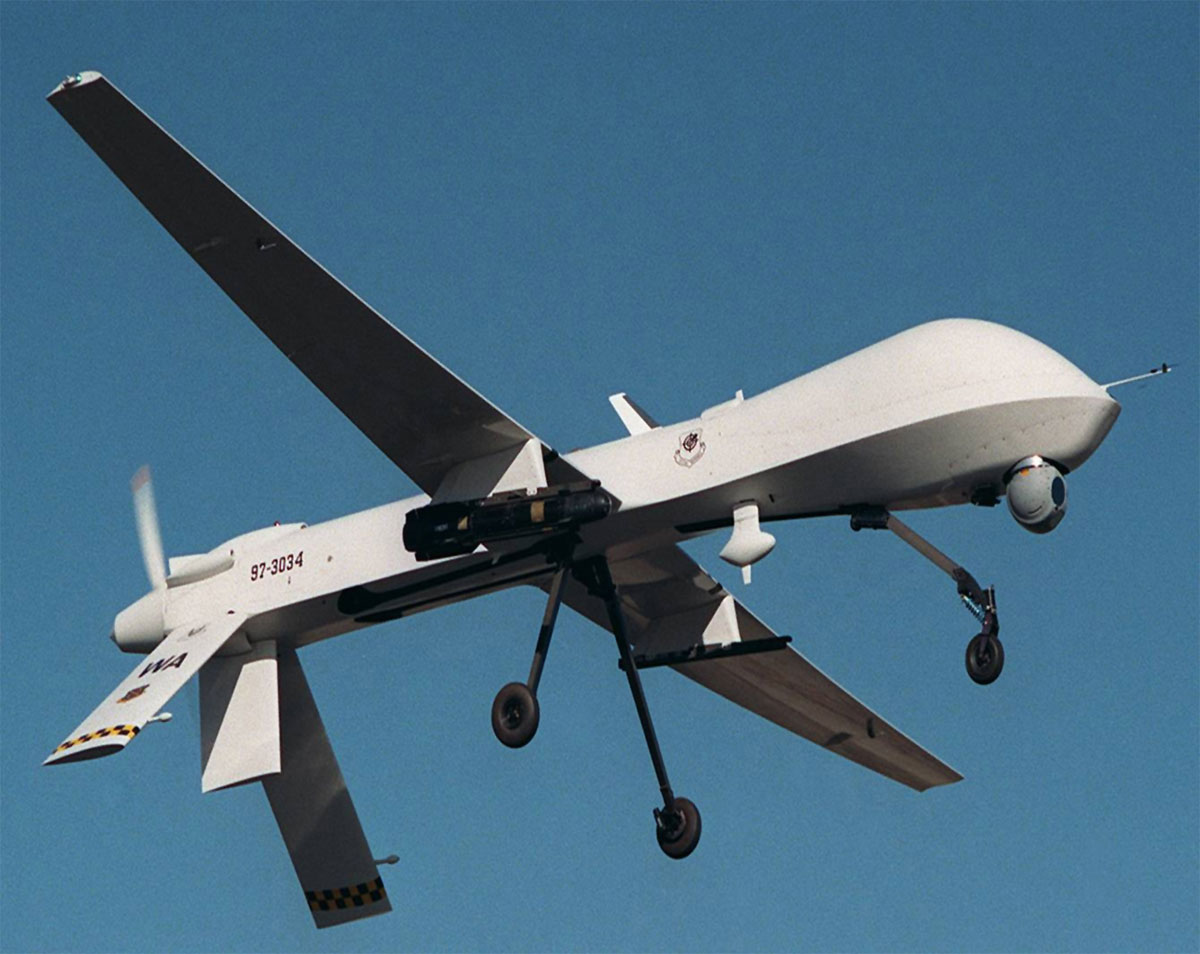
Virtually every time the U.S. fires a missile from a drone and ends the lives of Muslims, American media outlets dutifully trumpet in headlines that the dead were "militants" — even though those media outlets literally do not have the slightest idea of who was actually killed.

They simply cite always-unnamed "officials" claiming that the dead were "militants." It’s the most obvious and inexcusable form of rank propaganda: media outlets continuously propagating a vital claim without having the slightest idea if it’s true.

This practice continues even though key Obama officials have been caught lying, a term used advisedly, about how many civilians they’re killing. I’ve written and said many times before that in American media discourse, the definition of "militant" is any human being whose life is extinguished when an American missile or bomb detonates (that term was even used when Anwar Awlaki’s 16-year-old American son, Abdulrahman, was killed by a U.S. drone in Yemen two weeks after a drone killed his father, even though nobody claims the teenager was anything but completely innocent: "Another U.S. Drone Strike Kills Militants in Yemen").

This morning, the New York Times has a very lengthy and detailed article about President Obama’s counter-Terrorism policies based on interviews with "three dozen of his current and former advisers." I’m writing separately about the numerous revelations contained in that article, but want specifically to highlight this one vital passage about how the Obama administration determines who is a "militant." The article explains that Obama’s rhetorical emphasis on avoiding civilian deaths "did not significantly change" the drone program, because Obama himself simply expanded the definition of a "militant" to ensure that it includes virtually everyone killed by his drone strikes. Just read this remarkable passage;

Mr. Obama embraced a disputed method for counting civilian casualties that did little to box him in. It in effect counts all military-age males in a strike zone as combatants, according to several administration officials, unless there is explicit intelligence posthumously proving them innocent.

Counterterrorism officials insist this approach is one of simple logic: people in an area of known terrorist activity, or found with a top Qaeda operative, are probably up to no good. "Al Qaeda is an insular, paranoid organization — innocent neighbors don’t hitchhike rides in the back of trucks headed for the border with guns and bombs," said one official, who requested anonymity to speak about what is still a classified program.

This counting method may partly explain the official claims of extraordinarily low collateral deaths. In a speech last year Mr. Brennan, Mr. Obama’s trusted adviser, said that not a single noncombatant had been killed in a year of strikes. And in a recent interview, a senior administration official said that the number of civilians killed in drone strikes in Pakistan under Mr. Obama was in the "single digits" — and that independent counts of scores or hundreds of civilian deaths unwittingly draw on false propaganda claims by militants.

But in interviews, three former senior intelligence officials expressed disbelief that the number could be so low. The C.I.A. accounting has so troubled some administration officials outside the agency that they have brought their concerns to the White House. One called it "guilt by association" that has led to "deceptive" estimates of civilian casualties.

"It bothers me when they say there were seven guys, so they must all be militants," the official said. "They count the corpses and they’re not really sure who they are."

For the moment, leave the ethical issues to the side that arise from viewing "all military-age males in a strike zone as combatants"; that’s nothing less than sociopathic, a term I use advisedly, but I discuss that in the separate, longer piece I’ve written. For now, consider what this means for American media outlets. Any of them which use the term "militants" to describe those killed by U.S. strikes are knowingly disseminating a false and misleading term of propaganda. By "militant," the Obama administration literally means nothing more than: any military-age male whom we kill, even when we know nothing else about them. They have no idea whether the person killed is really a militant: if they’re male and of a certain age they just call them one in order to whitewash their behavior and propagandize the citizenry (unless conclusive evidence somehow later emerges proving their innocence).

What kind of self-respecting media outlet would be party to this practice? Here’s the New York Times documenting that this is what the term "militant" means when used by government officials. Any media outlet that continues using it while knowing this is explicitly choosing to be an instrument for state propaganda — not that that’s anything new, but this makes this clearer than it’s ever been. More


Friday, March 28, 2014

UN backs resolution presented by Pakistan on drones

GENEVA: The United Nations called on all states on Friday to ensure that the use of armed drones complies with international law, backing a proposal from Pakistan seen as taking aim at the United States.

A resolution presented by Pakistan on behalf of co-sponsors including Yemen and Switzerland did not single out any state. The United States is the biggest drone user in conflicts including those in Pakistan, Yemen, Afghanistan and Somalia.

“The purpose of this resolution is not to shame or name anyone, as we are against this approach,” Pakistan's ambassador Zamir Akram told the UN Human Rights Council.

“It is about supporting a principle.”

The United States prizes drones for their accuracy against al Qaeda and Taliban militants. Pakistan says they kill civilians and infringe its sovereignty.

“The United States is committed to ensuring that our actions, including those involving remotely piloted aircraft, are undertaken in accordance with all applicable domestic and international laws and with the greatest possible transparency, consistent with our national security needs,” Paula Schriefer, US deputy assistant secretary of state, told the talks.

The resolution was adopted by a vote of 27 states in favour to six against, with 14 abstentions at the 47-member Geneva forum. The United States, Britain and France voted against.

The Council “urges all states to ensure that any measures employed to counter terrorism, including the use of remotely piloted aircraft or armed drones, comply with their obligations under international law ... in particular the principles of precaution, distinction and proportionality.”

The text voiced concern at civilian casualties resulting from the use of remotely-piloted aircraft or armed drones, as highlighted by the UN special investigator on counter-terrorism Ben Emmerson in a recent report.

It called on UN human rights boss Navi Pillay to organise expert discussions on armed drones and report back in September.

The United States, Britain and France said it was not appropriate for the forum to put weapons systems on its agenda.

The Obama administration preferred to discuss drones under an initiative of Switzerland and the International Committee of the Red Cross, which it hoped would provide a “non-politicised forum” where military experts can discuss law of war issues, Schriefer said.

Akram, speaking before the vote, said opposition “can only lead to the conclusion that these states are guilty of violating applicable international law and demonstrate that they are afraid of being exposed in the expert panel.”

A separate UN human rights watchdog called on the Obama administration on Thursday to limit its use of drones and to curb US surveillance activities.


Wednesday, March 19, 2014

Confessions of a Drone Warrior

From the darkness of a box in the Nevada desert, he watched as three men trudged down a dirt road in Afghanistan.

The box was kept cold—precisely sixty-eight degrees—and the only light inside came from the glow of monitors. The air smelled spectrally of stale sweat and cigarette smoke. On his console, the image showed the midwinter landscape of eastern Afghanistan’s Kunar Province—a palette of browns and grays, fields cut to stubble, dark forests climbing the rocky foothills of the Hindu Kush. He zoomed the camera in on the suspected insurgents, each dressed in traditional shalwar kameez, long shirts and baggy pants. He knew nothing else about them: not their names, not their thoughts, not the thousand mundane and profound details of their lives.

He was told that they were carrying rifles on their shoulders, but for all he knew, they were shepherd’s staffs. Still, the directive from somewhere above, a mysterious chain of command that led straight to his headset, was clear: confirmed weapons. He switched from the visible spectrum—the muted grays and browns of “day-TV”—to the sharp contrast of infrared, and the insurgents’ heat signatures stood out ghostly white against the cool black earth. A safety observer loomed behind him to make sure the “weapon release” was by the book. A long verbal checklist, his targeting laser locked on the two men walking in front. A countdown—three…two…one…—then the flat delivery of the phrase “missile off the rail.” Seventy-five hundred miles away, a Hellfire flared to life, detached from its mount, and reached supersonic speed in seconds.

It was quiet in the dark, cold box in the desert, except for the low hum of machines.

He kept the targeting laser trained on the two lead men and stared so intently that each individual pixel stood out, a glowing pointillist dot abstracted from the image it was meant to form. Time became almost ductile, the seconds stretched and slowed in a strange electronic limbo. As he watched the men walk, the one who had fallen behind seemed to hear something and broke into a run to catch up with the other two. Then, bright and silent as a camera flash, the screen lit up with white flame.

Airman First Class Brandon Bryant stared at the scene, unblinking in the white-hot clarity of infrared. He recalls it even now, years later, burned into his memory like a photo negative: “The smoke clears, and there’s pieces of the two guys around the crater. And there’s this guy over here, and he’s missing his right leg above his knee. He’s holding it, and he’s rolling around, and the blood is squirting out of his leg, and it’s hitting the ground, and it’s hot. His blood is hot. But when it hits the ground, it starts to cool off; the pool cools fast. It took him a long time to die. I just watched him. I watched him become the same color as the ground he was lying on.”

That was Brandon Bryant’s first shot. It was early 2007, a few weeks after his twenty-first birthday, and Bryant was a remotely-piloted-aircraft sensor operator—a “sensor” for short—part of a U.S. Air Force squadron that flew Predator drones in the skies above Iraq and Afghanistan. Beginning in 2006, he worked in the windowless metal box of a Ground Control Station (GCS) at Nellis Air Force Base, a vast sprawl of tarmac and maintenance hangars at the edge of Las Vegas.

The airmen kept the control station dark so they could focus on controlling their MQ-1B Predators circling two miles above the Afghan countryside. Bryant sat in a padded cockpit chair. He had a wrestler’s compact build, a smooth-shaved head, and a piercing ice blue gaze frequently offset by a dimpled grin. As a sensor, his job was to work in tandem with the drone’s pilot, who sat in the chair next to him. While the pilot controlled the drone’s flight maneuvers, Bryant acted as the Predator’s eyes, focusing its array of cameras and aiming its targeting laser. When a Hellfire was launched, it was a joint operation: the pilot pulled a trigger, and Bryant was responsible for the missile’s “terminal guidance,” directing the high-explosive warhead by laser to its desired objective. Both men wore regulation green flight suits, an unironic Air Force nod to the continuity of military decorum in the age of drone warfare.

Since its inception, the drone program has been largely hidden, its operational details gathered piecemeal from heavily redacted classified reports or stage-managed media tours by military public-affairs flacks. Bryant is one of very few people with firsthand experience as an operator who has been willing to talk openly, to describe his experience from the inside. While Bryant considers leakers like Chelsea Manning and Edward Snowden heroes willing to sacrifice themselves for their principles, he’s cautious about discussing some of the details to which his top-secret clearance gave him access. Still, he is a curtain drawn back on the program that has killed thousands on our behalf.

Despite President Obama’s avowal earlier this year that he will curtail their use, drone strikes have continued apace in Pakistan, Yemen, and Afghanistan. With enormous potential growth and expenditures, drones will be a center of our policy for the foreseeable future. (By 2025, drones will be an $82 billion business, employing an additional 100,000 workers.) Most Americans—61 percent in the latest Pew survey—support the idea of military drones, a projection of American power that won’t risk American lives. More

======================

Chatham House Conference - Stop Killer Robots


Tuesday, October 1, 2013

Professor Paul Jackson: The unintended consequences of foreign intervention

After the horrors of the Westgate Mall attack in Nairobi, there will be inevitable questions about the nature of Islamic terrorism in East Africa. However, the attack itself is part of an on-going conflict in Kenya that in turn is part of a bigger regional conflagration based on Somalia. In fact the attack on the mall can be traced back to an international intervention that produced a number of unintended consequences, one of which has been the transformation of the group that perpetrated the attack, Al-Shabaab.

Kenyan troops at Westgate Mall

In fact the continued fighting in Somalia and the relative success of the African Union forces against Al-Shabaab fighters may have made the situation less stable and more dangerous for a number of reasons, not least because the movement may have splintered in to a number of cells capable of perpetrating terrorist atrocities rather than holding territory.

What of Al-Shabaab itself? A rather shady organisation that grew out of the youth wing (‘shabaab’ means ‘youth’) of a wider organisation, al-Ittihad al-Islami, one of the Somali extremist groups that existed in the 1980s and 90s, al-Shabaab itself remained relatively unimportant until 2007 following the invasion of Somalia by Ethiopian troops. At that time, al-Shabaab was serving as the military wing of a group known as the Islamic Courts Union (ICU), which established a form of governance within Mogadishu and in parts of the countryside. Following the Ethiopian invasion, the ICU collapsed and al-Shabaab took up arms against the Ethiopian forces, retreating in to a swampy area in the South.

At this point, the movement runs a very conventional guerrilla war against the Ethiopians, at various times supported by the Eritreans in a proxy war against her Ethiopian rival. However, the growing prominence of al-Shabaab and its Islamic roots make it fertile ground for the growth of Al-Qaeda links, as part of a regional spread of Islamic radicalism from Yemen, into the Horn and down the East coast. The increased links are attended by a change in philosophy of violence and a move to the use of suicide bombing as a means of spreading terror at the same time as continuing its conventional warfare against international forces.

In 2008 al-Shabaab mounts a series of suicide bombings against government offices and international agencies as well as the Ethiopian consulate, stating that the attacks are retaliation against the international community for the invasion of Somalia. With the advent of AMISOM in Somalia and African Union troops from Uganda and Burundi, al-Shabaab widened its terrorist campaign and in 2010 mounted its first international attack against an Ethiopian restaurant and rugby club in Uganda.

The AMISOM forces have been very successful on the ground in Somalia and al-Shabaab does not control the same level of territory as they did in 2008. The Kenyan military incursion that started in 2011 has been particularly successful, with the effective Kenyan military pushing back the fighters significantly, including capturing one of al-Shabaab’s last strongholds, Kismayo, a key source of revenue. It was this that led al-Shabaab to call the Westgate attack revenge for Kenyan involvement in Somalia.

The horrific attack can therefore be traced right back to an international intervention in a regional conflict. Not only does this point to a close link between terrorism and more conventional warfare, but also to the transnational nature of much conflict within Africa. The purpose of the attack itself was clearly to send a signal to the Kenyans that they should not send troops to Somalia, and yet it was also a signal that the African Union Somali offensive was being successful.

Losing territory and increasingly unable to hold territory against troops, al-Shabaab has been forced to rethink its strategy. Unfortunately the most logical model for a new strategy is localised cells of terrorists, usually connected to the Somali diaspora, which is very developed following twenty years of conflict. There are approximately 250,000 Somalis in Nairobi alone, which could provide a fertile breeding ground for radicalism, let alone other groups in Uganda and Tanzania.

The blueprint for this type of incident was the Mumbai hotel attack of 2008, which showed the weakness of many public areas frequented by westerners and wealthy locals and was capable of provoking an over-reaction by security forces that could lead to further radicalisation. More


Friday, May 24, 2013

Is a 'surgical strike' in Afghanistan any more palatable than a surgical hacking in Woolwich?

A man, a soldier, is brutally murdered on a Woolwich street. Politicians rush to emergency meetings. Reporters survey the scene, run 'terror warning' front pages and ask how such an atrocity 'could ever happen here'.

Yet, beyond the standard political condemnation and media 'examination', what more humanitarianthoughts and questions might be invoked over this horrific death?

The first compassionate thought should always be with the immediate victim, the person or persons killed, the life taken. That means all persons killed, all life taken, whether in Afghanistan, Iraq or on 'our' streets.

The next thought, equally human, but of more compassionate purpose, should be to ask ourselves why these kind of violent attacks are happening.

Is it enough, or even useful, just to feel appalled by such violence? Is it remotely helpful just to condemn? Or is it more productive and humanitarian to ask what compels or encourages it?

An ITN report on the killing noted: "A British soldier killed not in war, but at home" - war, presumably for such journalists, being something that can be visited upon others, in their countries, but not here in 'ours'.

Yet, are we really to believe that lands can be illegally invaded, their resources stolen, their people slaughtered, and that others, 'homegrown' or otherwise, will not react, often violently, to those appalling situations?

Ex-soldier turned anti-war campaigner Joe Glenton is in no doubt:

"So at the very outset, and before the rising tide of prejudice and pseudo-patriotism fully encloses us, let us be clear: while nothing can justify the savage killing in Woolwich yesterday of a man since confirmed to have been a serving British soldier, it should not be hard to explain why the murder happened. [...] It should by now be self-evident that by attacking Muslims overseas, you will occasionally spawn twisted and, as we saw yesterday, even murderous hatred at home. We need to recognise that, given the continued role our government has chosen to play in the US imperial project in the Middle East, we are lucky that these attacks are so few and far between."

As we advance that line of enquiry, further humanitarian questions occur: why was this killing announced, particularly, as a "terrorist" attack? What makes an attack on a soldier or a civilian here different from a soldier attacking and killing either a combatant or a civilian in Afghanistan?

As Glenn Greenwald asks:

How can one create a definition of "terrorism" that includes Wednesday's London attack on this British soldier without including many acts of violence undertaken by the US, the UK and its allies and partners? Can that be done? [...]The reason it's so crucial to ask this question is that there are few terms - if there are any - that pack the political, cultural and emotional punch that "terrorism" provides. When it comes to the actions of western governments, it is a conversation-stopper, justifying virtually anything those governments want to do. It's a term that is used to start wars, engage in sustained military action, send people to prison for decades or life, to target suspects for due-process-free execution, shield government actions behind a wall of secrecy, and instantly shape public perceptions around the world.

In essence, is state killing not terrorism? Are people not terrorised, terrified, by helicopter gunships? Is the killing of a person in this way any more or less gruesome than the obliteration of an Afghan child with an M16 missile? Is a 'surgical strike' any more palatable than a surgical hacking? Would the bloody outcomes of Nato strikes ever appear so graphically on front pages the way they have for the Woolwich killing?

Having dutifully repeated what official sources had briefed as a 'terrorist' attack, the BBC's Nick Robinson later tweeted: "To those offended by my describing the attacker as of "Muslim appearance" - I was directly quoting a Whitehall source quoting the police."

Robinson later apologised for the remark. Yet, alongside the insistence on a 'terrorist' crime, here, unwittingly revealed, was a consensually-loaded interpretation from police, government and the BBC.

What, does a Muslim supposedly 'look like'? Is it conceivable that any of these institutions would ever speak of an alleged attacker as being of 'Christian appearance' or 'Jewish appearance'?

Besides the 'incriminating look', various suggestions have been made about the questionable sanity of those who carried out this attack. Yet, why is this question confined to such assailants?

As Arundhati Roy notes, while Obama goes about his family life, he is ordering drone strikes that terminate other families' very existence.

Noting the public appearance of leaders like Blair and Obama, Roy describes their acts of war and violence as "psychopathic", observations that invite us to think about what separates 'respectable' appearance from true and disturbing intent.

Watching the fawning media treatment still enjoyed by Blair, the issue is not just whether his actions may be psychopathic. It's that the very suggestion of such a question is not even up for reasonable discussion, even in the liberal media.

While the precise psychiatry of people like Obama and Blair may be open to conjecture, what's certainly evident is their willingness to execute decisions that would in any other set of circumstances, like Woolwich, be deemed criminally psychotic in their ruthless disregard for other human beings.

The killers at Woolwich had visible blood on their hands. But Blair, Obama, Cameron and others have much, much more of it on theirs, even if it's unseen.

And so, a deeper question arises: watching Obama with his wife and kids, seeing him at the ball game, visiting victims of gun crime or natural disasters, how can we find it in ourselves to castigate such 'just like us' people?

Why do we so readily condemn one act of terrible killing, but not those who perpetrate horrific multiple others? Is it simply because the latter don't actually pull the trigger, fire the missile or release the bomb?

Besides the actual absence of balanced news and information exposing our governments' crimes, the psychology of mass propaganda plays upon a very basic emotionalism, encouraging a deep human reluctance to see those 'close' to us as murderous or clinically suspect.

Even now, ten years on from the decision that led to mass slaughter in Iraq, how readily might we really imagine, or wish to see, Blair jailed for high war crimes? Why is that possibility still beyond much of the public's comprehension? And why, with all their mass criminality, are leaders like Cameron still permitted to claim such 'moral authority', from calling for 'more benign intervention' in Syria to denouncing the Woolwich killers?

And remember too that those Western leaders of 'benign appearance' are the very same ones ready to support and fund those of 'Muslim appearance' and jihadi intent in Syria, just as they once expediently backed the Mujahadeen in Afghanistan.

The public may readily rationalise all this by saying 'well, politicians have a job to do, often an unenviable one'. But the basic question remains: why are those like the Woolwich killers denounced as evil and insane, terrorist and extremist, fanatical and deranged, while powerful mass killers are treated with blanket deference and respect?

As that most salient book title asks: Why Are We the Good Guys?

It's of considerable significance why power and a service media will always pose the easiest questions, while evading the most difficult.

The easiest question to answer here is why those men at Woolwich and others have committed such crimes. However mistaken in their response, and however personally responsible, it's because they see violence as way of expressing political grievances and just retribution against oppressor forces.

The harder and more useful question to pose, yet the one consistently avoided, is why those like Obama and Cameron continue to kill so criminally and mercilessly around the globe.

One may assume that such figures see killing as part of their 'office duty', caught up as they are in a world of profit-driven economies, neoliberal demands and insatiable militarism. That, by any decent moral compass, all seems pathological. Yet none of their violence or the forces behind all that are up for serious political or media discussion.


Sunday, May 12, 2013

If the Government Does It, It's Legal

Indefinite detention of the innocent and guilty alike, without any hope of charges, trial, or release: this is now the American way. Most Americans, however, may not care to take that in, not even when the indefinitely detained go on a hunger strike.

That act has certainly gotten Washington’s and the media’s collective attention. After all, could there be anything more extreme than striking against your own body to make a point? Suicide by strike? It’s the ultimate statement of protest and despair. Certainly, the strikers have succeeded in pushing Guantanamo out of the netherworld of non-news and onto front pages, into presidential news conferences, and to the top of the TV newscasts. That, in a word, is extraordinary. But what exactly do those prisoners, many now being force-fed, want to highlight? Here’s one thing: despite the promise he made on entering the Oval office, President Obama has obviously not made much of an effort to close the prison, which, as he said recently, “hurts us, in terms of our international standing... [and] is a recruitment tool for extremists.”

If Congress has been thoroughly recalcitrant when it comes to closing Guantanamo, the president’s idea of what shutting down that prison meant proved curious indeed. His plan involved transferring many of the prisoners from Cuba, that crown jewel of the offshore Bermuda Triangle of injustice that the Bush administration set up in January 2002, to a super-max-style prison in Illinois (“Gitmo North”). That would mean, of course, transferring indefinite detention from the offshore world of extraordinary rendition, black sites, and torture directly into the heart of the American justice system. Obama himself has indicated that at least 50 of the prisoners can, in his view, never be released or tried (in part because confessions were tortured out of some of them). They would be kept in what he, in the past, politely termed “prolonged detention.”

Here’s a second thing the strikers undoubtedly wanted to highlight and it's even harder to take in: Guantanamo now holds 86 prisoners (out of the 166 caged there) who have been carefully vetted by the U.S. military, the FBI, the CIA, and so on, and found to have done nothing for which they could be charged or should be imprisoned. All 86 have been cleared for release -- years late, often after brutal interrogation experiences sometimes involving torture. The problem: there is nowhere to release them to, especially since the majority of them are Yemenis and President Obama has imposed a moratorium on transferring any prisoner to Yemen.

Then there are the prisoners who may indeed have done something criminal in regard to the U.S., but had confessions tortured out of them which won't hold up in court. They are among the ones who will never be brought to trial, but never cleared for release either. In other words, indefinite detention, something anathema to the American justice system, will for the conceivable future be us. The fact that relatively few Americans seem fazed by this should be startling. No charges, no trials, but never getting out of prison: that would once have been associated with the practices of a totalitarian state.

We know one thing: no one, not George W. Bush, Dick Cheney, Donald Rumsfeld, Condoleezza Rice, or other top officials involved in setting up such a global system of injustice, sweeping up the innocent with the guilty, and subjecting them to horrors without end (including now force-feeding) will ever be brought to justice in an American court, nor will anyone involved in the system of rendition, torture, or abuse. In the Obama years, while indefinite detention remained a grim American reality, the government, as TomDispatch regular and former State Department officer Peter Van Buren himself experienced, honed other methods for punishing those it was unhappy with, especially whistleblowers of all sorts.

One of those methods might be called “indefinite suspension.” Instead of not being charged, you are charged repeatedly and dragged endlessly -- your life in a state of suspension -- through various bureaucratic judicial processes, the actual courts, and endless appeals thereof, so that even if sooner or later you come out the other side exonerated, you will still have been punished for your “crimes.” Let Peter Van Buren explain this mockery of "justice."

Homeland Insecurity: Seven Years, Untold Dollars to Silence One Man By Peter Van Buren

Read More


Monday, April 8, 2013

The Hijacking of Human Rights By Chris Hedges

April 08, 2013 "Information Clearing House" - The appointment of Suzanne Nossel, a former State Department official and longtime government apparatchik, as executive director of PEN American Center is part of a campaign to turn U.S. human rights organizations into propagandists for pre-emptive war and apologists for empire.

Nossel’s appointment led me to resign from PEN as well as withdraw from speaking at the PEN World Voices Festival in May. But Nossel is only symptomatic of the widespread hijacking of human rights organizations to demonize those—especially Muslims—branded by the state as the enemy, in order to cloak pre-emptive war and empire with a fictional virtue and to effectively divert attention from our own mounting human rights abuses, including torture, warrantless wiretapping and monitoring, the denial of due process and extrajudicial assassinations.

Nossel, who was deputy assistant secretary of state for international organization affairs under Hillary Clinton in a State Department that was little more than a subsidiary of the Pentagon, is part of the new wave of “humanitarian interventionists,” such as Samantha Power, Michael Ignatieff and Susan Rice, who naively see in the U.S. military a vehicle to create a better world. They know little of the reality of war or the actual inner workings of empire. They harbor a childish belief in the innate goodness and ultimate beneficence of American power. The deaths of hundreds of thousands of innocents, the horrendous suffering and violent terror inflicted in the name of their utopian goals in Iraq and Afghanistan, barely register on their moral calculus. This makes them at once oblivious and dangerous. “Innocence is a kind of insanity,” Graham Greene wrote in his novel “The Quiet American,” and those who destroy to build are “impregnably armored by … good intentions and … ignorance.”

There are no good wars. There are no just wars. As Erasmus wrote, “there is nothing more wicked, more disastrous, more widely destructive, more deeply tenacious, more loathsome” than war. “Whoever heard of a hundred thousand animals rushing together to butcher each other, as men do everywhere?” Erasmus asked. But war, he knew, was very useful to the power elite. War permitted the powerful, in the name of national security and by fostering a culture of fear, to effortlessly strip the citizen of his or her rights. A declaration of war ensures that “all the affairs of the State are at the mercy of the appetites of a few,” Erasmus wrote.

Nossel, they noted, “sees no conflict between her current role and having been a member of the executive staff whilst her President and Secretary of State bosses were carrying out war crimes such as drone attacks in Pakistan and Afghanistan and shielding torturers and their enablers in the Bush administration from prosecution.”

There are cases, and Bosnia in the 1990s was one, when force should be employed to halt an active campaign of genocide. This is the lesson of the Holocaust: When you have the capacity to stop genocide and you do not, you are culpable. For this reason, we are culpable in the genocides in Cambodia and Rwanda. But the “humanitarian interventionists” have twisted this moral imperative to intercede against genocide to justify the calls for pre-emptive war and imperial expansion. Saddam Hussein did carry out campaigns of genocide against the Kurds and the Shiites, but the dirty fact is that while these campaigns were under way we provided support to Baghdad or looked the other way. It was only when Washington wanted war, and the bodies of tens of thousands of Kurds and Shiites had long decomposed in mass graves, that we suddenly began to speak in the exalted language of human rights.

These “humanitarian interventionists” studiously ignore our own acts of genocide, first unleashed against Native Americans and then exported to the Philippines and, later, nations such as Vietnam. They do not acknowledge, even in light of the atomic bombings of Hiroshima and Nagasaki, our own capacity for evil. They do not discuss in their books and articles the genocides we backed in Guatemala and East Timor or the crime of pre-emptive war. They minimize the horror and suffering we have delivered to Iraqis and Afghans and exaggerate or fabricate the benefits. The long string of atrocities carried out in our name mocks the idea of the United States as a force for good with a right to impose its values on others. The ugly truth shatters their deification of U.S. power.

Nossel, in the contentious year she headed Amnesty International USA before leaving in January, oversaw a public campaign by the organization to support NATO’s war in Afghanistan. She was running Amnesty International USA when the organization posted billboards at bus stops that read, “Human Rights for Women and Girls in Afghanistan—NATO: Keep the Progress Going.” Madeleine Albright, along with senior State Department officials and politicians, were invited to speak at Amnesty International’s women’s forum during Nossel’s tenure. Nossel has urged Democrats to stay the course in Iraq, warning that a failure in Iraq could unleash “a kind of post-Vietnam, post-Mogadishu hangover” that would lamentably “herald an era of deep reservations among the U.S. public regarding the use of force.” She worked as a State Department official to discredit the Goldstone Report, which charged Israel with war crimes against the Palestinians. As a representative on the U.N. Human Rights Council she said that “the top of our list is our defense of Israel, and Israel’s right to fair treatment at the Human Rights Council.” Not a word about the Palestinians. She has advocated for expanded armed intervention in countries such as Syria and Libya. She has called for a military strike against Iran if it does not halt its nuclear enrichment program. In an article in The Washington Quarterly titled “Battle Hymn of the Democrats,” she wrote: “Democrats must be seen to be every bit as tough-minded as their opponents. Democratic reinvention as a ‘peace party’ is a political dead end.” “In a milieu of war or near-war, the public will look for leadership that is bold and strident—more forceful, resolute, and pugnacious than would otherwise be tolerated,” she went on. In a 2004 Foreign Affairs article, “Smart Power: Reclaiming Liberal Internationalism,” she wrote: “We need to deploy our power in ways that make us stronger, not weaker,” not a stunning thought but one that should be an anathema to human rights campaigners. She added, “U.S. interests are furthered by enlisting others on behalf of U.S. goals,” which, of course, is what she promptly did at Amnesty International. Her “smart power” theory calls on the U.S. to exert its will around the globe by employing a variety of means and tactics, using the United Nations and human rights groups, for example, to promote the nation’s agenda as well as the more naked and raw coercion of military force. This is not a new or original idea, but when held up to George W. Bush’s idiocy I guess it looked thoughtful. The plight of our own dissidents—including Bradley Manning—is of no concern to Nossel and apparently of no concern now to PEN.

Coleen Rowley and Ann Wright first brought Nossel’s past and hawkish ideology to light when she became the executive director of Amnesty International USA a year ago. Rowley and Wright have written correctly that “humanitarian interventionists,” in or out of government, see no distinction between human rights work and the furtherance of U.S. imperial power. Nossel, they noted, “sees no conflict between her current role and having been a member of the executive staff whilst her President and Secretary of State bosses were carrying out war crimes such as drone attacks in Pakistan and Afghanistan and shielding torturers and their enablers in the Bush administration from prosecution.” (For more on this see Rowley’s article “Selling War as ‘Smart Power.’ ”) More


Monday, March 25, 2013

Drone Warfare is Neither Cheap, Nor Surgical, Nor Decisive by W.J. Astore

The Ever-Destructive Dreams of Air Power Enthusiasts

Today’s unmanned aerial vehicles, most famously Predator and Reaper drones, have been celebrated as the culmination of the longtime dreams of airpower enthusiasts, offering the possibility of victory through quick, clean, and selective destruction. Those drones, so the (very old) story goes, assure the U.S. military of command of the high ground, and so provide the royal road to a speedy and decisive triumph over helpless enemies below.

Fantasies about the certain success of air power in transforming, even ending, war as we know it arose with the plane itself. But when it comes to killing people from the skies, again and again air power has proven neither cheap nor surgical nor decisive nor in itself triumphant. Seductive and tenacious as the dreams of air supremacy continue to be, much as they automatically attach themselves to the latest machine to take to the skies, air power has not fundamentally softened the brutal face of war, nor has it made war less dirty or chaotic.

Indeed, by emboldening politicians to seek seemingly low-cost, Olympian solutions to complex human problems -- like Zeus hurling thunderbolts from the sky to skewer puny mortals -- it has fostered fantasies of illimitable power emboldened by contempt for human life. However, just like Zeus’s obdurate and rebellious subjects, the mortals on the receiving end of death from on high have shown surprising strength in frustrating the designs of the air power gods, whether past or present. Yet the Olympian fantasy persists, a fact that requires explanation.

The Rise of Air Power

It did not take long after the Wright Brothers first put a machine in the air for a few exhilarating moments above the sandy beaches of Kitty Hawk, North Carolina, in December of 1903, for the militaries of industrialized countries to express interest in buying and testing airplanes. Previously balloons had been used for reconnaissance, as in the Napoleonic wars and the U.S. Civil War, and so initially fledgling air branches focused on surveillance and intelligence-gathering. As early as 1911, however, Italian aircraft began dropping small bombs from open-air cockpits on the enemy -- we might today call them “insurgents” -- in Libya.

World War I encouraged the development of specialized aircraft, most famously the dancing bi- and tri-winged fighter planes of the dashing “knights of the air,” as well as the more ponderous, but for the future far more important, bombers. By the close of World War I in 1918, each side had developed multi-engine bombers like the German Gotha, which superseded the more vulnerable zeppelins. Their mission was to fly over the trenches where the opposing armies were stalemated and take the war to the enemy’s homeland, striking fear in his heart and compelling him to surrender. Fortunately for civilians a century ago, those bombers were too few in number, and their payloads too limited, to inflict widespread destruction, although German air attacks on England in 1917 did spread confusion and, in a few cases, panic.

Pondering the hecatombs of dead from trench warfare, air power enthusiasts of the 1920s and 1930s not surprisingly argued strongly, and sometimes insubordinately, for the decisive importance of bombing campaigns launched by independent air forces. A leading enthusiast was Italy’s Giulio Douhet. In his 1921 work Il dominio dell’aria (Command of the Air), he argued that in future wars strategic bombing attacks by heavily armed “battle-planes” (bombers) would produce rapid and decisive victories. Driven by a fascist-inspired logic of victory through preemptive attack, Douhet called for all-out air strikes to destroy the enemy’s air force and its bases, followed by hammer blows against industry and civilians using high-explosive, incendiary, and poison-gas bombs. Such blows, he predicted, would produce psychological uproar and social chaos (“shock and awe,” in modern parlance), fatally weakening the enemy’s will to resist.

As treacherous and immoral as his ideas may sound, Douhet’s intent was to shorten wars and lessen casualties -- at least for his side. Better to subdue the enemy by pressing hard on select pressure points (even if the “pressing” was via high explosives and poison gas, and the “points” included concentrations of innocent civilians), rather than forcing your own army to bog down in bloody, protracted land wars.

That air power was inherently offensive and uniquely efficacious in winning cheap victories was a conclusion that found a receptive audience in Great Britain and the United States. In England, Hugh Trenchard, founding father of the Royal Air Force (RAF), embraced strategic bombing as the most direct way to degrade the enemy’s will; he boldly asserted that “the moral effect of bombing stands undoubtedly to the material effect in a proportion of twenty to one.”

Even bolder was his American counterpart, William “Billy” Mitchell, famously court-martialed and romanticized as a “martyr” to air power. (In his honor, cadets at the U.S. Air Force Academy still eat in Mitchell Hall.) At the Air Corps Tactical School in the 1930s, U.S. airmen refined Mitchell’s tenets, developing a “vital centers” theory of bombing -- the idea that one could compel an enemy to surrender by identifying and destroying his vulnerable economic nodes. It therefore came as no accident that the U.S. entered World War II with the world’s best heavy bomber, the B-17 Flying Fortress, and a fervid belief that “precision bombing” would be the most direct path to victory. More


Saturday, March 23, 2013

The more things change the more they stay the same

The CIA is set to reduce its involvement in America’s “drone war” and concentrate on spying against states such as China after advisers warned President Barack Obama of U.S. intelligence gaps.

John Brennan, the new CIA director and architect of Mr Obama’s expanded “targeted killing” campaign using unmanned aircraft, is believed to be preparing to transfer more control of the programme to the Pentagon. He is expected to oversee a redeployment of the spying agency’s resources towards traditional intelligence gathering following years of growth in its paramilitary role as part of the war on al-Qaeda.

The overhaul comes after Mr. Obama received a report from his intelligence advisory board. It found inadequate attention being paid to China and the Middle East, The Washington Post reported. During his confirmation process, Mr. Brennan told senators the CIA “should not be doing traditional military activities” and he would reconsider the agency’s “allocation of mission”.

Mr Brennan said: “There are things that the agency has been involved in since 9/11 that, in fact, have been an aberration from its traditional role.”

Lee Hamilton, one of 14 members of the intelligence advisory board, has urged Washington to pay more attention to a “long list of significant foreign policy issues confronting the White House.”

He wrote that these included “the rise of China, a war looming with Iran, increased tensions on the Korean peninsula, fragmentation of Syria, Libya, the spread of al-Qaeda to northern Africa.”

Although the CIA is not expected to stop using drones altogether, the shift towards the Pentagon may herald greater openness about the “targeted killing” campaign against terrorist suspects in Pakistan, Afghanistan, Yemen and Somalia, which was only recently publicly acknowledged by senior officials.

Laura Pitter, a counter-terrorism adviser for Human Rights Watch, said: “Bringing these strikes under military control could bring greater transparency and accountability to the public.” More


Friday, March 8, 2013

US Drone Strikes Putting 'Global Order At Risk', Warn European Politicians

The United States is putting "global stability and international order at risk" by pursuing a policy of targeted extrajudicial drone strikes against suspected terrorists, European politicians have warned.

At least to 3,000 people, including a large number of civilians, are said to have been killed by controversial CIA drone strikes in Pakistan, Somalia and Yemen since 2004.

This week members of the European Parliament said they were "deeply concerned about the legal basis, as well as the moral, ethical and human rights implications" of the drone attacks and urged European Union member states to "contest the US attempt to pervert international law".

In a statement the MEPs said: "We cannot remain silent. The European Union and its Member States must speak up against a practice that will set a dangerous and unwelcome precedent for International Law."

British MEP Baroness Sarah Ludford, the Liberal Democrat European justice and human rights spokeswoman, said on Friday: "US drone killings operate in disregard of the long-established international legal framework about when it is lawful to kill people. This sets an extremely dangerous precedent and risks a destabilising effect on international relations. It could even furnish Al-Qaida with a licence to kill in return."

"European complicity in the ‘War on Terror’ after 9/11, in defiance of legal norms whereby terrorist criminals must be brought to justice through due process, still haunts Europe as well as the US. It is incredible that the US is making renewed and reckless attempts to rewrite the international legal code, and we could get hurt again too."

"Without agreed law the international community cannot hope to justify military action and prevent human rights abuses. As leaders of that community along with the US, the EU and its Member States must boldly state their opposition to this programme, which disregards our common international legal heritage. Silence will be taken as European acquiescence, with potentially disastrous results."

The condemnation came after a briefing in Brussels from United Nations Special Rapporteur for Counter Terrorism and Human Rights, Ben Emmerson QC, who is conducting a UN investigation into the UK and US policy of targeted killings.

Senior British parliamentarians have also raised concerns in Westminster over president Obama's use of drones in Pakistan. Former British Foreign Office minister Baroness Kinnock of Holyhead has warned "action must be taken to ensure that there is accountability and reparations when a drone attack goes wrong".

And Lord West of Spithead, the former head of the Royal Navy and a security minister in the last Labour government, told the House of Lords last month: "War is horrible. Death is horrible. Being involved in the risk is horrible. When one does this remotely from a leafy suburb in your own country and killing people that does make it remote and that does have huge implications and is very worrying and needs a lot of control."

The House of Commons defence committee announced it would conduct an investigation into the British military's use of drones after the RAF decided to expand its use and number of Unmanned Ariel Vehicles.

Pressed by MPs and peers, the UK government has insisted it has only used its own drones inside Afghanistan as the British military's presence there is at the request of the Afghan government. However British intelligence agencies have been accused of passing information to the CIA to help the Americans carry out strikes in Pakistan.

And last month it was reported the UK had a policy of stripping British citizens of their passports on national security grounds - two of who were then killed by US drones.

President Obama's use of drones has recently climbed up the American news agenda following the controversial confirmation of John Brennan as head of the Central Intelligence Agency and Republican senator Rand Paul's thirteen hour senate filibuster against extrajudicial drone killings.

Brennan has previously claimed that no civilians have been killed by drones, based on the Obama administration's decision to designate every military-age male in the target area as a combatant.

On Thursday the White House tried to shut down the debate over whether, as had been initially suggested, Obama had the power to order a drone strike on US soil.

A series of HuffPost/YouGov surveys showed that while a majority of Americans support their use to kill people suspected of being "high-level members of al Qaeda", this is reversed if they are told civilians are at risk of being killed. More


Sunday, February 24, 2013

Killer robots a danger to mankind, warns human rights group

A HUMAN rights group is launching a global campaign to warn of the imminent danger of "killer robots".


They say the machines -- like Arnold Schwarzenegger's character in Terminator - "would be able to select and engage targets without human intervention".


Now Human Rights Watch wants to highlight the danger of killing machines and wants a ban before they become a reality.

The group says robot warfare is the next step up from unmanned drones, and will be available within the decade.

But HRW, a New York based NGO which spends millions each year raising awareness of human rights, says that the public at large are not aware of the danger.

To this end, it is launching the "Stop The Killer Robot" campaign at the House of Commons. Supporters include academics and Nobel peace prize laureates.

It says: “Fully autonomous weapons do not exist yet, but they are being developed by several countries and precursors to fully autonomous weapons have already been deployed by high-tech militaries.

“Killer robots are weapons with full autonomy would be able to choose and fire on targets without any human intervention.


“The aims of the conference are: 1) To increase civil society awareness and understanding of the challenges posed by fully autonomous weapons (killer robots); and 2) To encourage action by civil society to campaign for a ban on their development, production, and use.”

Dr Noel Sharkey, a robotics expert at Sheffield University, warns that automated weapons are unregulated and pay little heed to moral implications or international law.

He said: “These things are not science fiction; they are well into development.” More