Showing posts with label tar sands. Show all posts

Friday, June 14, 2013

Corporate Abuse of Human Rights?

Keystone XL Activists Labeled Possible Eco-Terrorists

in Internal TransCanada Documents

Demonstrators in DC via sandiego350.org

Documents recently obtained by Bold Nebraska show that TransCanada - owner of the hotly-contested Keystone XL (KXL) tar sands pipeline - has colluded with an FBI/DHS Fusion Center in Nebraska, labeling non-violent activists as possible candidates for "terrorism" charges and other serious criminal charges.

Further, the language in some of the documents is so vague that it could also ensnare journalists, researchers and academics, as well.

TransCanada also built a roster of names and photos of specific individuals involved in organizing against the pipeline, including 350.org's Rae Breaux, Rainforest Action Network's Scott Parkin and Tar Sands Blockade's Ron Seifert. Further, every activist ever arrested protesting the pipeline's southern half is listed by name with their respective photo shown, along with the date of arrest.

It's PSYOPs-gate and "fracktivists" as "an insurgency" all over again, but this time it's another central battleground that's in play: the northern half of KXL, a proposed border-crossing pipeline whose final fate lies in the hands of President Barack Obama.

The southern half of the pipeline was approved by the Obama Admin. via a March 2013 Executive Order. Together, the two pipeline halves would pump diluted bitumen ("dilbit") south from the Alberta tar sands toward Port Arthur, TX, where it will be refined and shipped to the global export market.

Activists across North America have put up a formidable fight against both halves of the pipeline, ranging from the summer 2011 Tar Sands Action to the ongoing Tar Sands Blockade. Apparently, TransCanada has followed the action closely, given the level of detail in the documents.

Another Piece of the Puzzle

"The Hot Springs School District practiced a lockdown procedure after pretending to receive a letter from a group that wrote 'things dear to everyone will be destroyed unless continuation of the Keystone pipeline and uranium mining is stopped immediately," explained the Rapid City Journal. "As part of the drill, the district's 800 students locked classroom doors, pulled down window shades and remained quiet."

This latest revelation, then, is a continuation of the troubling trend profiled in investigative journalist Will Potter's book "Green Is the New Red." That is, eco-activists are increasingly being treated as domestic eco-terrorists both by corporations and by law enforcement.

TransCanada Docs: "Attacking Critical Infrastructure" = "Terrorism"

The documents demonstrate a clear fishing expedition by TransCanada. For example, TransCanada's PowerPoint presentation from Dec. 2012 on corporate security allege that Bold Nebraska had "suspicious vehicles/photography" outside of its Omaha office.

That same presentation also says TransCanada has received "aggressive/abusive email and voicemail," vaguely citing an incident in which someone said the words "blow up," with no additional context offered. It also states the Tar Sands Blockade is "well-funded," an ironic statement about a shoe-string operation coming from one of the richest and most powerful industries in human history.

Another portion of TransCanada's PowerPoint presentation discusses the various criminal and anti-terrorism statutes that could be deployed to deter grassroots efforts to stop KXL. The charge options TransCanada presented included criminal trespass, criminal conspiracy, and most prominently and alarmingly: federal and state anti-terrorism statutes.

Journalism Could be Terrorism/Criminal According to FBI/DHS Fusion Center Presentation

An - a Crime Analyst at the Nebraska Information Analysis Center (NIAC), the name of the Federal Bureau of Investigation (FBI) and Department of Homeland Security (DHS) funded Nebraska-based Fusion Center - details all of the various "suspicious activities" that could allegedly prove a "domestic terrorism" plot in-the-make.

NAIC says its mission is to "[c]ollect, evaluate, analyze, and disseminate information and intelligence data regarding criminal and terrorist activity to federal, state, local and tribal law enforcement agencies, other Fusion Centers and to the public and private entities as appropriate."

Among the "observed behaviors and incidents reasonably indicative of preoperations planning related to terrorism or other criminal activity" is "photography, observation, or surveillance of facilities, buildings, or critical infrastructure and key resources." A slippery slope, to say the least, which could ensnare journalists and photo-journalists out in the field doing their First Amendment-protected work.

Another so-called "suspicious activity" that could easily ensnare journalists, researchers and academics: "Eliciting information beyond curiosity about a facility's or building's purpose, operations, or security."

Melissa Troutman and Joshua Pribanic - producers of the documentary film "Triple Divide" and co-editors of the investigative journalism website Public Herald - are an important case in point. While in the Tioga State Forest (public land) filming a Seneca Resources fracking site in Troy, Pennsylvania, they were detained by a Seneca contractor and later labeled possible "eco-terrorists."

"In discussions between the Seneca Resources and Chief Caldwell, we were made out to be considered 'eco-terrorists' who attempted to trespass and potentially vandalize Seneca’s drill sites, even though the audio recording of this incident is clear that we identified ourselves as investigative journalists in conversation with the second truck driver," they explained in a post about the encounter, which can also be heard in their film.

"We were exercising a constitutional right as members of the free press to document and record events of interest to the public on public property when stripped of that right by contractors of Seneca."

Activists protesting against the American Legislative Exchange Council (ALEC) during its April 2013 meeting in Arizona were also labeled as possible "domestic terrorists" by the Arizona FBI/DHS Fusion Center, as detailed in a recent investigation by the Center for Media and Democracy. More

Sunday, May 26, 2013

The Beaver Lake Cree Judgment: The Most Important Tar Sands Case You’ve Never Heard Of

Sure they’re bad for the environment, for human health, and for wildlife, but we rarely stop to wonder if the Alberta tar sands are in fact unconstitutional.

But the constitutional standing of the tar sands – one of the world’s largest and most carbon-intensive energy projects – is just what’s at stake in a treaty rights claim the Beaver Lake Cree Nation (BLCN) is bringing against the Governments of Alberta and Canada in a case that promises to be one of the most significant legal and constitutional challenges to the megaproject seen in Canada to date.

Signaling the high-stakes of the whole dispute, it has taken five years of beleaguered fighting just to have the case go to trial. Canada and Alberta – the defendants – fought tooth and nail during those five years to have the claim dismissed outright, saying the case put forward by the BCLN was “frivolous, improper and an abuse of process.”

The BCLN is challenging these governments on the grounds of the cumulative impacts of the tar sands and has indicated some 19,000 ‘individual authorizations’ and 300 individual industrial projects in their claim. The governments of Alberta and Canada tried to have the case dismissed under Rule 3.68, a measure meant to protect defendants from cases that are…well…“frivolous, improper, and an abuse of process.”

But this case isn’t one of those.

Canada claimed the claim was “unmanageable” and “overwhelming,” suggesting the 19,000 authorizations were likely to have fallen within the relevant regulatory framework at the time of their approval and needn't be bothered with. But, as one judge stated, a claim cannot be dismissed based merely on its scope. The courts agreed, telling Canada that no further “delaying tactics” should be permitted in this litigation lest the entire claim be “stonewalled at an early stage through excessive particularization.”

What is more, the court said Canada’s complaint “flies in the face of the Supreme Court of Canada” and its previous decisions, indicating Canada’s counsel was unsuccessful in its attempts to squeeze out of a tight legal position. Canada even sought to have its portion of the claim whittled down to “limit its exposure” in the case, a position the court said Canada’s “counsel candidly admitted to advancing…for strategic reasons.”

On April 30th, 2013, the courts told Canada and Alberta they’d had enough of the bickering. “The parties will be well-served by returning to their case management judge for the implication plan to advance this litigation through trial,” they wrote.

In other words: get your act together, you’re going to court.

The Rights

The Alberta Court of Appeal’s decision to uphold the claim against the crown, grants the BLCN the opportunity to argue the cumulative negative impacts of tar sands expansion may constitute a legal breach of the band’s historic Treaty 6 with the Canadian government, signed back in 1876.

And the significance of this judgment cannot be overstated. The BLCN’s claim now stands as the first opportunity for legal consideration of the cumulative impacts of the tar sands on First Nation’s traditional territory and the implications of those impacts on the ability to uphold Treaty Rights.

And First Nation’s Rights – enshrined as Aboriginal Rights in section 35 of the Constitution Act, 1982 – are arguably some of the most important emerging rights on the Canadian legal landscape and certainly the most powerful environmental rights in the country.

This, in part, has to do with the fact that what section 35 rights actually legally entail, is still being developed through case law. Dozens of important cases - like the precedent-setting R v. Gladstone andMikisew v. Canada- have been decided by courts over the last 30 years, since the patriation of the Constitution, finding Canada in serious violation of the Constitution when it comes to treaty rights.

Despite the emerging nature of these rights, one thing is clear – First Nations have the inalienable right to hunt, trap and fish in their preferred manner, throughout their traditional territories and the province.

And there’s the rub. If you’ve got a megaproject that is destroying what you might otherwise be hunting, trapping or fishing, you've got a serious constitutional gaffe on your hands. The Constitution is the highest law in the land, and cannot simply be ignored.

The Cumulative Impacts

This puts Canada and Alberta in a tough spot. Over the last decade, as they’ve been welcoming a veritable cascade of new projects in the tar sands area, scientists and conservation groups have been raising the alarm as the consequent research began to show devastating effects on caribou populationsand fish species especially hard done by the escalating development.

The BCLN’s traditional territories blanket an area about the size of Switzerland. Thirty per cent of tar sands production, or about 560,000 barrels of oil, are produced on BLCN every day. The oil industry has plans to grow this number to 1.6 million barrels a day.

The once-pristine forest and hunting grounds are now covered with 35,000 oil and gas sites, 21,700 kilometres of seismic lines, 4,028 kilometres of pipeline and 948 kilometres of road.

Perhaps it has taken Canada and Alberta by surprise that the cumulative impacts might be considered at a constitutional level. After all, neither the province nor the federal government have been particularly proactive in studying the cumulative effects of development in the area.

True, scientists have been fretting about loss of caribou herds and habitat for decades, even citing theSpecies At Risk Act as a potential legal cause to slow the pace and scale of tar sands development. But Canada ignored those pleas for caution as long at it could – until another legal action forced them to release the recent Federal Caribou Recovery Act last fall.

And it was only a few months ago that Environment Canada scientists announced tar sands pollution was present in bodies of water up to 100 kilometres from the centre of development. The accumulating toxins, they discovered, disrupt fish embryos at the developmental stage. The federal government worked overtime to downplay the significance of the research last fall, even preventing lead researchers from discussing their findings with the media.

Overall, the federal government has been just as culpable as provincial leaders in keeping these growing environmental effects under-reported, or under wraps. The BLCN’s upcoming litigation may be the change in tide that brings the cumulative impact discussion to centre-stage.

The Cause for Hope

5 years ago Crystal Lameman’s uncle Chief Al Lameman filed the original claim on behalf of the Nation.

“In 2008 I don't think my uncle knew the attention this litigation would gain,” Crystal said. “His intent and purpose was to protect what little we have left but it has created this movement, this mobilization of a people and it's a great feeling seeing people mobilize beyond the confines of race, color, and creed. This recent win means our judicial system is clearly standing strong in the law of Canada and it gives me hope.”

And Crystal has much cause for hope, according to Jack Woodward, renowned Native Law expert and lawyer on the case.

“The Beaver Lake case will define the point where industrial development must be curtailed to preserve treaty rights,” he said.

“At issue is the cumulative impact of industry, not each individual project. The court will be asked to say if the level of industrial activity in the hunting grounds has now crossed the line to make it impossible to reasonably exercise the harvesting rights. If the Beaver Lake are successful there will be constitutional controls on development to allow the land to recover and to prevent any further encroachments that might disturb wildlife populations.”

A precedent-setting ruling of that sort would have significance for any other First Nation making similar claims regarding the overall impacts of industrial development. This could have serious ramifications for other First Nation groups living near the tar sands or newly-industrialized zones like British Columbia’s northeast. More


The Beaver Lake Cree nation's once-pristine forest and hunting grounds are now covered with 35,000 oil and gas sites, 21,700 kilometres of seismic lines, 4,028 kilometres of pipeline and 948 kilometres of road.


Monday, April 2, 2012

Ecocide is a crime.


For almost twenty years, Garth's photography of threatened wilderness regions, devastation, and the impacts on indigenous peoples, has appeared in the world's leading publications. His recent images from the boreal region of Canada have helped lead to significant victories and large new protected areas in the Northwest Territories, Quebec, and Ontario. Garth's major touring exhibit on the Tar Sands premiered on Los Angeles in 2011 and recently appeared in New York. Garth is a Fellow of the International League Of Conservation Photographers

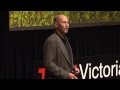
For those interested to know more about our profile cover picture of before and after please watch this excellent TEDx talk by Garth Lenz about the destruction of the Athabasca wetlands and forest in Canada through extraction of the tar sands for oil.

What does environmental devastation actually look like? At TEDxVictoria, photographer Garth Lenz shares shocking photos of the Alberta Tar Sands mining project -- and the beautiful (and vital) ecosystems under threat.