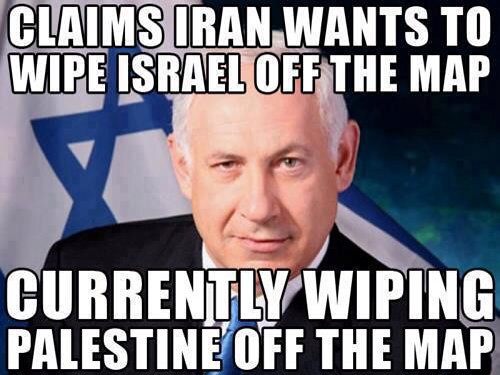
Fadi Quran, a Palestinian activist, set to appear in an Israeli court for the second time since his arrest on Friday.
Fadi Quran, a Palestinian activist, set to appear in an Israeli court for the second time since his arrest on Friday. The 24 year old Stamford graduate holds a double major in international relations and physics, was described by Time magazine as "the face of the new Middle East" was arrested in occupied Palestine West Bank for allegedly pushing a poor defenceless Israeli soldier.

As Palestinian “administrative detainee” Hana Al-Shalabi, 29, entered her eleventh day on hunger strike, her parents continued their own hunger strike in solidarity, against their daughter’s imprisonment without charge or trial by Israel.
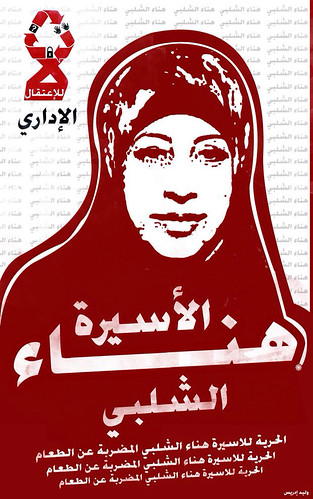
Hana was arrested from her home in Burqin village near Jenin on 17 February in the Israeli-occupied West Bank. She had previously spent two and a half years in administrative detention – with no charge or trial – from 14 September 2009, until she was released last October as part of a prisoner exchange deal between Israel and Hamas, according to updates posted by Addameer via itsTwitter and Facebook pages.
Meanwhile, al-Shalabi’s parents have been on hunger strike for three days, in a solidarity tent near next to their home in Burqin, and have called for international intervention to free their daughter and end the policy of administrative detention.
Samidoun, the Palestinian Prisoner Solidarity Network, has issued an action alert calling for people to take action to bring attention to Hana Al-Shalabi’s case.
Renewed attention to Israel’s widespread use of detention without charge came as a result of the 66-day hunger strike of Khader Adnan. Amnesty International called the deal which ended Adnan’s hunger strike “insufficient” and reiterated its demand that Israel end the use of detention without charge or trial.
Currently more than 300 Palestinians are in Israeli administrative detention, including 21 elected members of the Palestinian Legislative Council. More
Israel was the focus of discussions by the UN Committee on the Elimination of Racial Discrimination (CERD) earlier this month.

Israel is obliged to submit a report to the Geneva-based committee on how it has implemented the rights enshrined in the International Convention on the Elimination of All Forms of Racial Discrimination (ICERD) every two years.
However, Israel waited until this year to submit a series of reports that were formally due in 2006, 2008 and 2010.
The Committee on the Elimination of Racial Discrimination is a body of independent experts that monitors the implementation of the convention. ICERD states that that any doctrine of superiority based on racial differentiation is scientifically false, morally condemnable, socially unjust and dangerous, and that there is no justification for racial discrimination, in theory or in practice.
ICERD defines racial discrimination as “any distinction, exclusion, restriction or preference based on race, color, descent, or national or ethnic origin which has the purpose or effect of nullifying or impairing the recognition, enjoyment or exercise, on an equal footing, of human rights and fundamental freedoms in the political, economic, social, cultural or any other field of public life” (see International Convention on the Elimination of All Forms of Racial Discrimination).
Israel’s presented its last three bi-annual reports in one 183-page volume (see Reports submitted by States parties under article 9 of the Convention” 17 January 2011).
In addition, Palestinian and Israeli human rights organizations submitted shadow reports to inform the committee about the situation, and a designated UN rapporteur for Israel identified a list of themes as guidance for the discussions. After examination of all the reports, the committee will write its concerns and recommendations to Israel in its “concluding observations.”
The Russell Tribunal on Palestine submitted a shadow report about apartheid in Israel in January 2012, and delegated Michael Mansfield — one of its jurors — to address the committee. Mansfield is a well-known, respected attorney from the United Kingdom and is the president of the Haldane Society of Socialist Lawyers. The Electronic Intifada contributor Adri Nieuwhofinterviewed Mansfield in Geneva. More