Showing posts with label water. Show all posts

Friday, December 5, 2014

The injustices being inflicted by Israel on the Palestinians

Via Jonathan Cook, journalist

I did a brief speaking tour of Montreal and Ottawa in the spring during which I met many inspiring individuals finding their own ways to help from afar end the injustices being inflicted by Israel on the Palestinians.

One seminar I participated in was on the Jewish National Fund, a Zionist "charity" whose funds have been used to plant forests to conceal Israel's eradication of Palestinian villages during and after the 1948 war and which continues to ethnically cleanse Palestinians from areas like the Negev, or Naqab.

It's great to see that the organisers have put together a powerful short video presentation that shows pictorially what the JNF is really doing with those charitable donations.

http://youtu.be/rnm-HKf6MJU

Thursday, February 13, 2014

Undeniable discrimination in the amount of water allocated to Israelis and Palestinians

Following the Knesset debate today, B'Tselem publishes a short FAQ about inequality in the distribution of water between Palestinians and Israelis.

1. Is there discrimination in terms of the quantity of water available to Israelis and Palestinians?

Yes, there is discrimination in water allocation and Israeli citizens receive much more water than Palestinian residents of the West Bank and the Gaza Strip. The Government of Israel is largely responsible for this discrimination due its water policy: First, minimal amounts of water are supplied to Palestinians and water from shared resources is unequally divided; Second, existing infrastructure with high levels of water loss is not upgraded, no infrastructure is developed for communities that are not connected to the water grid and water infrastructure projects in areas located inside the Palestinian Authority are not approved. It is important to note that the water allocation for Palestinians was determined in the Oslo Accord, but the agreement included a plan to increase the supply. This plan never materialized. In addition, demand for water has increased due to population growth over the twenty years since the Oslo Accord was signed.

2. Are there gaps in water consumption between Israelis and Palestinians? Absolutely.

According to the Israeli national water company, Mekorot, the average household water consumption in Israel is between 100 and 230 liters per person per day. The World Health Organization recommends a minimum of 100 liters per person per day. This figure relates to urban consumption which includes drinking, food preparation and hygiene, and takes into consideration urban services such as hospitals and public institutions. Israelis living in the settlements, as well as inside Israel, generally have access to as much running water as they please.

This is not the case for Palestinians.

Palestinians living in the OPT can be divided into three groups according to the amount of water available to them, which is less than the Israeli average in all three cases:

  • Palestinians in the West Bank who are connected to the water infrastructure: The average daily consumption among Palestinians connected to a running-water network is about 73 liters. There are significant gaps between the various cities (169 liters per person per day in Jericho compared to 38 in Jenin). However, even those who are connected do not necessarily have access to running water throughout the day or the year, and water is supplied intermittently, following a rotation program. In many places in the West Bank, including city centers, residents must fill tanks with water, when it is available through the network and use it when running water is not available. Communities located at the edges of the water supply network and in high areas experience the water shortage more acutely and residents must buy water from private dealers at a much higher cost than the water supplied through the grid.
  • Palestinians in the West Bank who are not connected to the water supply network: About 113,000 people living in 70 communities, 50,000 of them in Area C. These residents are not included in the calculations of the public water authority. They rely on rainwater which they store in cisterns and on water sold in tanker trucks by private dealers. In the southern West Bank, about 42 communities consume less than sixty litres per person per day and shepherding communities in the northern Jordan Valley consume only twenty. Private dealers charge between 25 and 40 NIS per cubic meter, depending on the distance between the village and the water source. The price is up to three times that of the highest tariff Israelis pay for water for household consumption. In the summer months, the monthly household expenditure on water in communities that buy water from tankers is between 1,250 and 2,000 NIS, about half of the entire monthly household expenditure.
  • Palestinians in the Gaza Strip: Average consumption in the Gaza Strip is 70-90 liters per person per day, but the quality of the water is extremely poor. Ninety percent of the water pumped in Gaza is considered un-potable according to the standards set by the World Health Organization. For full and updated information on this issue.

3. Causes for gaps in water supply to Palestinians in the West Bank compared to Israelis:

  • The amount of water supplied to the entire West Bank: According to 2011 figures, the West Bank water supply was comprised of 87 million cubic meters pumped from official Palestinian water sources and 53 million cubic meters sold to the Palestinian Authority by Mekorot. About 51 million cubic meters of the water in the public water network was used for agriculture. According to the Israeli water authority (2009), an additional 10 million cubic meters of water are pumped from unauthorized wells, but this water is used for agriculture as well as drinking. According to Palestinian water authority figures, more than 2.3 Palestinians live in the West Bank. This means that under optimal conditions, the water supply (excluding the unauthorized wells) could have allowed domestic and urban consumption of 100 liters per person per day, but this is where the second factor affecting water consumption comes into play.
  • Water loss: There is extensive water loss on the public water grid in the West Bank - about 30%, and more in some locations. Water theft is also a widespread problem. The water infrastructure in the Palestinian Authority needs upgrading, but this is not possible without significant work in Area C, where every action requires Israeli approval at the joint water committee. Such approvals are rare. Even committee-approved projects may be delayed or stopped, due to restrictions imposed by the Civil Administration.
  • The Palestinian water network is managed by dozens of local water authorities without a coordinating mechanism. The inability to develop a nationally controlled water network, with reservoirs that could supply the needs of all residents is inextricably tied to the fact that every action in Area C requires Israeli approval. More


Tuesday, December 31, 2013

The Red Sea - Dead Sea canal

The agreement for the two seas Canal connecting the Red and Dead Sea was summed up best by Israeli water minister Silvan Shalam who jubilantly described it following the December 9 signing ceremony at the World Bank headquarters as "a historic agreement that realises ... the dream of (founder of modern Zionism Theodore) Herzl."

The canal was another strategic triumph for Israel's conniving diplomacy even after the project was reduced to about one-tenth of its original size due to serious economic and environmental concerns raised by the World Bank.

The Zionist-envisioned project was repackaged and sponsored by Jordan as a must to save the Dead Sea, and building a large desalination plant providing each Israel and Jordan with eight billion to 13 billion gallons of fresh water annually.

According to Israeli and international environmentalists, Israeli government's policies of over pumping from the Sea of Galilee and Jordan River - serving Jewish only colonies - was the main cause for the loss of nearly 30 per cents of the Dead Sea's mass in the last 50 years.

Herzl's repackaged vision includes articles tacitly granting Israel exclusive water rights in the supposedly shared Sea of Galilee and Jordan River's water. For the tri-party agreement empowers Israel to transfer close to 13 billion gallons of fresh water from those bodies to Jordan and to sell the state of Palestine 8bn gallons of drinking water at preferential prices.

Even more cynical is for the state of Palestine to purchase water from Israel -mind you at a special discount - while Israel continues to expropriate West Bank's water aquifers for the benefit of illegal Jewish-only colonies for free.

In addition to political concerns, environmentalists have warned that introducing new water composition from the Red sea brings a host of new invasive photosynthetic organisms which could lead to drastic negative consequences affecting the unique natural system of the Dead Sea.

Unlikely to solve the Dead Sea environmental degradation, international and Israeli environmentalists have alternatively suggested that "the reestablishment of the Jordan River to its natural state was a better solution to the decline of the Dead Sea than the proposed canal."

While it would receive roughly half of the desalinated water from the project, the 100 miles brine pipeline will run exclusively through Jordanian territories to circumvent objections by Israeli environmental groups.

Lacking proper environmental oversight, a credible rupture in the high saline pipeline - running along known active earthquake fault - would cause irreparable damage for a main source of Jordan's fresh groundwater in Wadi Araba.

Being the only party with positive return and no potential risks, the agreement provides Israel a free safety net to escape responsibility for the Dead Sea's environmental calamity while realising an old Zionist strategic military vision adding a natural water course on Israel's eastern borders. Economically, this project places Israeli water companies in a unique position to gain the most in building the waterway, associated desalination and power generation plants.

Jordan, on the other hand, is taking the biggest long term risk since a probable structural failure in the Canal system would lead to an incurable disaster for both the agriculture and ecosystem in the Jordanian valley.

In purchasing Israeli water, Palestine is sanctioning Israel's theft of its water aquifers from occupied West Bank, while allowing Israel to continue syphoning the only lifeline for the Dead Sea. More


Saturday, October 5, 2013

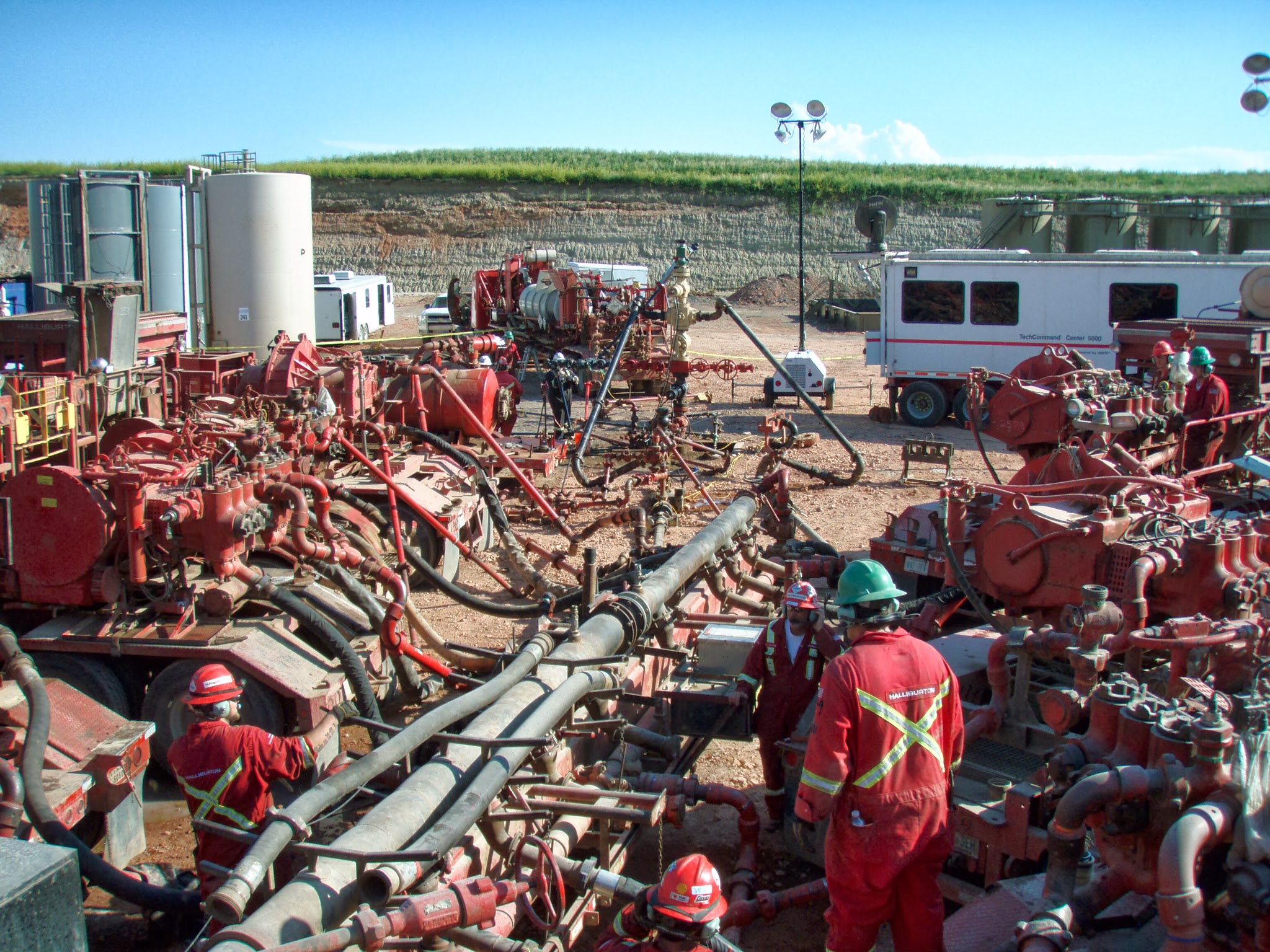
New Report First to Quantify Damage Done by Gas Drilling

“The numbers don't lie — fracking has taken a dirty and destructive toll on our environment. If this dirty drilling continues unchecked, these numbers will only get worse,” said John Rumpler, senior attorney for Environment America.

“At health clinics, we’re seeing nearby residents experiencing nausea, headaches and other symptoms linked to fracking pollution,” said David Brown, a toxicologist who has reviewed health data from Pennsylvania. “With billions of gallons of toxic waste coming each year, we’re just seeing the ‘tip of the iceberg’ in terms of health risks.”

The “Fracking by the Numbers” report measured key indicators of fracking threats across the country, including:

• 280 billion gallons of toxic wastewater generated in 2012,
• 450,000 tons of air pollution produced in one year,
• 250 billion gallons of fresh water used since 2005,
• 360,000 acres of land degraded since 2005,
• 100 million metric tons of global warming pollution since 2005.

Fracking also inflicts other damage not quantified in the report — ranging from contamination of residential wells to ruined roads to earthquakes at disposal sites.
Reviewing the totality of this fracking damage, the report’s authors conclude:

Given the scale and severity of fracking’s myriad impacts, constructing a regulatory regime sufficient to protect the environment and public health from dirty drilling — much less enforcing such safeguards at more than 80,000 wells, plus processing and waste disposal sites across the country — seems implausible. In states where fracking is already underway, an immediate moratorium is in order. In all other states, banning fracking is the prudent and necessary course to protect the environment and public health.

At the federal level, the report’s data on land destroyed by fracking operations comes as the Obama administration considers a rule for fracking on public lands, and as the oil and gas industry is seeking to expand fracking to several places which help provide drinking water for millions of Americans — including the White River National Forest in Colorado and the Delaware River basin, which provides drinking water for more than 15 million Americans.

Along with the new numbers in today’s report, Environment America’s John Rumpler added one more: the more than 1 million public comments submitted this summer to the Obama administration rejecting its proposed rule for fracking on public lands as far too weak. Environment America is urging President Obama to follow the recommendation of his administration’s advisory panel on fracking to keep sensitive areas as off-limits to fracking.

“We need decisive action from Washington to protect our communities,” said John Fenton, a rancher from Pavillion, Wyoming who last week appealed to federal officials to re-open an investigation into contamination of drinking water there.

“The bottom line is this: The numbers on fracking add up to an environmental nightmare,” said Rumpler. “For our environment and for public health, we need to put a stop to fracking.”
Of particular concern are the billions of gallons of toxic waste created from fracking, which threaten the environment, public health and drinking water. Environment America is calling on federal officials to close the loophole that exempts this waste from our nation’s hazardous waste law. Rep. Matt Cartwright (PA-17) has introduced the CLEANER Act, H.R. 2825, to close that loophole.

“The data from today’s report shows that fracking is taking a dirty and destructive toll on our environment and health,” said Rumpler. “It’s time for our federal officials to step up; they can start by keeping fracking out of our forests and away from our parks, and closing the loophole exempting toxic fracking waste from our nation’s hazardous waste law.” More

Download Report


Friday, October 4, 2013

A Fierce Green Fire - Trailer

Spanning 50 years of grassroots and global activism, this Sundance documentary brings to light the vital stories of the environmental movement where people fought -- and succeeded -- against enormous odds. From halting dams in the Grand Canyon to fighting toxic waste at Love Canal; from Greenpeace to Chico Mendes; from climate change to the promise of transforming our civilization, A Fierce Green Fire is "nothing less than the history of environmentalism itself." (Los Angeles Times)

From the Academy Award-nominated director of "Berkeley in the Sixties", and narrated by Robert Redford, Meryl Streep, Ashley Judd, Van Jones and Isabel Allende.

Sunday, June 30, 2013

The water is running out in Gaza: Humanitarian catastrophe looms as territory’s only aquifer fails

The Gaza Strip, a tiny wedge of land jammed between Israel, Egypt and the Mediterranean sea, is heading inexorably into a water crisis that the United Nations says could make the Palestinian enclave uninhabitable in just a few years.

With 90 to 95 per cent of the territory's only aquifer contaminated by sewage, chemicals and seawater, neighbourhood desalination facilities and their public taps are a lifesaver for some of Gaza's 1.6 million residents. But these small-scale projects provide water for only about 20 per cent of the population, forcing many more residents in the impoverished territory to buy bottled water at a premium. The UN estimates that more than 80 per cent of Gazans buy their drinking water. "Families are paying as much as a third of their household income for water," said June Kunugi, a special representative of the UN children's fund Unicef.

The Gaza Strip, governed by the Islamist group Hamas and in a permanent state of tension with Israel, is not the only place in the Middle East facing water woes. A Nasa study of satellite data released this year showed that between 2003 and 2009 the region lost 144 cubic kilometres of stored freshwater – equivalent to the amount in the Dead Sea – making a bad situation much worse.

But the situation in Gaza is particularly acute, with the UN warning that its sole aquifer might be unusable by 2016, with the damage potentially irreversible by 2020. Between 5 and 10 per cent only of the aquifer's water is safe to drink, but even this can mix with poor-quality water during distribution, making it good only for washing.

"The tap water from the municipality is not fit to drink, and my husband is a kidney patient," said Sahar Moussa, a mother of three, who lives in a cramped, ramshackle house in Khan Younis in the southern Gaza Strip, near the Egyptian border. She spends 45 shekels (£8.20) each month – a large sum for most Palestinians in the area – to buy filtered water that she stores in a 500L plastic tank.

Further complicating the issue is Israel's blockade of the Gaza Strip, which activists say has prevented the import of materials needed for repairs on water and waste facilities. Israel says the blockade is necessary to prevent arms from reaching Hamas, which is opposed to the existence of the Jewish state.

With no streams or rivers to speak of, Gaza has historically relied almost exclusively on its coastal aquifer, which receives some 50 to 60 million cubic metres of refill each year thanks to rainfall and run-off from the Hebron hills to the east. But the needs of Gaza's rapidly growing population, as well as those of the nearby Israeli farmers, means an estimated 160 million cubic metres of water is drawn from the compromised aquifer each year. As the levels sink, seawater seeps in from the nearby Mediterranean. This saline pollution is made worse by untreated waste, with 90,000 cubic metres of raw sewage allowed to flow into the shallow sea waters each day from Gaza, according to UN data.

Even with the aquifer, regular running tap water is a luxury unknown to many Gazans. People living across the territory say that during the summer months water might spurt out of their taps every other day, and the pressure is often so low that those living on upper floors might see just a trickle.

Many families have opted to drill private wells drawing from water deep underground. Authorisation is required but rigid restrictions mean that most households dig their wells in secret. Hired labourers erect large plastic sheets to try to hide their work from prying neighbours. "As you can see, this is like a crime scene," said a 45-year-old father of six, who gave his name as Abu Mohammed. A clothes merchant from Gaza city, he paid his clandestine, seven-strong crew £2,300 to drill a well and came across water at a depth of 48 metres. "We begin the work after sunset and... cover the sound of digging with music," he said. A senior Israeli security official estimates that as many as 6,000 wells have been sunk in Gaza, many without authorisation.

While Israel shares the polluted aquifer, which stretches all the way to Caesarea, about 37 miles north of Tel Aviv, the problem is less acute than in Gaza which is downstream. In addition, Israel can access water from the Sea of Galilee and the mountain aquifer that also spans the West Bank.

As Gaza borders the sea, the obvious answer is desalination. Gaza already hosts 18 small plants, one treating seawater, the others water from brackish wells – most of them supplied by Unicef and Oxfam.

The Palestinian Water Authority has started work on two new seawater desalination plants and is planning a third, larger facility, which is designed to produce 55 million cubic metres of water a year. But with funding for the $450m (£295m) project still uncertain, construction is not due to start until 2017. By that time, cash-strapped Gaza may not have enough electricity available to power the energy-intensive plants. The UN estimates that Gaza needs an additional 100 megawatts of production capacity even before the big water facility is built.

Israel is trying to drum up aid for Gaza, the senior security official said, alarmed at the prospect of a looming water catastrophe and possible humanitarian crisis on its doorstep. "We have talked to everyone we know in the international community because 1.4 million people will be without water in a few years," he said, asking not to be named because of the issue's sensitivity. He said Israel, a leader in the desalination industry, was helping to train a few Gazans in the latest water technology, which the Palestinian Water Authority (PWA) confirmed.

Rebhi El Sheikh, deputy chairman of the PWA, has called on international donors to help fund energy, water and sewage projects, warning of disaster if nothing happens. "A small investment is needed to avoid a bigger one, and it is a humanitarian issue that has nothing to do with politics or security," he said.

Water wars

Water scarcity has become a growing problem in the Middle East, East Africa and the US.

Although the Middle East has experienced water scarcity for quite some time, Jay Famiglietti, principal investigator of a recently published Nasa study, has said that there was an "alarming rate of decrease in total water storage in the Tigris and Euphrates river basins, which currently has the second fastest rate of groundwater storage loss on Earth, after India". With tensions already high in this region, water scarcity could become another cause of conflict.

Sub-Saharan Africa is one of the driest regions in the world. East Africa, in particular the Nile River basin, has seen conflict rise over who controls fresh water supplies. Due to limited resources, the Sudanese civil war between 1983 and 2005 became a struggle over territory which in turn led to conflicts over water supplies. The impact on the population and irrigation of the country would be substantial. After 22 years of fighting, 400,000 people were killed and 2.5 million were displaced from their homes.

Water cleanliness is an issue that is having considerable impact on sub-Saharan Africa. According to the charity WaterAid, 16.4 million people in Kenya and 43.4 million people in Ethiopia don't have access to safe water.

The US is also facing significant strain on fresh-water supplies. According to WaterSense, a partnership program of the US Environmental Protection Agency: "Nearly every region of the country has experienced water shortages. At least 36 states are anticipating local, regional, or state-wide water shortages" this year, "even under non-drought conditions". More


Saturday, June 8, 2013

Israeli rabbis commit atrocity against Jewish history

When settlers and Rabbis called the policemen and soldiers of Israel “Nazis”, hardly anyone spoke out. When I voiced criticism over this, I received phone threats.

Yoram Kaniuk


Then, last week, when MK and MD Professor Aryeh Eldad sided with rabbis who warned their flock not to rent or sell property to non-Jews, I remembered that in Nazi Germany many physicians also identified with Hitler. The term “Nazi” now lingers once more in the air, but on the opposite side to that of settlers who swore at soldiers. The word “Nazi” now lingers because the Rabbis who signed the racist declaration committed an atrocity against Jewish history.

A duck may be declared as such if it looks like a duck, talks like a duck and walks like a duck. Nazis began their assault on Jews by by humiliating them, by forbidding them to share life with Germans. The benches on the boulevards were marked “Germans only”. The Nazi claimed that only someone possessing of pure German blood could be a part of the German nation.

Rabbis and other racists, who popped up like mushrooms following a rain of anti-humanist sewage, fear dangerous encounters between Jews and Arabs or life among gentiles. Much in the same did the Nazis, unlike the Italian fascists, fear intermarriage and launch campaigns of defamation and humiliation against their resident enemy. At first they did not consider murdering the Jews. The wanted to isolate them, to discriminate against them, to have them fired from their workplaces. They refused to share a park-bench with them and called on them to immigrate.

Those who wished to immigrate and had the opportunity could flee, even with their assets. Prior to becoming the driver of Jews to their death, Adolf Eichmann worked in Vienna and later in Prague as the head of a state agency devoted to forcing immigration on the Jews. The Nazis wanted the Jews out of Europe, which, in their eyes, they had soiled. Annihilation began only after the Nazis could no longer await immigration and the nations of the world refused to receive the refugees.

Thus, the racist actions committed by the Rabbis and by much of Israel’s population today is old-school racism which we are adopting sixty five years after the Holocaust. Pure German blood massacred the Jews. Jewish law is rich with goodness and rich with ugliness, but when Rabbis speak on television about wanting to expel Arabs from this land and not co-reside with them, we must remember of whom these rabbis and other racists learned their craft.

This is because if anyone who voices such opinions and acts according to them at home and on the street would look at the map knowing its measure, they will understand that none of it would work without a horrible punitive action. There’s hardly enough in a decree forbidding Arabs from living in the town of Safed or a housing project for Jews only built in Jaffa, or in the occupied territories of the West Bank. There, the expulsion, the robbing and the beating of anyone who isn’t Jewish has already been permitted by Jewish law.

All that’s left for them then is annihilation, otherwise the Arabs will avenge, helped by the international community. This may well be the case, and just as the Nazi state crumbled so will this Israeli state, so distant from the culture of Israel, from the values of Israel, from the wisdom of Israel. Those who do not know history and do not know the Holocaust turn the Holocaust into a rope by which to hang and hate those who live here and are not of our own: the immigrant workers, the children of mixed marriages and non-Jews in general.

One rabbi, interviewed on television this week, was shocked to hear blasphemous Rabbis being called “racists”. Nearly in a cry, with his startled eyes shut, he said something like “how can the word racism could ever be said in relation to Rabbis?”

These are the crooked and corrupt, because the word “racists” weighs heavy on that vacant and vehement fool and reminds him, heavens forbid, of the Holocaust. What does it do? Remind him? And this is while all that was ever done in the struggle of religious Zionism against Jewish nationalism, against the gentiles, against the God of Israel, is all racism in the spirit of the Nurnberg laws.

Had that God existed, then I assume, grace of first hand acquaintance, he wouldn’t have wanted to see “National Wailing Wall” in Jerusalem as a sort of pagan golden calf taken for Jewish by them, its plaza split into separate sections for men, women, gentiles and foreigners. It is much like the “gold-less” calf that the Jews had when they left Egypt, and was surely created of looted Egyptian jewelry, or where else would the gold come from?

Soon the nations of the world will declare their acceptance of a Palestinian state in accordance with the 1967 borders. Israel will stand alone. Will the Jews of this world, whom Israel’s Rabbis put at risk, accept the verdict? And what then of the State of Israel? It shall become another episode in the history of the Jewish people. More


Wednesday, March 27, 2013

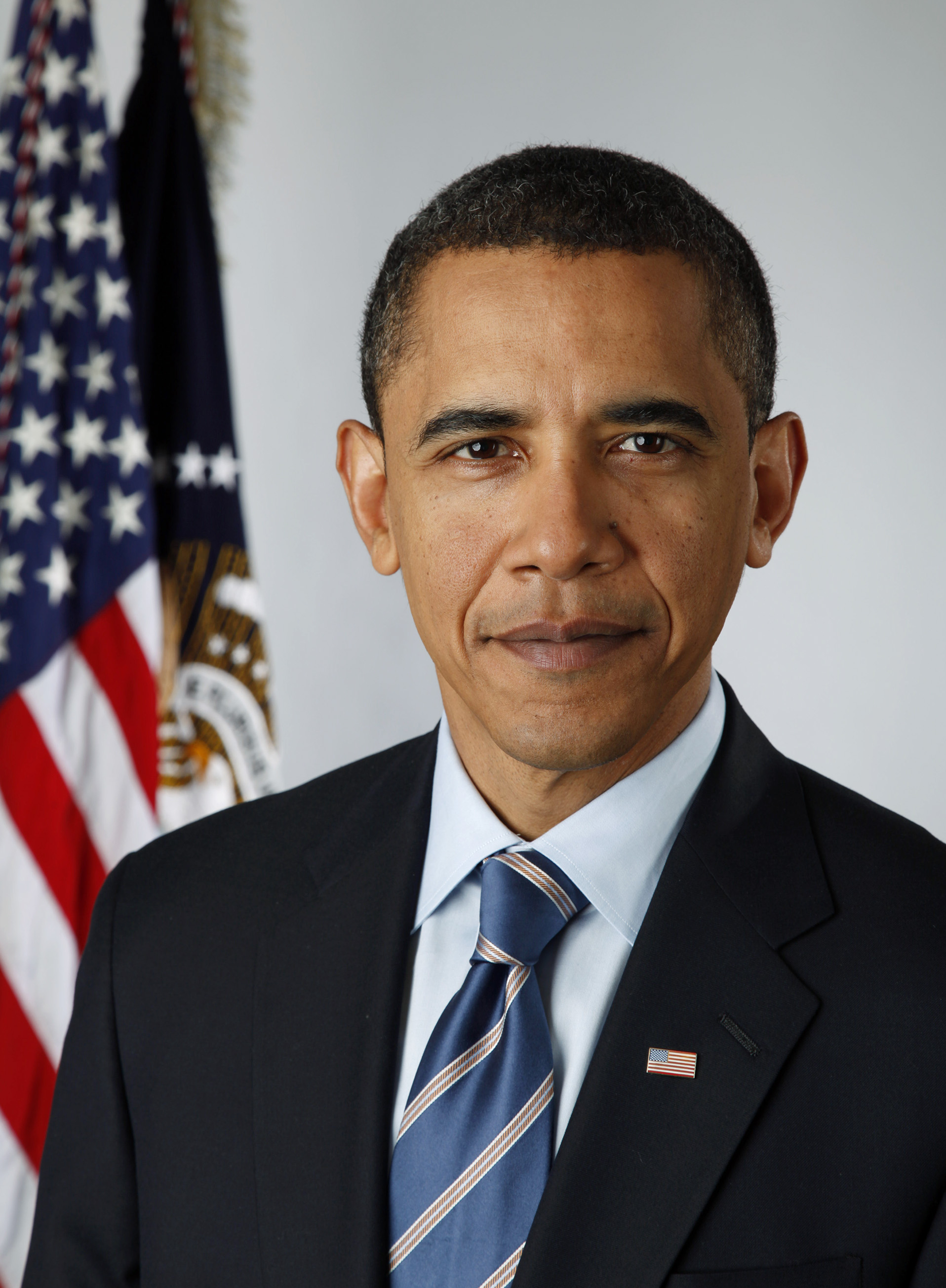
What Was Wrong With Obama’s Speech In Jerusalem by Richard Falk

It was master-crafted as an ingratiating speech by the world’s most important leader and the government that has most consistently championed Israel’s cause over the decades. Enthusiastically received by the audience of Israeli youth, and especially by liberal Jews around the world.

Despite the venue, President Obama’s words in Jerusalem on March 21st seemed primarily intended to clear the air somewhat in Washington. Obama may now have a slightly better chance to succeed in his second legacy-building presidential term despite a deeply polarized U.S. Congress, and a struggling American economy if assessed from the perspective of workers’ distress rather than on the basis of robust corporate profits.

As for the speech itself, it did possess several redeeming features. It did acknowledge that alongside Israeli security concerns “Palestinian people’s right of self-determination, their right to justice must also be recognized.” This affirmation was followed by the strongest assertion of all: “..put yourself in their shoes. Look at the world through their eyes.” To consider the realities of the conflict through Palestinian eyes is to confront the ugly realities of prolonged occupation, annexationist settlement projects, an unlawful separation wall, generations confined to the misery of refugee camps and exile, second-class citizenship in Israel, ethnic cleansing in Jerusalem, and a myriad of regulations that make the daily life of Palestinians a narrative of humiliation and frustration. Of course, Obama did not dare to do this. None of these realities were specified, being left to the imagination of his audience of Israeli youth, but at least the general injunction to see the conflict through the eyes of the other pointed the way toward empathy and reconciliation.

Obama also encouraged in a helpful way Israeli citizen activism on behalf of a just peace based on two states for two peoples. A bit strangely he urged that “for the moment, put aside the plans and process” by which this goal might be achieved, and “instead..build trust between people.” Is this not an odd bit of advice? It seems a stretch to stress trust when the structures and practice of occupation are for the Palestinians unremittingly cruel, exploitative, and whittle away day after day at the attainability of a viable Palestinian state. But this farfetched entreaty was coupled with a more plausible plea: “I can promise you this: Political leaders will never take risks if the people do not push them to take some risks. You must create the change that you want to see. Ordinary people can accomplish extraordinary things.” There is some genuine hope to be found in these inspirational words, but to what end given the present situation.

In my opinion the speech was deeply flawed in three fundamental respects:

>> by speaking only to Israeli youth, and not arranging a parallel talk in Ramallah to Palestinian youth, the role of the United States as ‘dishonest broker’ was brazenly confirmed; it also signaled that the White House was more interested in appealing to the folks in Washington than to those Palestinians trapped in the West Bank and Gaza, an interpretation reinforced by laying a wreath at the grave of Theodor Herzl but refusing to do so at the tomb of Yasir Arafat. This disparity of concern was further exhibited when Obama spoke of the children of Sderot in southern Israel, “the same age as my own daughters, who went to bed at night fearful that a rocket would land in their bedroom simply because of who they are and where they live.” To make such an observation without even mentioning the trauma-laden life of children on the other side of the border in Gaza who have been living for years under conditions of blockade, violent incursions, and total vulnerability year after year is to subscribe fully to the one-sided Israeli narrative as to the insecurity being experienced by the two peoples.

>> by speaking about the possibility of peace based on the two state consensus, the old ideas, without mentioning developments that have made more and more people skeptical about Israeli intentions is to lend credence to what seems more and more to be a delusionary approach to resolving the conflict. Coupling this with Obama’s perverse injunction to the leaders of the Middle East that seems willfully oblivious to the present set of circumstances makes the whole appeal seem out of touch: “Now’s the time for the Arab world to take steps towards normalizing relations with Israel.” How can now be the time, when just days earlier Benjamin Netanyahu announced the formation of the most right-wing, pro-settler government in the history of Israel, selecting a cabinet that is deeply dedicated to settlement expansion and resistant to the very idea of a genuine Palestinian state? It should never be forgotten that when the Palestinian Liberation Organization announced back in 1988 that it was prepared to make a sustained peace with Israel on the basis of the 1967 borders. By doing this, the Palestinians were making an extraordinary territorial concession that has never been reciprocated, and operationally repudiated by continuous settlement building. The move meant accepting a state limited to 22% of historic Palestine, or less than half of what the UN had proposed in its 1947 partition plan contained in GA Resolution 181, which at the time was seen as grossly unfair to the Palestinians and a plan put forward without taking account of the wishes of the resident population. To expect the Palestinians to be willing now to accept significantly less land than enclosed by these 1967 borders to reach a resolution of the conflict seems highly unreasonable, and probably not sustainable if it should be imprudently accepted by the Palestinian Authority.

>> by endorsing the formula two states for two peoples was consigning the Palestinian minority in Israel to permanent second-class citizenship without even being worthy of mention as a human rights challenge facing the democratic Israel that Obama was celebrating. As David Bromwich has pointed out [“Tribalism in the Jerusalem speech,”] http://mondoweiss.net/2013/03/tribalism-jerusalem-speech.html Obama was also endorsing a tribalist view of statehood that seem inconsistent with a globalizing world, and with secularist assumptions that a legitimate state should never be exclusivist in either its religious or ethnic character. Obama went out of his to affirm the core Zionist idea of a statist homeland where all Jews can most fully embrace their Jewishness: “Israel is rooted not just in history and tradition, but also in a simple and profound idea: the idea that people deserve to be free in a land of their own.” And with embedded irony no mention was made of the absence of any Palestinian right of return even for those who were coerced into fleeing from homes and villages that had been family residences for countless generations.

Such a regressive approach to identity and statehood was also by implication attributed to the Palestinians, also affirmed as a a lesser entitlement. But this is highly misleading, a false symmetry. The Palestinians have no guiding ethno-religious ideology that is comparable to Zionism. Their quest has been to recover rights under international law in the lands of their habitual residence, above all, the exercise of their inalienable right of self-determination in such a manner as to roll back the wider claims of settler colonialism that have been so grandiosely integral to the Greater Israel vision and practice of the Netanyahu government. And what of the 20% of the current population of Israel that lives under a legal regime that discriminates against them and almost by definition is a permanent consignment to second-class citizenship. Indeed, Obama’s speech was also an affront to many Israeli post-Zionists and secularists who do not affirm the idea of living under in a hyper-nationalist state with pretensions of religious endowments. More


Monday, March 25, 2013

Israel appropriates 82% of Palestinian water

A Palestinian water expert has criticised the 1993 Oslo Peace Agreement signed between the Palestinians and the Israelis for giving Israel the right to control Palestinian water.

The Director of the Association of Palestinian Hydrologists, Abur-Rahman Al-Tamimi, said: "The Oslo Agreements gave control over basic water resources to the Israelis. The role of the Palestinian side was limited to serving it."

During a discussion panel in Ramallah, Al-Tamimi said: "The problem emerged when the Palestinians agreed to postpone the issue of water to final status negotiations. They did not even discuss the issue of irrigation water." He said the Israelis steal about 82 per cent of Palestinian water.

Al-Tamimi severely criticised the "Palestinian negotiators who ignored the rights of the Palestinians regarding water."

At the same time, he said: "The agreements laid down the right of the Israelis to the water of the River Jordan. It also laid down their rights to veto against any future talks regarding it."

The Palestinian expert also added: "The agreements included the rights of the Israeli to control all Palestinian water wells."

Regarding the future of Palestinian water, Al-Tamimi said: "As the Israelis completely control Palestinian water resources, future conflict in the region will be over water resources." More


Friday, March 22, 2013

Why Palestinians Have No Water - and No, It's Not That Palestine Has No Water by Abby Zimet

In honor of the U.N.'s World Water Day, new graphics from Visualizing Palestine show what happens to the water in Ramallah, which gets more annual rainfall than London. And no, it doesn't go to Palestinians. It just should. Ideas for equity from the Thirsting for Justice Campaign.

More


Saturday, March 9, 2013

Researcher uncovers hidden facts of Israeli-Palestinian water politics

The Israeli government has been forcing the Palestinian Authority into approving water infrastructure for illegal West Bank settlements for the past 15 years, according to research by a University of Sussex academic.

The research by Senior Lecturer in International Relations Dr Jan Selby is published today (5 February 2013) in the journal Water Alternatives.1

It presents the first known evidence of the Palestinian Authority lending its official consent to parts of Israel’s settlement expansion programme.

Settlements and related infrastructure are illegal under international law, and are recognised as one of the major obstacles to a two-state solution to the Israeli-Palestinian conflict.

The research is based on minutes of the Joint Water Committee – an Israeli-Palestinian body often upheld as an example of good Israeli-Palestinian relations – and interviews with participants. Dr Selby concludes that:

  • Israel has repeatedly made its approval of improvements to Palestinian water supplies conditional upon Palestinian Authority approval of new water facilities for Israeli settlements;
  • the Palestinians, who face serious water shortage issues and an underdeveloped supply system, have given this approval in almost every case;
  • the arrangement was known about by former Palestinian leader Yasser Arafat and current President Abu Mazen;
  • international donors have known that Israel’s approval of donor-funded projects for Palestinians is conditional on Palestinian approval of Israeli settlement infrastructures, but have preferred to remain silent on the issue;
  • the Palestinian water crisis in the West Bank has significantly worsened since the creation of the Joint Water Committee.


Dr Selby says: “None of the parties emerge very well from these findings. Israel has been exploiting Palestinian desperation for improved water supplies. The Palestinian Authority has been pressured into consenting to its own colonisation and has not contested Israel’s cynical tactics as forcefully as it might have done.

“And international donors have variously stood by or been complicit in activity which is contrary to international law, and contrary to their own policies on the peace process, and which has helped to undermine the possibility of a two state solution.” More


Friday, March 1, 2013

The unequal right to water in unrecognized Bedouin villages

On February 20, the Israeli Supreme Court dismissed an appeal by residents of the unrecognized Bedouin village of Umm El-Hiran in the Naqab (Negev), demanding minimum access to drinking water. which holds 500 residents.

The appeal was filed by Adalah, the Legal Center for Arab Minority Rights in Israel on behalf of the village’s 500 residents.

The residents of the village Umm El-Hiran arrived in 1956 when they were forced to move there by the Israeli military commander. Today, 58 years later, they get their drinking water from a water tank provided by the Israeli Water Authority, which decided to locate the tank eight kilometers away from the village. Alternately, the residents can to purchase drinking water from a private family that lives four kilometers away. The latter option is complicated by the fact that there are disputes between some villagers and that private family. More importantly, the family charges a higher price for water than the one set by the Water Authority.

In other words, although the state is responsible for providing drinking water directly and equally to all its citizens, the village residents can either get the water by themselves from the water tank a lengthy distance away or live under the grace of a private family and pay more than all other citizens. Meanwhile, the nearby Jewish community of “Amos,” which consists of only one family numbering a few persons, is connected to water infrastructure that reaches directly to their home with proper facilities – just like the other 30 or more individual Jewish settlements in the Naqab.

The Supreme Court’s decision in February ended an eight-year legal struggle in different Israeli courts. This situation did not come about as a result of lack of natural resources but rather because of an intentional governmental policy not to connect Umm El-Hiran, as well as another 90,000 other Bedouin living on their ancestral lands in 34 unrecognized villages, which are unconnected to water sources to this day. The government has made it clear that the policy is intended to pressure and coerce the Bedouin residents to leave their land by denying them services. The purpose of this evacuation policy is to enable the establishment of new Jewish towns on the same land, create industrial zones under the jurisdiction of Jewish towns or even for the mere purpose of forestation.

This court decision follows a previous ruling issued by the Israeli Supreme Court in June 2006, which dealt with the villagers’ demand to connect their houses to drinking water infrastructure. In a precedent ruling, the court held that the right to water is part of the constitutional right to minimum standard of living, which itself is anchored in the constitutional right to dignity. However, it ruled that citizens living in those unrecognized villages are not entitled to a direct connection to drinking water in their homes. The court basically accepted the state’s argument that the purpose of the refusal to connect the villages to water is the fact they are not recognized by the state, and thus the villagers are trespassers. As such, they are not entitled to any of these services, no matter how basic and essential, including water, electricity, education and health, etc.

The state also declared in court that if it connects the unrecognized villages to water it will “encourage the continuing phenomenon of the unrecognized villages,” and thus by denying permanent water sources it can create an “incentive for the Bedouins to move to villages established by the state itself” – further evidence that the state is using the water issue to pressure villagers to evacuate their land. The court confirmed that the purpose of this policy is adequate and reasonable.

However, the court added that the villagers are entitled to minimum access to water, as an essential resource, without defining “minimum access.” The only exception for which the court allowed direct water connection to the residents’ houses was for “special humanitarian considerations.” After reviewing the case of Umm El-Hiran, the court concluded it is not clear that the water tank eight kilometers away meets the criteria of “minimum access,” and ruled that their case should go back to the Water Authority for re-examination. Adalah appealed on behalf of the villagers to the Water Authority to reconsider providing “minimum access” to water closer to the village; the Authority dismissed the request. Adalah’s next appeal, to the Water Tribunal, was dismissed as well.

As a result the case reached the Supreme Court again. This late action resulted in the most recent court decision, which once again justified the government’s policy of “encouraging” the villagers to move from their lands while declaring again that the current circumstances sufficiently meet the “minimum access” to water criteria.

With this ruling, the court established that the rule of law does not apply to Bedouin citizens of Israel. In upholding the state’s argument that denying the water could pressure Bedouin citizens to move from their land and that the villagers are entitled to “minimum access” to water rather than “equal access” like other citizens, the Israeli court basically justified the refusal to connect citizens to drinking water as a tool for punishing all Bedouin who refuse to leave their land. This goes hand-in-hand with the fact that Israeli authorities intentionally resist recognizing Bedouin land ownership rights.

The resulting situation is intolerable for a country that claims to be a democracy, but it is tolerable for a country that defines itself only as a “Jewish state.” The court refused to acknowledge that this group of its citizens is entitled to “equal” access to water, sticking instead with “minimum access.” That places Bedouin citizens on a lower level than other Israeli citizens in terms of constitutional rights. More


Tuesday, February 19, 2013

The ethnic cleansing of the Jordan Valley

Consider the following quotation, taking into account its moral, political and legal implications:

Map: ARIJ) Click to enlarge

‘You don’t simply bundle people onto trucks and drive them away ... I prefer to advocate a more positive policy, to create, in effect, a condition that in a positive way will induce people to leave’ (PDF)

This is Ariel Sharon, former Prime Minister of Israel, speaking about the Palestinians who inhabit Israel’s most prized territory after Jerusalem -- the Jordan Valley. Just over a quarter of the West Bank and stretching 70km along the River Jordan from the Dead Sea in the south to Israel’s border in the north, the Jordan Valley is now home to some 50,000 Palestinians and over 9,000 Israeli-Jewish settlers, who live in what one Palestinian NGO described as ‘Parallel Realities’.

Israel has long-coveted the Jordan Valley. Shortly after the Knesset approved Oslo II, Prime Minister Yitzhak Rabin declared, “the security border to protect the State of Israel will be set in the Jordan Valley, in the broadest meaning of this term.” The view of this supposedly ‘liberal Zionist’ PM is mirrored by that of current Israeli Prime Minister Benjamin Netanyahu who declared that the army “must remain along the Jordan River in any future agreement.” Reflecting the prioritisation of the Jordan Valley even over other settlement areas in the West Bank, settlers receive exorbitant incentives to move there Israel has declared the entire West Bank, or Judea and Samaria as it stubbornly refers to it, as a ‘National Priority Area’ bringing subsidies for housing, free education and tax cuts, whilst settlers told Ma’an Development Center that the Jordan Valley remains the cheapest to move to through incentives.

The dichotomy in living standards between Palestinians and Israeli settlers in the West Bank has drawn a series of analogies between the Jewish state and the apartheid state of South Africa. John Dugard, who hails from the latter and was UN special rapporteur to the Palestinian territories, has called for the International Court of Justice to rule on whether apartheid is practised there or not, and his views have been echoed by Richard A. Falk, his successor in the UN role. Yet in the Jordan Valley, elements of Israel’s policy clearly go far beyond the legal definition of apartheid. The annexation of territory and imposition of impossible living standards on the Palestinians forcing them to move most closely resembles ethnic cleansing. Or as Ariel Sharon euphemistically puts it in the earlier quotation, Israel is "inducing people to leave".

Accusations of ethnic cleansing have also been levelled against Israel, albeit with less coverage than the apartheid analogy. Richard Falk has asked that the ICJ investigate Israel’s ethnic cleansing of Palestinians from East Jerusalem, whilst Israeli historian and political activist Ilan Pappe, author of The Ethnic Cleansing of Palestine, has persuasively argued that actions by Jewish paramilitaries to forcibly transfer 700,000 Palestinians during 1947-49 merit the label of ‘ethnic cleansing’. The term is gaining ground. Given there are several reports of forced displacement and transfer of Palestinians from the Jordan Valley into other areas of Palestine, it would appear that ethnic cleansing may be taking place in that region through the slow and silent destruction of the means of life for Palestinians.

The legal definition of ethnic cleansing is somewhat vague. Unlike the crime of apartheid, which is mentioned in several conventions of international law and the Rome Statue of the International Criminal Court, there is no widely acknowledged prohibition on ethnic cleansing. Palestinian legal monitor Al Haq has argued, ‘It seems that “ethnic cleansing” is a composite term that covers various violations of IHL (International Humanitarian Law), such as the grave breach of “unlawful deportation or transfer” of a civilian (Article 147 of the Fourth Geneva Convention).’ As previously mentioned, UN Special Rapporteur Richard Falk has used the term to describe Israel’s policy of creating an ethnically-pure or Jewish-dominated East Jerusalem, whilst the UN Security Council has passed resolutions condemning ethnic cleansing in the former Yugoslavia. Additionally, the International Criminal Court regards ‘forcible transfer of population’ as a crime against humanity. When this transfer is based on ethnic criteria as in East Jerusalem, it could be argued ethnic cleansing has occurred. In the former Yugoslavia the ethnic cleansing was not just confined to massacres but as the International Criminal Tribunal for Yugoslavia stated, “Serb municipal authorities and Serb forces created severe living conditions for Muslims and Croats which aimed, and succeeded, in making it practically impossible for most of them to remain.” This is Israel’s policy in the Jordan Valley.

A series of policies combine to make life as difficult as possible in the Eastern portion of the West Bank along the Jordan, including restricting movement, healthcare, water resources and stifling economic development. The combination of policies has been described by the UN’s Human Rights Council as having a devastating effect. With reference to Area C, which comprises 95% of the Jordan Valley, ‘79% of the communities surveyed recently do not have enough nutritious food; this is a rate higher than in blockaded Gaza, where it is 61%.’ Ma’an Development have carried out numerous highly informative reports on the Jordan Valley region, where they have described a contrast between Israeli settlers and Palestinians that is even more acute than the rest of the West Bank. More


Thursday, November 15, 2012

A Land Given Them by God

First of all. The 'jews', as they define themselves, as others also define them, unfortunately so, as an ethnically homogenous group (they’re not and that shouldn’t matter anyway), have reason to be paranoid, reason to be distrustful about the motives of the world.

The question is how long the rest of us should put up with it, should allow our collective, bad conscience let the isreali government get away with anything.

Any horrible act, any atrocity, at least in intention, if not yet in scope, easily comparable to what the nazis (and the world’s silence then) did to «them».

They favor the collective punishment method, like the nazis did. When their enemies send one rocket into Israel, they return a thousand, a reign of bombs and destruction. When one single soldier is killed (god forbid) they kill thousands of men, women and even children on the other «side». When a few soldiers are kidnapped, or rather taken prisoners of war, they start yet another war, yet another campaign of terror on occupied territories and neighboring countries. The Middle East has become their playground, their sandbox, where they can turn over everything repeatedly, where they can do practically anything with impunity, without anyone doing anything about it.

This isn’t a war. This is a one-sided, single-minded massacre of perceived enemies.

«The eggs turn to lice», a united states general has been quoted as saying during the genocide of the american natives, and this is obviously how the israeli government and the forces behind it view Palestinian children. They show that by their action almost daily. Even many conservative politicians, including the former norwegian prime minister Kåre Willoch, have grown to realize and advocate the obvious truth: that israel is the occupying force in Palestine. He visited the refugee camps Sabra and Shatila in Lebanon in the eighties, and saw for himself the results of israeli occupation and general policy.

So Palestine is occupied, as defined by international law, and as such, the Palestinian people have the right and even the duty to defend themselves and do everything in their power to fight the occupier, like any occupied land and people have done throughout recorded history. But it is an uneven struggle. It often is. But in this case the term «David and Goliath» is truer than it ever was. The way things are today any Palestinian resistance can never be any more than a gnat swatted by the israeli giant swatter. Only true international pressure can sway the fourth greatest military power on the planet. Only full and complete adherence to the countless (useless) UN resolutions is acceptable.

Israel must be threatened by both economic sanctions and military blockade. Though it would be more than sufficient if the united states, their major benefactor, would withhold their aid, both economic and political. Then the horrible military machine of the Apartheid state would crumble and fade, as it should. And: Israel is, even more so than other states, an artificial construct, and should never have existed in the first place. More


Friday, November 2, 2012

Israeli Ministry of Tourism map annexes over 60% of the West Bank

Is Israel preparing to annex Area C, as a growing number of analysts have recently been speculating?

This week, on a visit to the Israel’s tourism bureau in Nazareth, I came across an official brochure, “Your Next Vacation: Israel”, that suggests the answer. The brochure is supplied to travel agents around the world as well as to hundreds of thousands of tourists who arrive in Israel each year.

Inside is a map, produced by the Ministry of Tourism, that shows both Israel and the occupied territories. Helpfully, it incorporates Israel’s interpretation of the territorial demarcations created by the Oslo Accords of the mid-1990s.

Oslo divided the West Bank into three parts temporarily – for a period of five years – while Israel and the Palestinians were supposed to negotiate a final-status agreement that, it was widely assumed, would lead to the creation of a Palestinian state in the West Bank, Gaza and East Jerusalem.

Area A, the smallest part of the West Bank and restricted chiefly to the main Palestinian cities, was placed under the full control of the newly created Palestinian Authority.

Area B, mainly covering the areas around the cities, was under the shared control of the PA and Israel, with Israel taking charge of security matters and the Palestinians responsible for civil affairs.

Today, Areas A and B together cover about 39 per cent of the West Bank.

But by far the largest portion of the West Bank, Area C, was handed over to Israel’s full control. It was assumed by most observers that this land, 61 per cent of the West Bank, would eventually become the territorial bulk of a future Palestinian state.

Over the past two decades, however, Israel has used its hold over Area C – and the lack of an agreement, due to its own intransigence – to entrench and expand the settlements there.

There are now nearly 350,000 Jewish settlers living in more than 250 settlements and outposts dotted all over Area C (a further 200,000 settlers live in East Jerusalem). These settlers, backed by Israeli soldiers and a network of civilian and military bureaucrats, have created a reign of terror that has gradually encouraged Palestinians in Area C to migrate to the cities, still nominally under Palestinian Authority control.

There were once hundreds of thousands of Palestinians in Area C, most making their living from agriculture. Today, some estimates put that number below 100,000, but the population is certainly no higher than 150,000. Of these, most live in extreme poverty and insecurity:

  • their homes are liable to be demolished at any moment;
  • they can access water expensively and intermittently from water-trucks only;
  • their livelihoods as farming communities are under constant threat from water shortages, land confiscations and the walls and fences Israel constantly erects to divide up their holdings;
  • and their physical safety is threatened by attacks from ever-more fanatical settlers living nearby.
Further, what the Oslo Accords assumed would be Israel’s temporary control of Area C has become effectively permanent – part of what the Israeli Supreme Court recently acknowledged as Israel’s “prolonged occupation” of the West Bank. More


Thursday, October 4, 2012

The new expropriation regime in the West Bank

Week 2362 of Occupation

Israel’s takeover of West Bank lands for settlement construction has proceeded without interruption since 1967. But the legal strategies for carrying out land acquisition and legitimating it in the eyes of the Israeli public and the international community have evolved over the 45 years. There are now signs that the regime of expropriation is once again changing its shape, this time making even fewer concessions to international law and opinion.

Since the beginning of Israel’s occupation of the West Bank, Israeli courts have allowed the army to expropriate private Palestinian-owned land. International law allows for the occupier’s use of land in cases of “military necessity,” and Israel’s High Court of Justice gave “military necessity” an extremely liberal interpretation, in effect allowing seizure of land whenever the military authorities claimed that it would benefit the security of the state.
Thus many of the early settlements were established on private land seized by the army and legitimated by the court. That was until 1979, when the High Court of Justice, in the face of a flagrant mockery of the spirit of international law, ruled that the military could not confiscate land for the sole purpose, with no security rationale, of establishing a permanent settlement. The extreme religious settlement of Elon Moreh was forced to relocate, and the era of military pretexts for the theft of private land for settlements was brought to a close.
But of course the Elon Moreh decision did not slow the acquisition of Palestinian land for the illegal settlement enterprise. It led to two new techniques. The first involved the spurious legal distinction between private Palestinian lands, and “state lands” to which no one held legal title. The court declared that private land could not be used for settlements (although military requisition was still approved), but state lands were fair game. Thus the courts created a legal avenue for the theft of lands, some of which had been cultivated for many generations, and all of which constitute the only territory left for the future Palestinian state.
The other consequence of the landmark Elon Moreh decision was the practice of seizing hilltops and claiming unauthorized but unofficially-sanctioned outposts. The networks of religious settler activists, and well placed bureaucrats in the ministries of defense and housing continued to spread across the central spine of the West Bank, oblivious to whom the land’s legal owners might be. The Elon Moreh ruling was bypassed as settlers grabbed hilltops, while government agencies quickly connected them to the electric grid, water services, and road network.
Now this thirty-year-old regime of land acquisition, with its dual offensives of legal procedure for so-called “state lands,” and after-the-fact normalization of illegal “outposts,” might be undergoing another transformation. Recent years have placed some obstacles in the path of the settler movements, from the work of Peace Now, to Dalia Sasson’s government-sponsored expose of the deeply rooted corruption that enables the illegal settlements. And most recently, in July of this year, a government-appointed commission headed by retired jurist Edmond Levy called for an end to the two-faced policy of unofficially promoting outposts while officially placing them outside the law. The Levy commission called for the immediate legalization of the outposts, even preserving those built on private Palestinian land, perhaps compensating the owners. More