Showing posts with label gas. Show all posts

Thursday, February 26, 2015

The Great Game in the Holy Land

How Gazan Natural Gas Became the Epicenter of An International Power Struggle

Guess what? Almost all the current wars, uprisings, and other conflicts in the Middle East are connected by a single thread, which is also a threat: these conflicts are part of an increasingly frenzied competition to find, extract, and market fossil fuels whose future consumption is guaranteed to lead to a set of cataclysmic environmental crises.

Amid the many fossil-fueled conflicts in the region, one of them, packed with threats, large and small, has been largely overlooked, and Israel is at its epicenter. Its origins can be traced back to the early 1990s when Israeli and Palestinian leaders began sparring over rumored natural gas deposits in the Mediterranean Sea off the coast of Gaza. In the ensuing decades, it has grown into a many-fronted conflict involving several armies and three navies. In the process, it has already inflicted mindboggling misery on tens of thousands of Palestinians, and it threatens to add future layers of misery to the lives of people in Syria, Lebanon, and Cyprus. Eventually, it might even immiserate Israelis.

Resource wars are, of course, nothing new. Virtually the entire history of Western colonialism and post-World War II globalization has been animated by the effort to find and market the raw materials needed to build or maintain industrial capitalism. This includes Israel's expansion into, and appropriation of, Palestinian lands. But fossil fuels only moved to center stage in the Israeli-Palestinian relationship in the 1990s, and that initially circumscribed conflict only spread to include Syria, Lebanon, Cyprus, Turkey, and Russia after 2010.

The Poisonous History of Gazan Natural Gas

Back in 1993, when Israel and the Palestinian Authority (PA) signed the Oslo Accords that were supposed to end the Israeli occupation of Gaza and the West Bank and create a sovereign state, nobody was thinking much about Gaza's coastline. As a result, Israel agreedthat the newly created PA would fully control its territorial waters, even though the Israeli navy was still patrolling the area. Rumored natural gas deposits there mattered little to anyone, because prices were then so low and supplies so plentiful. No wonder that the Palestinians took their time recruiting British Gas (BG) -- a major player in the global natural gas sweepstakes -- to find out what was actually there. Only in 2000 did the two parties even sign a modest contract to develop those by-then confirmed fields.

BG promised to finance and manage their development, bear all the costs, and operate the resulting facilities in exchange for 90% of the revenues, an exploitative but typical "profit-sharing" agreement. With an already functioning natural gas industry, Egypt agreed to be the on-shore hub and transit point for the gas. The Palestinians were to receive 10% of the revenues (estimated at about a billion dollars in total) and were guaranteed access to enough gas to meet their needs.

Had this process moved a little faster, the contract might have been implemented as written. In 2000, however, with a rapidly expanding economy, meager fossil fuels, and terrible relations with its oil-rich neighbors, Israel found itself facing a chronic energy shortage. Instead of attempting to answer its problem with an aggressive but feasible effort to develop renewable sources of energy, Prime Minister Ehud Barak initiated the era of Eastern Mediterranean fossil fuel conflicts. He brought Israel's naval control of Gazan coastal waters to bear and nixed the deal with BG. Instead, he demanded that Israel, not Egypt, receive the Gaza gas and that it also control all the revenues destined for the Palestinians -- to prevent the money from being used to "fund terror."

With this, the Oslo Accords were officially doomed. By declaring Palestinian control over gas revenues unacceptable, the Israeli government committed itself to not accepting even the most limited kind of Palestinian budgetary autonomy, let alone full sovereignty. Since no Palestinian government or organization would agree to this, a future filled with armed conflict was assured.

The Israeli veto led to the intervention of British Prime Minister Tony Blair, who sought to broker an agreement that would satisfy both the Israeli government and the Palestinian Authority. The result: a 2007 proposal that would have delivered the gas to Israel, not Egypt, at below-market prices, with the same 10% cut of the revenues eventually reaching the PA. However, those funds were first to be delivered to the Federal Reserve Bank in New York for future distribution, which was meant to guarantee that they would not be used for attacks on Israel.

This arrangement still did not satisfy the Israelis, who pointed to the recent victory of the militant Hamas party in Gaza elections as a deal-breaker. Though Hamas had agreed to let the Federal Reserve supervise all spending, the Israeli government, now led by Ehud Olmert, insisted that no "royalties be paid to the Palestinians." Instead, the Israelis would deliver the equivalent of those funds "in goods and services."

This offer the Palestinian government refused. Soon after, Olmert imposed a draconian blockade on Gaza, which Israel's defense minister termed a form of "'economic warfare' that would generate a political crisis, leading to a popular uprising against Hamas." With Egyptian cooperation, Israel then seized control of all commerce in and out of Gaza, severely limiting even food imports and eliminating its fishing industry. As Olmert advisor Dov Weisglass summed up this agenda, the Israeli government was putting the Palestinians "on a diet" (which, according to the Red Cross, soon produced "chronic malnutrition," especially among Gazan children).

When the Palestinians still refused to accept Israel's terms, the Olmert government decided to unilaterally extract the gas, something that, they believed, could only occur once Hamas had been displaced or disarmed. As former Israel Defense Forces commander and current Foreign Minister Moshe Ya'alon explained, "Hamas... has confirmed its capability to bomb Israel's strategic gas and electricity installations... It is clear that, without an overall military operation to uproot Hamas control of Gaza, no drilling work can take place without the consent of the radical Islamic movement."

Following this logic, Operation Cast Lead was launched in the winter of 2008. According to Deputy Defense Minister Matan Vilnai, it was intended to subject Gaza to a "shoah" (the Hebrew word for holocaust or disaster). Yoav Galant, the commanding general of the Operation, said that it was designed to "send Gaza decades into the past." As Israeli parliamentarian Tzachi Hanegbi explained, the specific military goal was "to topple the Hamas terror regime and take over all the areas from which rockets are fired on Israel."

Operation Cast Lead did indeed "send Gaza decades into the past." Amnesty International reported that the 22-day offensive killed 1,400 Palestinians, "including some 300 children and hundreds of other unarmed civilians, and large areas of Gaza had been razed to the ground, leaving many thousands homeless and the already dire economy in ruins." The only problem: Operation Cast Lead did not achieve its goal of "transferring the sovereignty of the gas fields to Israel."

More Sources of Gas Equal More Resource Wars

In 2009, the newly elected government of Prime Minister Benjamin Netanyahu inheritedthe stalemate around Gaza's gas deposits and an Israeli energy crisis that only grew more severe when the Arab Spring in Egypt interrupted and then obliterated 40% of the country's gas supplies. Rising energy prices soon contributed to the largest protests involving Jewish Israelis in decades.

As it happened, however, the Netanyahu regime also inherited a potentially permanent solution to the problem. An immense field of recoverable natural gas was discovered in the Levantine Basin, a mainly offshore formation under the eastern Mediterranean. Israeli officials immediately asserted that "most" of the newly confirmed gas reserves lay "within Israeli territory." In doing so, they ignored contrary claims by Lebanon, Syria, Cyprus, and the Palestinians.

In some other world, this immense gas field might have been effectively exploited by the five claimants jointly, and a production plan might even have been put in place to ameliorate the environmental impact of releasing a future 130 trillion cubic feet of gas into the planet's atmosphere. However, as Pierre Terzian, editor of the oil industry journal Petrostrategies, observed, "All the elements of danger are there... This is a region where resorting to violent action is not something unusual."

In the three years that followed the discovery, Terzian's warning seemed ever more prescient. Lebanon became the first hot spot. In early 2011, the Israeli government announcedthe unilateral development of two fields, about 10% of that Levantine Basin gas, which lay in disputed offshore waters near the Israeli-Lebanese border. Lebanese Energy Minister Gebran Bassil immediately threatened a military confrontation, asserting that his country would "not allow Israel or any company working for Israeli interests to take any amount of our gas that is falling in our zone." Hezbollah, the most aggressive political faction in Lebanon, promised rocket attacks if "a single meter" of natural gas was extracted from the disputed fields.

Israel's Resource Minister accepted the challenge, asserting that "[t]hese areas are within the economic waters of Israel... We will not hesitate to use our force and strength to protect not only the rule of law but the international maritime law."

Oil industry journalist Terzian offered this analysis of the realities of the confrontation:

"In practical terms... nobody is going to invest with Lebanon in disputed waters. There are no Lebanese companies there capable of carrying out the drilling, and there is no military force that could protect them. But on the other side, things are different. You have Israeli companies that have the ability to operate in offshore areas, and they could take the risk under the protection of the Israeli military."

Sure enough, Israel continued its exploration and drilling in the two disputed fields, deploying drones to guard the facilities. Meanwhile, the Netanyahu government invested major resources in preparing for possible future military confrontations in the area. For one thing, with lavish U.S. funding, it developed the "Iron Dome" anti-missile defense system designed in part to intercept Hezbollah and Hamas rockets aimed at Israeli energy facilities. It also expanded the Israeli navy, focusing on its ability to deter or repel threats to offshore energy facilities. Finally, starting in 2011 it launched airstrikes in Syria designed, according to U.S. officials, "to prevent any transfer of advanced... antiaircraft, surface-to-surface and shore-to-ship missiles" to Hezbollah.

Nonetheless, Hezbollah continued to stockpile rockets capable of demolishing Israeli facilities. And in 2013, Lebanon made a move of its own. It began negotiating with Russia. The goal was to get that country's gas firms to develop Lebanese offshore claims, while the formidable Russian navy would lend a hand with the "long-running territorial dispute with Israel."

By the beginning of 2015, a state of mutual deterrence appeared to be setting in. Although Israel had succeeded in bringing online the smaller of the two fields it set out to develop, drilling in the larger one was indefinitely stalled "in light of the security situation." U.S. contractor Noble Energy, hired by the Israelis, was unwilling to invest the necessary $6 billion dollars in facilities that would be vulnerable to Hezbollah attack, and potentially in the gun sights of the Russian navy. On the Lebanese side, despite an increased Russian naval presence in the region, no work had begun.

Meanwhile, in Syria, where violence was rife and the country in a state of armed collapse, another kind of stalemate went into effect. The regime of Bashar al-Assad, facing a ferocious threat from various groups of jihadists, survived in part by negotiating massive military support from Russia in exchange for a 25-year contract to develop Syria's claims to that Levantine gas field. Included in the deal was a major expansion of the Russian naval base at the port city of Tartus, ensuring a far larger Russian naval presence in the Levantine Basin.

While the presence of the Russians apparently deterred the Israelis from attempting to develop any Syrian-claimed gas deposits, there was no Russian presence in Syria proper. So Israel contracted with the U.S.-based Genie Energy Corporation to locate and develop oil fields in the Golan Heights, Syrian territory occupied by the Israelis since 1967. Facing a potential violation of international law, the Netanyahu government invoked, as the basis for its acts, an Israeli court ruling that the exploitation of natural resources in occupied territories was legal. At the same time, to prepare for the inevitable battle with whichever faction or factions emerged triumphant from the Syrian civil war, it began shoring up the Israeli military presence in the Golan Heights.

And then there was Cyprus, the only Levantine claimant not at war with Israel. Greek Cypriots had long been in chronic conflict with Turkish Cypriots, so it was hardly surprising that the Levantine natural gas discovery triggered three years of deadlocked negotiations on the island over what to do. In 2014, the Greek Cypriots signed an exploration contract with Noble Energy, Israel's chief contractor. The Turkish Cypriots trumped this move by signing a contract with Turkey to explore all Cypriot claims "as far as Egyptian waters." Emulating Israel and Russia, the Turkish government promptly moved three navy vesselsinto the area to physically block any intervention by other claimants.

As a result, four years of maneuvering around the newly discovered Levantine Basin deposits have produced little energy, but brought new and powerful claimants into the mix, launched a significant military build-up in the region, and heightened tensions immeasurably.

Gaza Again -- and Again

Remember the Iron Dome system, developed in part to stop Hezbollah rockets aimed at Israel's northern gas fields? Over time, it was put in place near the border with Gaza to stop Hamas rockets, and was tested during Operation Returning Echo, the fourth Israeli military attempt to bring Hamas to heel and eliminate any Palestinian "capability to bomb Israel's strategic gas and electricity installations."

Launched in March 2012, it replicated on a reduced scale the devastation of Operation Cast Lead, while the Iron Dome achieved a 90% "kill rate" against Hamas rockets. Even this, however, while a useful adjunct to the vast shelter system built to protect Israeli civilians, was not enough to ensure the protection of the country's exposed oil facilities. Even one direct hit there could damage or demolish such fragile and flammable structures.

The failure of Operation Returning Echo to settle anything triggered another round of negotiations, which once again stalled over the Palestinian rejection of Israel's demand to control all fuel and revenues destined for Gaza and the West Bank. The new Palestinian Unity government then followed the lead of the Lebanese, Syrians, and Turkish Cypriots, and in late 2013 signed an "exploration concession" with Gazprom, the huge Russian natural gas company. As with Lebanon and Syria, the Russian Navy loomed as a potential deterrent to Israeli interference.

Meanwhile, in 2013, a new round of energy blackouts caused "chaos" across Israel, triggering a draconian 47% increase in electricity prices. In response, the Netanyahu government considered a proposal to begin extracting domestic shale oil, but the potential contamination of water resources caused a backlash movement that frustrated this effort. In a country filled with start-up high-tech firms, the exploitation of renewable energy sources was still not being given serious attention. Instead, the government once again turned to Gaza.

With Gazprom's move to develop the Palestinian-claimed gas deposits on the horizon, the Israelis launched their fifth military effort to force Palestinian acquiescence, Operation Protective Edge. It had two major hydrocarbon-related goals: to deter Palestinian-Russian plans and to finally eliminate the Gazan rocket systems. The first goal was apparently met when Gazprom postponed (perhaps permanently) its development deal. The second, however, failed when the two-pronged land and air attack -- despite unprecedented devastation in Gaza -- failed to destroy Hamas's rocket stockpiles or its tunnel-based assembly system; nor did the Iron Dome achieve the sort of near-perfect interception rate needed to protect proposed energy installations.

There Is No Denouement

After 25 years and five failed Israeli military efforts, Gaza's natural gas is still underwater and, after four years, the same can be said for almost all of the Levantine gas. But things are not the same. In energy terms, Israel is ever more desperate, even as it has been building up its military, including its navy, in significant ways. The other claimants have, in turn, found larger and more powerful partners to help reinforce their economic and military claims. All of this undoubtedly means that the first quarter-century of crisis over eastern Mediterranean natural gas has been nothing but prelude. Ahead lies the possibility of bigger gas wars with the devastation they are likely to bring. More


Wednesday, December 24, 2014

Israel’s looming gas empire requires a final solution in Gaza

“The destruction which I have seen coming here is beyond description,” said UN secretary-general, Ban Ki Moon, after his October tour of the Gaza Strip.

Operation Protective Edge, Israel’s military incursion into Gaza this past summer, wrought an unprecedented level of devastation on the tiny strip of land inhabited by 1.8 million people. The operation had damaged or destroyed over 100,000 homes, affecting more than 600,000 Palestinians - a third of the population.

Mowing the grass

“Basically the town is unliveable,” said Mayor Mohammed al-Kafarna about Beit Hanoun. “There is no power, water or communications. There are not basics for life.” One major sewage pipe serving nearly half a million people had been severed, sending huge quantities of raw sewage into the sea and on fields.

In 2012, a UN report warned that Gaza “will not be liveable by 2020”. The following year, Israel’s tightening of its blockade prompted Filippo Grande, commissioner-general of the UN Works and Relief Agency (UNWRA), to say that “Gaza is quickly becoming uninhabitable.”

Israel’s massive bombardment of Gaza this summer has fast-tracked that outcome. This is no accident. While Israeli officials will not admit it, this strategic goal can be surmised from the statements of those close to key officials in Netanyahu’s administration.

Dismantling Gaza

“The only durable solution,” wrote Martin Sherman in the Jerusalem Post during the summer onslaught, “requires dismantling Gaza, humanitarian relocation of the non-belligerent Arab population, and extension of Israeli sovereignty over the region”: a recipe for ethnic cleansing and colonisation. He complained that the elected Israeli government is constrained by an unelected “left-wing” political discourse wedded to “the two-state concept and the land-for-peace doctrine,” both of which must be rejected.

For Sherman, the current strategy of periodically “mowing the grass” – “a new round of fighting every time the Palestinian violence reaches levels Israel finds unacceptable” – must be replaced by a final solution: “The grass needs to be uprooted – once and for all.”

Sherman is no pariah. On the contrary, his ideas increasingly represent the thinking of senior Israeli cabinet officials. As founding director of the Israel Institute for Strategic Studies (IISS), an initiative dedicated to laying “the foundations of a new assertive Zionist-compliant paradigm,” Sherman’s platform is endorsed by the following key Israeli leaders: Yaakov Amidror, Israel’s national security adviser until 2013; Uzi Landau, minister of tourism and ex-minister for energy; and Moshe Ya’alon, vice prime minister and incumbent defence minister.

Colonisation

These connections reveal critical elements of Israel’s security strategy. Amidror, for instance, has long advocated that Israel directly occupy Gaza “for many years,” to prevent a situation where “Hamas is strengthened into an entity similar to Hezbollah.”

His successor, Yossi Cohen, who presided with Ya’alon over Operation Protective Edge and who has previously served as deputy head of Shin Bet (Israel’s domestic security agency), told Israeli Army Radio that the operation had successfully created conditions that would facilitate the Palestinian Authority’s (PA) return to power in Gaza at Hamas’ expense. Hamas needed to be “demilitarised”, he said.

Israeli foreign minister Avigdor Lieberman agreed: “As long as Hamas controls Gaza, we won’t be able to ensure the safety of Israel's citizens in the South and we won't be able to make a peace agreement.” Earlier during the latest invasion of Gaza, Lieberman recommended that Israel consider re-occupying Gaza to end rocket attacks.

Palestinian statehood: A threat to Israel’s energy hegemony?

Another Sherman endorser, Uzi Landau, who is currently minister of tourism, was minister for energy and water from 2009 to 2013. There he oversaw Israel’s resource policies, especially concerning gas discoveries and export options. In 2011, when the PA was bidding to secure formal UN recognition of Palestinian statehood, Landau told Israeli radio that Israel should unilaterally declare its sovereignty over the Jordan Valley, West Bank settlements, and all of Gaza to head off the bid. He had previously been dispatched by the foreign ministry to Chile, Colombia and Australia to lobby against the PA campaign.

Why would Landau, then energy and water minister, be sent to lobby against Palestinian statehood?

In recent years, Israel had made increasingly significant energy discoveries throwing light on the link. In December 2010, the Texas based energy company Noble energy announced that it had discovered 25 trillion cubic feet of gas in the offshore Leviathan field (downgraded more recently to 17 trillion). This followed the US Geological Survey’s (USGS) assessment earlier in the year of an estimated 122 trillion cubic feet of technically recoverable gas in the Levant basin, encompassing the waters of Israel, Syria, Lebanon, Cyprus and Gaza. This is “bigger than anything we have assessed in the United States,” said a USGS spokesperson at the time.

Landau’s advisers: Israel’s gas could deplete in decades

The new discoveries would turn Israel into a gas-export powerhouse, with potentially transformative implications across the region. But there were potential pitfalls.

In 2012, the chief scientists of Landau’s energy and water ministry warned the government that Israel did not have sufficient gas resources to sustain both exports and domestic demand. Citing a gap of “100 to 150 billion cubic metres between the demand projections that were presented to the committee and the most recent projections,” they said that Israel’s “gas reserves are likely to last even less than 40 years!"

By 2055, the chief scientists argued, even if Israel chose not to export any gas, it would entirely exhaust its offshore reserves. But if Israel exports significant quantities of gas, and if it turns out that much of its gas turns out to be not commercially extractable, then the breaking point could arrive decades earlier. “The more gas we use now, the sooner we'll need to start importing gas or oil or to find alternative technology.”

Landau and his colleagues obviously took the report seriously enough that, according to Ha'aretz, they excluded the report’s findings from the committee determining Israel’s gas export policy.

Threat of war

Complicating matters further, many of the recently discovered oil and gas resources Israel is claiming for itself are in disputed territorial waters where maritime boundaries are not clearly defined.

In the summer of 2010, Landau said that Israel would “not hesitate to use force” to protect its offshore gas discoveries. He was responding to claims that Leviathan’s deposits extend into Lebanon’s territorial waters.

Similarly, two offshore fields that Israel is already exploiting have been claimed by the Palestinian Authority to extend into Gaza's offshore territory – Mari-B, which is near depletion, and Noa North, both of which are being developed by Noble Energy.

Gaza’s gas: The key to peace?

In March 2014, just a few months before the IDF launched Operation Protective Edge in Gaza, the German Marshall Fund of the United States published a policy brief on Israel’s interests in Gaza’s gas fields by Simon Henderson, director of the Gulf and Energy Policy Program at the Washington Institute for Near East Policy (WINEP) in Washington DC. WINEP is notable for its influence amongst US foreign policymakers. Current and former WINEP members have had senior roles in successive US administrations, including Obama's, and its alumni have gone onto serve across various US government agencies on Middle East policy.

Henderon’s policy brief in particular pinpointed the Gaza Marine, where just over 1 trillion cubic feet of gas was discovered by BG Group in 2000. Gaza Marine could supply all of Palestinian power for up to 20 years. Although the election of Hamas in 2006 in Gaza left negotiations over the gas between Israel and the PA at a stalemate, according to Henderson: “In late 2011 and early 2012, there was renewed Israeli interest in devising a way to exploit the natural gas of Gaza Marine.”

International diplomatic interest further increased in 2013, with Quartet Middle East envoy Tony Blair and US secretary of state John Kerry seeing the Gaza Marine as integral to a potential peace package. In October 2013, Israeli officials conceded that the Israeli government was “very supportive” of the project. All this is corroborated by British Foreign Office files released under Freedom of Information.

Israel’s vision for the Gaza Marine includes a range of options. Apart from boosting PA revenues dramatically, “Using Gaza Marine gas may also reduce the need of Israel to consume its own natural gas to generate electricity for the Palestinians,” observed Henderson. “Such usage will also marginally lower Israel’s dependence on fields controlled by the Noble Energy/Delek group, which currently holds the licenses for the Tamar field and all the other Israeli fields likely to come on stream in the next few years.”

Gaza’s gas, Henderson continued, “would be available for transfer into Israel’s natural gas main network, feeding power stations and petrochemicals across the country.” The gas could also be used for Gaza’s power plant, or even to power the West Bank. In the latter case, “the Gaza Marine natural gas would be fed to an Israel power plant to generate electricity. That electricity would then be supplied to the West Bank.”

Gaza’s gas: The key to exports?

But there is another dimension to the strategic significance of the Gaza Marine: Israel’s gas ambitions. This was alluded to by Ariel Ezrahi, senior energy adviser in Tony Blair’s Office of the Quartet Representative in east Jerusalem, who noted that the biggest obstacle to Israel becoming a regional gas exporter is the opposition of domestic Arab populations in Jordan, Egypt, Turkey and elsewhere.

This opposition could, however, be overcome if Israel finds a way to integrate Gaza’s gas into the export equation, so that Arab publics find a way to see gas deals with Israel as acceptable: “… it would be wise for Israel to at least consider the contribution of the Palestinian dimension to these deals,” said Ezrahi. “I think it’s a mistake for Israel to rush into regional agreements without at least considering the Palestinian dimension and how it can contribute to Israeli interests.” Israel should use the Gaza Marine “as an asset as they strive to join the regional power grid, and as a bridge to the Arab world,” by selling Palestinian “gas to various markets,” or promoting a deal with the corporations developing Israel’s “Tamar and Leviathan [fields] that will allow for the sale of cheap gas to the [Palestinian] Authority.”

Hamas: The obstacle

For Israel, the existence of Hamas remains the chief obstacle to any of these scenarios. According to Simon Henderson: “The main challenge to Secretary Kerry’s vision is that the Gaza Marine natural gas field is offshore the Gaza Strip, controlled by Hamas, whose authority is not recognised by the PA, which is based in Ramallah. Additionally, the United States regards Hamas as a terrorist organisation and Washington is therefore legally constrained from cooperating with it.”

In other words, from the perspective of Israeli hawks and the entities of the Quartet - the US, EU, UN and Russia - the fundamental obstacle to both the proposed ‘peace package’ and Israel’s interests in becoming a regional energy hegemony, is the continued existence of Hamas in Gaza.

In 2007, incumbent defence minister Ya’alon advised in an influential policy paper that there was only one way to solve this problem: “It is clear that without an overall military operation to uproot Hamas control of Gaza, no drilling work can take place without the consent of the radical Islamic movement.” Ya’alon is yet another Israeli government official who endorses Martin Sherman’s IISS initiative.

Since then, successive Israeli military operations - including Operation Protective Edge - have aimed at degrading Hamas’ power in Gaza by making the entire civilian population of the strip pay the price. Through excessive military action to devastate Gaza’s critical infrastructure until much of the strip is virtually “uninhabitable,” Israel has successfully accelerated this process.

Strangulating Gaza

Under the new ceasefire agreement with Hamas after the operation, Israel had secured even more Draconian powers to enforce its ongoing siege of Gaza. This included a partial military re-occupation by maintaining a 100 metre buffer zone inside Gaza; a joint Israeli, UN and PA committee to supervise the process for goods being permitted into Gaza; tight monitoring of imports of construction materials, as well as their use inside Gaza, to guarantee they would not be used by Hamas to build ‘terror tunnels’ and weapons; and on the table for discussion, Israel’s top priority was to make the total demilitarisation of Gaza a precondition for reconstruction and rehabilitation.

Under this extraordinary scheme, Gaza will be under constant surveillance by Israeli drones, and the PA-UN supervisory committee will submit all details of homes needing rebuilding to an Israeli database for close monitoring and approval.

Against this context, the decision by the EU General Court to remove Hamas from a list of terrorist groups along with the European Parliament’s new resolution recognising “in principle… Palestinian statehood and the two-state solution,” takes on new meaning.

To move forward, what remains of the aborted Kerry-Quartet vision for ‘peace’ encompassing the exploitation of Gaza’s gas, requires Hamas’s military capabilities – already infinitesimal compared to Israeli’s $15.5 billion military budget – to be degraded to the point of being utterly negligible.

The EU’s latest measures appear designed to incentivize the Palestinians and Hamas to comply with this vision of a pliable, demilitarised Gaza as a step toward a ‘two-state’ solution dominated and controlled by Israel: the carrot. Israel’s threat and use of force to smash Gaza into an uninhabitable no-man’s land, in which the US and the EU are complicit through extensive trade and military aid to Israel, is the stick. More


Sunday, August 10, 2014

War and Natural Gas: The Israeli Invasion and Gaza’s Offshore Gas Fields

More than five years ago, Israel invaded Gaza under “Operation Cast Lead”.

The following article was first published by Global Research in January 2009 at the height of the Israeli bombing and invasion under Operation Cast Lead.

In the wake of the invasion, Palestinian gas fields were de facto confiscated by Israel in derogation of international law

A year following “Operation Cast Lead”, Tel Aviv announced the discovery of the Leviathan natural gas field in the Eastern Mediterranean “off the coast of Israel.”

At the time the gas field was: “ … the most prominent field ever found in the sub-explored area of the Levantine Basin, which covers about 83,000 square kilometres of the eastern Mediterranean region.” (i)

Coupled with Tamar field, in the same location, discovered in 2009, the prospects are for an energy bonanza for Israel, for Houston, Texas based Noble Energy and partners Delek Drilling, Avner Oil Exploration and Ratio Oil Exploration. (See Felicity Arbuthnot, Israel: Gas, Oil and Trouble in the Levant, Global Research, December 30, 2013

The Gazan gas fields are part of the broader Levant assessment area.

What is now unfolding is the integration of these adjoining gas fields including those belonging to Palestine into the orbit of Israel. (see map below).

It should be noted that the entire Eastern Mediterranean coastline extending from Egypt’s Sinai to Syria constitutes an area encompassing large gas as well as oil reserves.

War and Natural Gas: The Israeli Invasion and Gaza's Offshore Gas Fields

More than five years ago, Israel invaded Gaza under “Operation Cast Lead”.

The following article was first published by Global Research in January 2009 at the height of the Israeli bombing and invasion under Operation Cast Lead.

In the wake of the invasion, Palestinian gas fields were de facto confiscated by Israel in derogation of international law

A year following “Operation Cast Lead”, Tel Aviv announced the discovery of the Leviathan natural gas field in the Eastern Mediterranean “off the coast of Israel.”

At the time the gas field was: “ … the most prominent field ever found in the sub-explored area of the Levantine Basin, which covers about 83,000 square kilometres of the eastern Mediterranean region.” (i)

Coupled with Tamar field, in the same location, discovered in 2009, the prospects are for an energy bonanza for Israel, for Houston, Texas based Noble Energy and partners Delek Drilling, Avner Oil Exploration and Ratio Oil Exploration. (See Felicity Arbuthnot, Israel: Gas, Oil and Trouble in the Levant, Global Research, December 30, 2013

The Gazan gas fields are part of the broader Levant assessment area.

What is now unfolding is the integration of these adjoining gas fields including those belonging to Palestine into the orbit of Israel. (see map below).

It should be noted that the entire Eastern Mediterranean coastline extending from Egypt’s Sinai to Syria constitutes an area encompassing large gas as well as oil reserves.

levant gas map1 felicity

Michel Chossudovsky, January 3, 2014

War and Natural Gas: The Israeli Invasion and Gaza’s Offshore Gas Fields

by Michel Chossudovsky

January 8, 2009

The December 2008 military invasion of the Gaza Strip by Israeli Forces bears a direct relation to the control and ownership of strategic offshore gas reserves.

This is a war of conquest. Discovered in 2000, there are extensive gas reserves off the Gaza coastline.

British Gas (BG Group) and its partner, the Athens based Consolidated Contractors International Company(CCC) owned by Lebanon’s Sabbagh and Koury families, were granted oil and gas exploration rights in a 25 year agreement signed in November 1999 with the Palestinian Authority.

The rights to the offshore gas field are respectively British Gas (60 percent); Consolidated Contractors (CCC) (30 percent); and the Investment Fund of the Palestinian Authority (10 percent). (Haaretz, October 21, 2007).

The PA-BG-CCC agreement includes field development and the construction of a gas pipeline.(Middle East Economic Digest, Jan 5, 2001).

The BG licence covers the entire Gazan offshore marine area, which is contiguous to several Israeli offshore gas facilities. (See Map below). It should be noted that 60 percent of the gas reserves along the Gaza-Israel coastline belong to Palestine.

Map 1

The BG Group drilled two wells in 2000: Gaza Marine-1 and Gaza Marine-2. Reserves are estimated by British Gas to be of the order of 1.4 trillion cubic feet, valued at approximately 4 billion dollars. These are the figures made public by British Gas. The size of Palestine’s gas reserves could be much larger.

Who Owns the Gas Fields

The issue of sovereignty over Gaza’s gas fields is crucial. From a legal standpoint, the gas reserves belong to Palestine.

The death of Yasser Arafat, the election of the Hamas government and the ruin of the Palestinian Authority have enabled Israel to establish de facto control over Gaza’s offshore gas reserves.

British Gas (BG Group) has been dealing with the Tel Aviv government. In turn, the Hamas government has been bypassed in regards to exploration and development rights over the gas fields.

Map 2

The election of Prime Minister Ariel Sharon in 2001 was a major turning point. Palestine’s sovereignty over the offshore gas fields was challenged in the Israeli Supreme Court. Sharon stated unequivocally that “Israel would never buy gas from Palestine” intimating that Gaza’s offshore gas reserves belong to Israel.

In 2003, Ariel Sharon, vetoed an initial deal, which would allow British Gas to supply Israel with natural gas from Gaza’s offshore wells. (The Independent, August 19, 2003)

The election victory of Hamas in 2006 was conducive to the demise of the Palestinian Authority, which became confined to the West Bank, under the proxy regime of Mahmoud Abbas.

In 2006, British Gas “was close to signing a deal to pump the gas to Egypt.” (Times, May, 23, 2007). According to reports, British Prime Minister Tony Blair intervened on behalf of Israel with a view to shunting the agreement with Egypt.

The following year, in May 2007, the Israeli Cabinet approved a proposal by Prime Minister Ehud Olmert “to buy gas from the Palestinian Authority.” The proposed contract was for $4 billion, with profits of the order of $2 billion of which one billion was to go the Palestinians.

Tel Aviv, however, had no intention on sharing the revenues with Palestine. An Israeli team of negotiators was set up by the Israeli Cabinet to thrash out a deal with the BG Group, bypassing both the Hamas government and the Palestinian Authority:

Israeli defence authorities want the Palestinians to be paid in goods and services and insist that no money go to the Hamas-controlled Government.” (Ibid, emphasis added)

The objective was essentially to nullify the contract signed in 1999 between the BG Group and the Palestinian Authority under Yasser Arafat.

Under the proposed 2007 agreement with BG, Palestinian gas from Gaza’s offshore wells was to be channeled by an undersea pipeline to the Israeli seaport of Ashkelon, thereby transferring control over the sale of the natural gas to Israel.

The deal fell through. The negotiations were suspended:

”Mossad Chief Meir Dagan opposed the transaction on security grounds, that the proceeds would fund terror”. (Member of Knesset Gilad Erdan, Address to the Knesset on “The Intention of Deputy Prime Minister Ehud Olmert to Purchase Gas from the Palestinians When Payment Will Serve Hamas,” March 1, 2006, quoted in Lt. Gen. (ret.) Moshe Yaalon, Does the Prospective Purchase of British Gas from Gaza’s Coastal Waters Threaten Israel’s National Security? Jerusalem Center for Public Affairs, October 2007)

Israel’s intent was to foreclose the possibility that royalties be paid to the Palestinians. In December 2007, The BG Group withdrew from the negotiations with Israel and in January 2008 they closed their office in Israel.(BG website).

Invasion Plan on The Drawing Board

The invasion plan of the Gaza Strip under “Operation Cast Lead” was set in motion in June 2008, according to Israeli military sources:

“Sources in the defense establishment said Defense Minister Ehud Barak instructed the Israel Defense Forces to prepare for the operation over six months ago [June or before June] , even as Israel was beginning to negotiate a ceasefire agreement with Hamas.”(Barak Ravid, Operation “Cast Lead”: Israeli Air Force strike followed months of planning, Haaretz, December 27, 2008)

That very same month, the Israeli authorities contacted British Gas, with a view to resuming crucial negotiations pertaining to the purchase of Gaza’s natural gas:

“Both Ministry of Finance director general Yarom Ariav and Ministry of National Infrastructures director general Hezi Kugler agreed to inform BG of Israel’s wish to renew the talks.

The sources added that BG has not yet officially responded to Israel’s request, but that company executives would probably come to Israel in a few weeks to hold talks with government officials.” (Globes online- Israel’s Business Arena, June 23, 2008)

The decision to speed up negotiations with British Gas (BG Group) coincided, chronologically, with the planning of the invasion of Gaza initiated in June. It would appear that Israel was anxious to reach an agreement with the BG Group prior to the invasion, which was already in an advanced planning stage.

Moreover, these negotiations with British Gas were conducted by the Ehud Olmert government with the knowledge that a military invasion was on the drawing board. In all likelihood, a new “post war” political-territorial arrangement for the Gaza strip was also being contemplated by the Israeli government.

In fact, negotiations between British Gas and Israeli officials were ongoing in October 2008, 2-3 months prior to the commencement of the bombings on December 27th.

In November 2008, the Israeli Ministry of Finance and the Ministry of National Infrastructures instructed Israel Electric Corporation (IEC) to enter into negotiations with British Gas, on the purchase of natural gas from the BG’s offshore concession in Gaza. (Globes, November 13, 2008)

“Ministry of Finance director general Yarom Ariav and Ministry of National Infrastructures director general Hezi Kugler wrote to IEC CEO Amos Lasker recently, informing him of the government’s decision to allow negotiations to go forward, in line with the framework proposal it approved earlier this year.

The IEC board, headed by chairman Moti Friedman, approved the principles of the framework proposal a few weeks ago. The talks with BG Group will begin once the board approves the exemption from a tender.” (Globes Nov. 13, 2008)

Gaza and Energy Geopolitics

The military occupation of Gaza is intent upon transferring the sovereignty of the gas fields to Israel in violation of international law.

What can we expect in the wake of the invasion?

What is the intent of Israel with regard to Palestine’s Natural Gas reserves?

A new territorial arrangement, with the stationing of Israeli and/or “peacekeeping” troops?

The militarization of the entire Gaza coastline, which is strategic for Israel?

The outright confiscation of Palestinian gas fields and the unilateral declaration of Israeli sovereignty over Gaza’s maritime areas?

If this were to occur, the Gaza gas fields would be integrated into Israel’s offshore installations, which are contiguous to those of the Gaza Strip. (See Map 1 above).

These various offshore installations are also linked up to Israel’s energy transport corridor, extending from the port of Eilat, which is an oil pipeline terminal, on the Red Sea to the seaport – pipeline terminal at Ashkelon, and northwards to Haifa, and eventually linking up through a proposed Israeli-Turkish pipeline with the Turkish port of Ceyhan.

Map 3

Ceyhan is the terminal of the Baku, Tblisi Ceyhan Trans Caspian pipeline. “What is envisaged is to link the BTC pipeline to the Trans-Israel Eilat-Ashkelon pipeline, also known as Israel’s Tipline.” (See Michel Chossudovsky, The War on Lebanon and the Battle for Oil, Global Research, July 23, 2006)

More


Wednesday, March 26, 2014

Oil Company’s Restraining Order Bars Anti-Fracking Protestor From Grocery Store, Friends’ Houses

In October of 2013, Cabot Oil & Gas secured a court order that effectively banned an anti-fracking activist from entering any land owned or leased by the company. But because of the broad scope of the court order, that activist is now claiming she legally can’t go to the grocery store, the hospital, restaurants, and even her friends’ homes.

Vera Scroggins

“It’s tough to try to figure out, where can I stand? Where can I walk?” Vera Scroggins told the Associated Press on Tuesday. “It’s not a pleasant thing to endure.”

Cabot, one of the biggest names in Pennsylvania’s natural gas rush, had sought a preliminary injunction against Scroggins in October after alleging that she had repeatedly trespassed onto several of the company’s leased and owned properties, giving unauthorized tours of their operations. After hearing testimony from employees and security personnel, Susquehanna County Judge Kenneth Seamans granted Cabot’s request to have Scroggins legally barred from not only the land Cabot owns, but from all the land it holds mineral leases on.

The problem with that, according to Scroggins’ attorneys, is that nearly 40 percent of Susquehanna County land is owned or leased by Cabot. This includes the grocery store, the local recycling center, the hospital that is nearest to her home, and several of her friends’ houses.

“In short, the right to extract gas is, according to the company, also the right to banish,” Scroggins’ attorneys said in a motion asking Susquehanna County Judge Kenneth Seamans to undo his October order. A ruling on that motion could come this week, the Associated Press reports.

In arguing for the ban, Cabot allegedly said that its leases for the mineral rights below properties like the grocery store and hospital granted the company an “exclusive property interest” in that land. But Scroggins — who elected not to have attorney representation at the time of the October order — is now arguing alongside her attorneys that Cabot’s leases contain no language that grant the company such a broad right.

Additionally, her attorneys are saying that Cabot’s request and Judge Seamans’ decision violated Scroggins’ Constitutional rights to freedom of speech and movement.

“The injunction sends a chilling message to those who oppose fracking and wish to make their voices heard or to document practices that they fear will harm them and their neighbors,” the motion said. “That message is loud and clear: criticize a gas company, and you’ll pay for it.”

According to the motion, Cabot isn’t even continuing to seek the broad restraining order. In an amended complaint against Scroggins filed in January, Cabot said it would prefer a more specific but permanent injunction barring Scroggins from entering onto properties owned and leased by Cabot, but only where it is actually conducting operations. The company also wants to ban Scroggins from coming anywhere within 150 feet of that land.

This is hardly the first time an activist fighting against fossil fuel development has find herself in legal hot water.

In Australia, Jonathan Moylan is facing jail time after a fake press release he distributed led to temporary stock market confusion. In the U.S., activist and journalist Mike Stark is being sued for defamation after writing a strongly opinionated article about coal baron Robert Murray. And in November, Canadian environmental writer, illustrator and activist Franke James was blacklisted by the Canadian government for making art that was critical of the Canadian government’s policies with respect to tar sands and climate change.


Saturday, October 5, 2013

New Report First to Quantify Damage Done by Gas Drilling

“The numbers don't lie — fracking has taken a dirty and destructive toll on our environment. If this dirty drilling continues unchecked, these numbers will only get worse,” said John Rumpler, senior attorney for Environment America.

“At health clinics, we’re seeing nearby residents experiencing nausea, headaches and other symptoms linked to fracking pollution,” said David Brown, a toxicologist who has reviewed health data from Pennsylvania. “With billions of gallons of toxic waste coming each year, we’re just seeing the ‘tip of the iceberg’ in terms of health risks.”

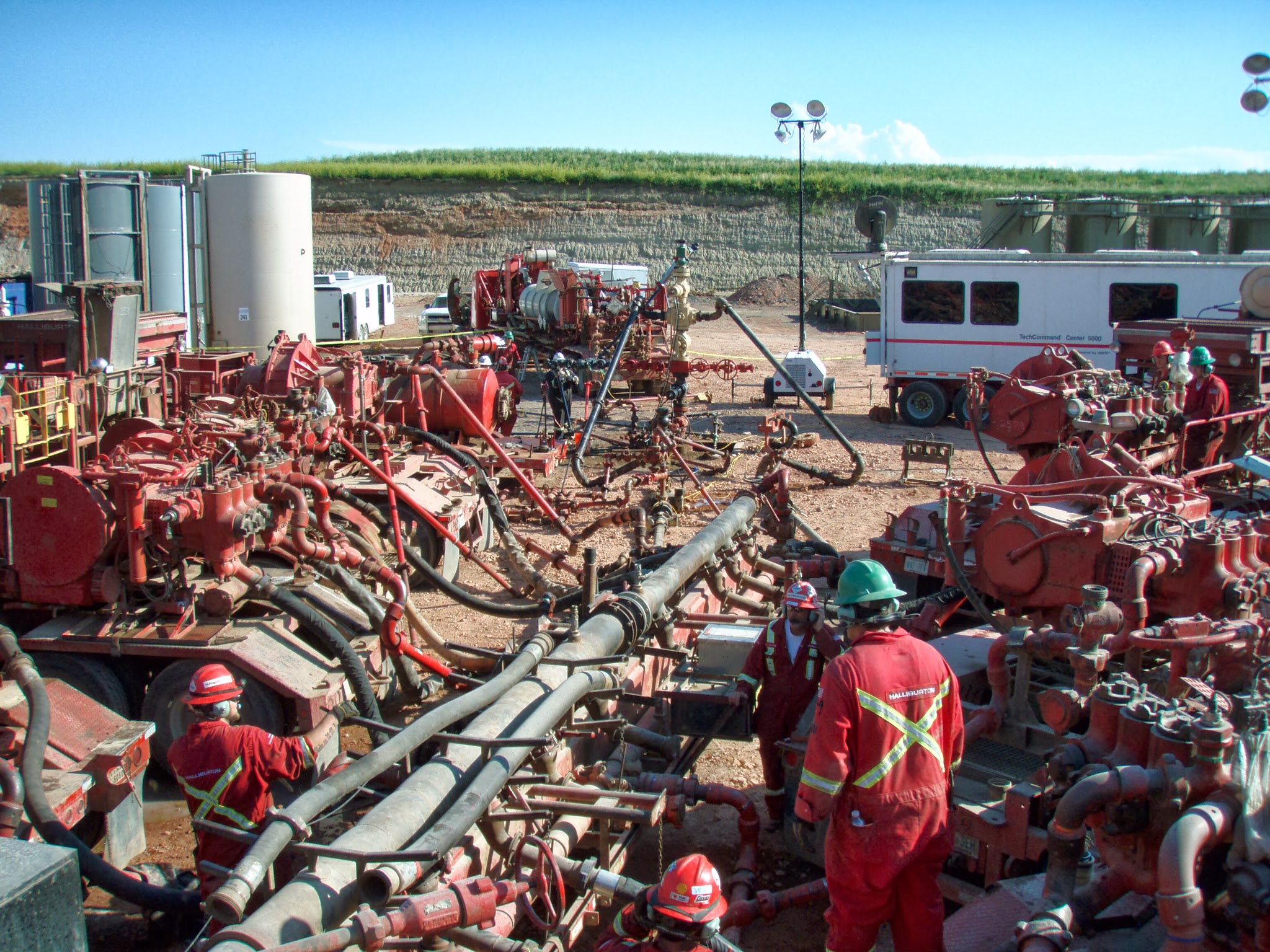
The “Fracking by the Numbers” report measured key indicators of fracking threats across the country, including:

• 280 billion gallons of toxic wastewater generated in 2012,
• 450,000 tons of air pollution produced in one year,
• 250 billion gallons of fresh water used since 2005,
• 360,000 acres of land degraded since 2005,
• 100 million metric tons of global warming pollution since 2005.

Fracking also inflicts other damage not quantified in the report — ranging from contamination of residential wells to ruined roads to earthquakes at disposal sites.
Reviewing the totality of this fracking damage, the report’s authors conclude:

Given the scale and severity of fracking’s myriad impacts, constructing a regulatory regime sufficient to protect the environment and public health from dirty drilling — much less enforcing such safeguards at more than 80,000 wells, plus processing and waste disposal sites across the country — seems implausible. In states where fracking is already underway, an immediate moratorium is in order. In all other states, banning fracking is the prudent and necessary course to protect the environment and public health.

At the federal level, the report’s data on land destroyed by fracking operations comes as the Obama administration considers a rule for fracking on public lands, and as the oil and gas industry is seeking to expand fracking to several places which help provide drinking water for millions of Americans — including the White River National Forest in Colorado and the Delaware River basin, which provides drinking water for more than 15 million Americans.

Along with the new numbers in today’s report, Environment America’s John Rumpler added one more: the more than 1 million public comments submitted this summer to the Obama administration rejecting its proposed rule for fracking on public lands as far too weak. Environment America is urging President Obama to follow the recommendation of his administration’s advisory panel on fracking to keep sensitive areas as off-limits to fracking.

“We need decisive action from Washington to protect our communities,” said John Fenton, a rancher from Pavillion, Wyoming who last week appealed to federal officials to re-open an investigation into contamination of drinking water there.

“The bottom line is this: The numbers on fracking add up to an environmental nightmare,” said Rumpler. “For our environment and for public health, we need to put a stop to fracking.”
Of particular concern are the billions of gallons of toxic waste created from fracking, which threaten the environment, public health and drinking water. Environment America is calling on federal officials to close the loophole that exempts this waste from our nation’s hazardous waste law. Rep. Matt Cartwright (PA-17) has introduced the CLEANER Act, H.R. 2825, to close that loophole.

“The data from today’s report shows that fracking is taking a dirty and destructive toll on our environment and health,” said Rumpler. “It’s time for our federal officials to step up; they can start by keeping fracking out of our forests and away from our parks, and closing the loophole exempting toxic fracking waste from our nation’s hazardous waste law.” More

Download Report