Showing posts with label geneva conventions. Show all posts

Sunday, August 30, 2015

Palestine overwhelmed by Illegal American Immigrants

If there were a Palestinian Donald Trump, he’d be fulminating against illegal immigrants swamping the Palestinian West Bank. And he’d be complaining that fully 1 in 6 of these undocumented squatters are Americans.

Since Americans have trouble understanding the basic facts of the situation, it is worthwhile underscoring that the United Nations General Assembly’s partition plan for British Mandate Palestine in 1947 did not include Gaza or the West Bank of the Jordan. Those territories were never awarded to Jewish settlers or later Israelis by any legitimate authority (even the UNGC is not an executive body and the Security Council should have signed off to grant real legitimacy in law). Israel militarily conquered Gaza and the West Bank in 1967 and have by now so altered the ways of life, economy and society of these occupied territories that the Occupation is illegal by the Hague Convention of 1907 and the Geneva Convention of 1949 (designed to prevent atrocities against occupied populations of the sort the Axis carried out during WW II).

It is strictly illegal for the occupying power to attempt to annex occupied territory or to transfer its citizens into militarily occupied territory. Mussolini’s Italy pulled that stunt with the parts of France he occupied during WW II. When you hear that someone has violated the Geneva Convention, that isn’t just an abstract matter. It means that someone is acting the way the dictators acted during the war, because it is that kind of lawless behavior the conventions were attempting to forestall from happening again.

Israel illegally annexed part of the Palestinian West Bank to its district of Jerusalem and then settled it with Israeli squatters. Am I comparing Israeli Prime Minister Binyamin Netanyahu to Mussolini in Menton, France? If the shoe fits . . .

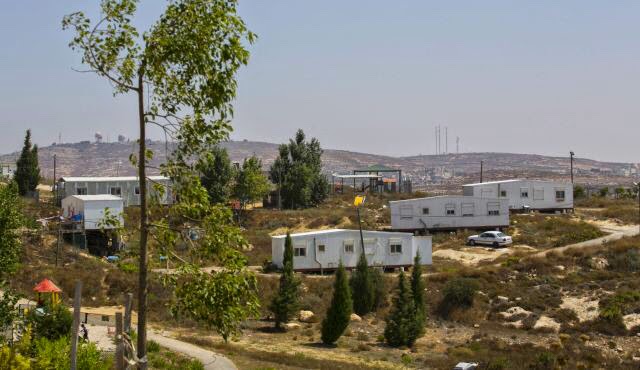
Outside the territory annexed to Jerusalem, there are at least 350,000 Israeli squatters who have usurped Palestinian land.

This link explains the process of illegal Israeli squatting on and theft of Palestinian land (a process the International Court of Justice ruled is illegal in 2004).

Some 60,000 of the squatters, today’s equivalent of Mussolini’s Black Shirts , are Americans, according to a new study.

Those American politicians like Mike Huckabee and Donald Trump, who make exaggerated and untrue statements against undocumented workers in the United States but who defend illegal Israeli immigration into the West Bank, are supreme hypocrites. The Israeli squatters, moreover, are often hostile and aggressive, excluding Palestinians from the townhouses they construct on stolen property. More


Wednesday, April 22, 2015

The Human Cost of Secret U.S. Drone Strikes in Yemen


For more than a decade now, the United States has been using armed drones to secretly kill suspected terrorists in Yemen. The public knows very little about these attacks. Neither the U.S. nor the Yemeni government has systematically disclosed who was killed and why, or whether civilians were among those killed.

Now, working with the Open Society Justice Initiative, researchers from the Yemeni nongovernmental organization Mwatana Organization for Human Rights have spent two years visiting the sites where some of these attacks took place. Their findings are detailed in a new report, Death by Drone: Civilian Harm Caused by U.S. Targeted Killings in Yemen, which gives the world a look at the reality of a counterterrorism strategy that the Obama administration has hailed as a model program.

The findings raise serious concerns over the lawfulness of U.S. drone strikes in Yemen. It also provides credible evidence that U.S. strikes continued to kill civilians even after President Obama said in a May 2013 speech that “before any strike is taken, there must be near-certainty that no civilians will be killed or injured.” This raises serious questions about the extent to which the United States is complying with its own policy guidelines.

As Yemen sinks further into instability, the report seeks to ensure that the civilian victims of these strikes are not forgotten to new and future crises. And as the United States implements a new drone export policy purporting to be part of a broader effort to shape international standards on drone use, the report warns of the dangers associated with promoting the U.S. model of drone use.

The report, which documents civilian harm caused by nine U.S. airstrikes between May 2012 and April 2014, describes the experiences of civilians directly affected by U.S. drone strikes, individuals whose voices are all too easily forgotten because they are poor and without political influence, and because the drone strikes were conducted in secret, in remote locations far away from the United States.

The report is based on 96 interviews with injured survivors and eyewitnesses of the attacks, relatives of individuals killed or injured in these attacks, local community leaders, doctors and hospital staff who were involved in the treatment of victims, and Yemeni government officials. Where available, Yemeni government statements, photographs and videos of the aftermath of the drone strikes, and medical records corroborated these accounts. An independent munitions expert provided additional analysis.

But, as our report explains, this research was conducted in a context of pervasive U.S. and Yemeni government secrecy concerning the airstrikes. There were also tense security situations in many of the regions where the strikes took place, as well as the fear of reprisals for speaking openly about the strikes.

The testimonies in this report describe desperately poor communities left to fend for themselves amid the devastation caused by U.S. drone strikes. Mothers and fathers who lost their children in drone strikes speak of inconsolable loss. They speak of their children’s bodies charred beyond recognition. Wives speak of losing their breadwinners, and of young children asking where their fathers have gone. The victims of these strikes say that these strikes will not make the United States or Yemen safer, and will only strengthen support for al-Qaeda.

The report also describes the terrorizing effects of U.S. drones on local populations. In many of the incidents documented, local residents had to live with drones continually flying overhead prior to the strikes and have lived in constant fear of another attack since. Some fled their villages for months after the strike, and lost their source of livelihood in the process. Survivors of the attacks continue to have nightmares of being killed in the next strike. Men go to their farms in fear. Children are afraid to go to school.

The civilian victims of U.S. drone strikes in Yemen want justice. They want to know why they were targeted when they had nothing to do with al-Qaeda or any other terrorist group. But none of the nine strikes documented in the report have been acknowledged by the U.S. government. Nor are the victims aware of investigations into civilian deaths and injuries caused by U.S. strikes. In most cases, civilians have not received adequate compensation.

In February 2013, then–White House counterterrorism chief John Brennan testified at his Senate confirmation hearing to become CIA director that the United States “need[s] to acknowledge … publicly” mistaken killings “in the interest of transparency.” More recently, the General Counsel for the Department of Defense publicly declared: “Transparency … strengthens our democracy and promotes accountability.”

It is time for the U.S. government to make good on these assurances. It should publicly disclose the May 2013 Presidential Policy Guidance relating to targeted killings as well as the numbers and identities of civilians killed or injured by U.S. airstrikes. It should also conduct effective investigations into unlawful killings and provide prompt and meaningful reparations for civilian harm caused by U.S. strikes. More


Saturday, April 18, 2015

Teju Cole: Slow violence, cold violence – Teju Cole on East Jerusalem

Not all violence is hot. There’s cold violence too, which takes its time and finally gets its way. Children going to school and coming home are exposed to it. Fathers and mothers listen to politicians on television calling for their extermination. Grandmothers have no expectation that even their aged bodies are safe: any young man may lay a hand on them with no consequence.

The police could arrive at night and drag a family out into the street. Putting a people into deep uncertainty about the fundamentals of life, over years and decades, is a form of cold violence. Through an accumulation of laws rather than by military means, a particular misery is intensified and entrenched. This slow violence, this cold violence, no less than the other kind, ought to be looked at and understood.

Near the slopes of Mount Scopus in East Jerusalem is the neighbourhood of Sheikh Jarrah. Most of the people who live here are Palestinian Arabs, and the area itself has an ancient history that features both Jews and Arabs. The Palestinians of East Jerusalem are in a special legal category under modern Israeli law. Most of them are not Israeli citizens, nor are they classified the same way as people in Gaza or the West Bank; they are permanent residents. There are old Palestinian families here, but in a neighbourhood like Sheikh Jarrah many of the people are refugees who were settled here after the nakba ("catastrophe") of 1948. They left their original homes behind, fleeing places such as Haifa and Sarafand al-Amar, and they came to Sheikh Jarrah, which then became their home. Many of them were given houses constructed on a previously uninhabited parcel of land by the Jordanian government and by the UN Relief and Works Agency. East Jerusalem came under Israeli control in 1967, and since then, but at an increasing tempo in recent years, these families are being rendered homeless a second or third time.

There are many things about Palestine that are not easily seen from a distance. The beauty of the land, for instance, is not at all obvious. Scripture and travellers’ reports describe a harsh terrain of stone and rocks, a place in which it is difficult to find water or to shelter from the sun. Why would anyone want this land? But then you visit and you understand the attenuated intensity of what you see. You get the sense that there are no wasted gestures, that this is an economical landscape, and that there is great beauty in this economy. The sky is full of clouds that are like flecks of white paint. The olive trees, the leaves of which have silvered undersides, are like an apparition. And even the stones and rocks speak of history, of deep time, and of the consolation that comes with all old places. This is a land of tombs, mountains and mysterious valleys. All this one can only really see at close range.

Another thing one sees, obscured by distance but vivid up close, is that the Israeli oppression of Palestinian people is not necessarily – or at least not always – as crude as western media can make it seem. It is in fact extremely refined, and involves a dizzying assemblage of laws and bylaws, contracts, ancient documents, force, amendments, customs, religion, conventions and sudden irrational moves, all mixed together and imposed with the greatest care.

The impression this insistence on legality confers, from the Israeli side, is of an infinitely patient due process that will eventually pacify the enemy and guarantee security. The reality, from the Palestinian side, is of a suffocating viciousness. The fate of Palestinian Arabs since the nakba has been to be scattered and oppressed by different means: in the West Bank, in Gaza, inside the 1948 borders, in Jerusalem, in refugee camps abroad, in Jordan, in the distant diaspora. In all these places, Palestinians experience restrictions on their freedom and on their movement. To be Palestinian is to be hemmed in. Much of this is done by brute military force from the Israeli Defence Forces – killing for which no later accounting is possible – or on an individual basis in the secret chambers of the Shin Bet. But a lot of it is done according to Israeli law, argued in and approved by Israeli courts, and technically legal, even when the laws in question are bad laws and in clear contravention of international standards and conventions.

The permanent residency of a Palestinian in East Jerusalem is anything but permanent

The reality is that, as a Palestinian Arab, in order to defend yourself against the persecution you face, not only do you have to be an expert in Israeli law, you also have to be a Jewish Israeli and have the force of the Israeli state as your guarantor. You have to be what you are not, what it is not possible for you to be, in order not to be slowly strangled by the laws arrayed against you. In Israel, there is no pretence that the opposing parties in these cases are equal before the law; or, rather, such a pretence exists, but no one on either side takes it seriously. This has certainly been the reality for the Palestinian families living in Sheikh Jarrah whose homes, built mostly in 1956, inhabited by three or four generations of people, are being taken from them by legal means.

As in other neighbourhoods in East Jerusalem – Har Homa, the Old City, Mount Scopus, Jaffa Gate – there is a policy at work in Sheikh Jarrah. This policy is two-fold. The first is the systematic removal of Palestinian Arabs, either by banishing individuals on the basis of paperwork, or by taking over or destroying their homes by court order. Thousands of people have had their residency revoked on a variety of flimsy pretexts: time spent living abroad, time spent living elsewhere in occupied Palestine, and so on. The permanent residency of a Palestinian in East Jerusalem is anything but permanent, and once it is revoked, is almost impossible to recover.

The second aspect of the policy is the systematic increase of the Jewish populations of these neighbourhoods. This latter goal is driven both by national and municipal legislation (under the official rubric of "demographic balance") and is sponsored in part by wealthy Zionist activists who, unlike some of their defenders in the western world, are proud to embrace the word "Zionist". However, it is not the wealthy Zionists who move into these homes or claim these lands: it is ideologically and religiously extreme Israeli Jews, some of whom are poor Jewish immigrants to the state of Israel. And when they move in – when they raise the Israeli flag over a house that, until yesterday, was someone else’s ancestral home, or when they begin new constructions on the rubble of other people’s homes – they act as anyone would who was above the law: callously, unfeelingly, unconcerned about the humiliation of their neighbours. This two-fold policy, of pushing out Palestinian Arabs and filling the land with Israeli Jews, is recognised by all the parties involved. And for such a policy, the term "ethnic cleansing" is not too strong: it is in fact the only accurate description.

Each Palestinian family that is evicted in Sheikh Jarrah is evicted for different reasons. But the fundamental principle at work is usually similar: an activist Jewish organisation makes a claim that the land on which the house was built was in Jewish hands before 1948. There is sometimes paperwork that supports this claim (there is a lot of citation of 19th-century Ottoman land law), and sometimes the paperwork is forged, but the court will hear and, through eccentric interpretations of these old laws, often agree to the claim. The violence this legality contains is precisely that no Israeli court will hear a corresponding claim from a Palestinian family. What Israeli law supports, de facto, is the right of return for Jews into East Jerusalem. What it cannot countenance is the right of return of Palestinians into the innumerable towns, villages and neighbourhoods all over Palestine, from which war, violence and law have expelled them.

History moves at great speed, as does politics, and Zionists understand this. The pressure to continue the ethnic cleansing of East Jerusalem is already met with pressure from the other side to stop this clear violation of international norms. So Zionist lawyers and lawmakers move with corresponding speed, making new laws, pushing through new interpretations, all in order to ethnically cleanse the land of Palestinian presence. And though Palestinians make their own case and though many young Jews, beginning to wake up to the crimes of their nation, have marched in support of the families evicted or under threat in Sheikh Jarrah – the law and its innovative interpretations evolve at a speed that makes self-defence all but impossible.

This cannot go on. The example of Sheikh Jarrah, the cold violence of it, is echoed all over Palestine. Side by side with this cold violence is, of course, the hot violence that dominates the news: Israel’s periodic wars on Gaza, its blockades on places such as Nablus, the random unanswerable acts of murder in places such as Hebron. In no sane future of humanity should the deaths of hundreds of children continue to be accounted collateral damage, as Israel did in the summer of 2014.

In the world’s assessment of the situation in Palestine, in coming to understand why the Palestinian situation is urgent, the viciousness of law must be taken as seriously as the cruelties of war. As in other instances in which world opinion forced a large-scale systemic oppression to come to an end, we must begin by calling things by their proper names. Israel uses an extremely complex legal and bureaucratic apparatus to dispossess Palestinians of their land, hoping perhaps to forestall accusations of a brutal land grab. No one is fooled by this. Nor is anyone fooled by the accusation, common to many of Israel’s defenders, that any criticism of Israeli policies amounts to antisemitism. The historical suffering of Jewish people is real, but it is no less real than, and does not in any way justify, the present oppression of Palestinians by Israeli Jews.

A neighbourhood like Sheikh Jarrah is an x-ray of Israel at the present moment: a limited view showing a single set of features, but significant to the entire body politic. The case that is being made, and that must continue to be made to all people of conscience, is that Israel’s occupation of Palestine is criminal. This case should also include the argument that the proliferation of bad laws by the legislature and courts of Israel is itself antisemitic in effect, to the extent that they fuel the ancient calumnies against Jewish people. Nothing can justify either antisemitism or the racist persecution of Arabs, and the current use of the law in Israel is a part of the grave ongoing offence to the human dignity of both Palestinians and Jews. More

• Teju Cole’s books include Open City. He is a contributor to Letters to Palestine: Writers Respond to War and Occupation, edited by Vijay Prashad (Verso).


Thursday, February 26, 2015

The Great Game in the Holy Land

How Gazan Natural Gas Became the Epicenter of An International Power Struggle

Guess what? Almost all the current wars, uprisings, and other conflicts in the Middle East are connected by a single thread, which is also a threat: these conflicts are part of an increasingly frenzied competition to find, extract, and market fossil fuels whose future consumption is guaranteed to lead to a set of cataclysmic environmental crises.

Amid the many fossil-fueled conflicts in the region, one of them, packed with threats, large and small, has been largely overlooked, and Israel is at its epicenter. Its origins can be traced back to the early 1990s when Israeli and Palestinian leaders began sparring over rumored natural gas deposits in the Mediterranean Sea off the coast of Gaza. In the ensuing decades, it has grown into a many-fronted conflict involving several armies and three navies. In the process, it has already inflicted mindboggling misery on tens of thousands of Palestinians, and it threatens to add future layers of misery to the lives of people in Syria, Lebanon, and Cyprus. Eventually, it might even immiserate Israelis.

Resource wars are, of course, nothing new. Virtually the entire history of Western colonialism and post-World War II globalization has been animated by the effort to find and market the raw materials needed to build or maintain industrial capitalism. This includes Israel's expansion into, and appropriation of, Palestinian lands. But fossil fuels only moved to center stage in the Israeli-Palestinian relationship in the 1990s, and that initially circumscribed conflict only spread to include Syria, Lebanon, Cyprus, Turkey, and Russia after 2010.

The Poisonous History of Gazan Natural Gas

Back in 1993, when Israel and the Palestinian Authority (PA) signed the Oslo Accords that were supposed to end the Israeli occupation of Gaza and the West Bank and create a sovereign state, nobody was thinking much about Gaza's coastline. As a result, Israel agreedthat the newly created PA would fully control its territorial waters, even though the Israeli navy was still patrolling the area. Rumored natural gas deposits there mattered little to anyone, because prices were then so low and supplies so plentiful. No wonder that the Palestinians took their time recruiting British Gas (BG) -- a major player in the global natural gas sweepstakes -- to find out what was actually there. Only in 2000 did the two parties even sign a modest contract to develop those by-then confirmed fields.

BG promised to finance and manage their development, bear all the costs, and operate the resulting facilities in exchange for 90% of the revenues, an exploitative but typical "profit-sharing" agreement. With an already functioning natural gas industry, Egypt agreed to be the on-shore hub and transit point for the gas. The Palestinians were to receive 10% of the revenues (estimated at about a billion dollars in total) and were guaranteed access to enough gas to meet their needs.

Had this process moved a little faster, the contract might have been implemented as written. In 2000, however, with a rapidly expanding economy, meager fossil fuels, and terrible relations with its oil-rich neighbors, Israel found itself facing a chronic energy shortage. Instead of attempting to answer its problem with an aggressive but feasible effort to develop renewable sources of energy, Prime Minister Ehud Barak initiated the era of Eastern Mediterranean fossil fuel conflicts. He brought Israel's naval control of Gazan coastal waters to bear and nixed the deal with BG. Instead, he demanded that Israel, not Egypt, receive the Gaza gas and that it also control all the revenues destined for the Palestinians -- to prevent the money from being used to "fund terror."

With this, the Oslo Accords were officially doomed. By declaring Palestinian control over gas revenues unacceptable, the Israeli government committed itself to not accepting even the most limited kind of Palestinian budgetary autonomy, let alone full sovereignty. Since no Palestinian government or organization would agree to this, a future filled with armed conflict was assured.

The Israeli veto led to the intervention of British Prime Minister Tony Blair, who sought to broker an agreement that would satisfy both the Israeli government and the Palestinian Authority. The result: a 2007 proposal that would have delivered the gas to Israel, not Egypt, at below-market prices, with the same 10% cut of the revenues eventually reaching the PA. However, those funds were first to be delivered to the Federal Reserve Bank in New York for future distribution, which was meant to guarantee that they would not be used for attacks on Israel.

This arrangement still did not satisfy the Israelis, who pointed to the recent victory of the militant Hamas party in Gaza elections as a deal-breaker. Though Hamas had agreed to let the Federal Reserve supervise all spending, the Israeli government, now led by Ehud Olmert, insisted that no "royalties be paid to the Palestinians." Instead, the Israelis would deliver the equivalent of those funds "in goods and services."

This offer the Palestinian government refused. Soon after, Olmert imposed a draconian blockade on Gaza, which Israel's defense minister termed a form of "'economic warfare' that would generate a political crisis, leading to a popular uprising against Hamas." With Egyptian cooperation, Israel then seized control of all commerce in and out of Gaza, severely limiting even food imports and eliminating its fishing industry. As Olmert advisor Dov Weisglass summed up this agenda, the Israeli government was putting the Palestinians "on a diet" (which, according to the Red Cross, soon produced "chronic malnutrition," especially among Gazan children).

When the Palestinians still refused to accept Israel's terms, the Olmert government decided to unilaterally extract the gas, something that, they believed, could only occur once Hamas had been displaced or disarmed. As former Israel Defense Forces commander and current Foreign Minister Moshe Ya'alon explained, "Hamas... has confirmed its capability to bomb Israel's strategic gas and electricity installations... It is clear that, without an overall military operation to uproot Hamas control of Gaza, no drilling work can take place without the consent of the radical Islamic movement."

Following this logic, Operation Cast Lead was launched in the winter of 2008. According to Deputy Defense Minister Matan Vilnai, it was intended to subject Gaza to a "shoah" (the Hebrew word for holocaust or disaster). Yoav Galant, the commanding general of the Operation, said that it was designed to "send Gaza decades into the past." As Israeli parliamentarian Tzachi Hanegbi explained, the specific military goal was "to topple the Hamas terror regime and take over all the areas from which rockets are fired on Israel."

Operation Cast Lead did indeed "send Gaza decades into the past." Amnesty International reported that the 22-day offensive killed 1,400 Palestinians, "including some 300 children and hundreds of other unarmed civilians, and large areas of Gaza had been razed to the ground, leaving many thousands homeless and the already dire economy in ruins." The only problem: Operation Cast Lead did not achieve its goal of "transferring the sovereignty of the gas fields to Israel."

More Sources of Gas Equal More Resource Wars

In 2009, the newly elected government of Prime Minister Benjamin Netanyahu inheritedthe stalemate around Gaza's gas deposits and an Israeli energy crisis that only grew more severe when the Arab Spring in Egypt interrupted and then obliterated 40% of the country's gas supplies. Rising energy prices soon contributed to the largest protests involving Jewish Israelis in decades.

As it happened, however, the Netanyahu regime also inherited a potentially permanent solution to the problem. An immense field of recoverable natural gas was discovered in the Levantine Basin, a mainly offshore formation under the eastern Mediterranean. Israeli officials immediately asserted that "most" of the newly confirmed gas reserves lay "within Israeli territory." In doing so, they ignored contrary claims by Lebanon, Syria, Cyprus, and the Palestinians.

In some other world, this immense gas field might have been effectively exploited by the five claimants jointly, and a production plan might even have been put in place to ameliorate the environmental impact of releasing a future 130 trillion cubic feet of gas into the planet's atmosphere. However, as Pierre Terzian, editor of the oil industry journal Petrostrategies, observed, "All the elements of danger are there... This is a region where resorting to violent action is not something unusual."

In the three years that followed the discovery, Terzian's warning seemed ever more prescient. Lebanon became the first hot spot. In early 2011, the Israeli government announcedthe unilateral development of two fields, about 10% of that Levantine Basin gas, which lay in disputed offshore waters near the Israeli-Lebanese border. Lebanese Energy Minister Gebran Bassil immediately threatened a military confrontation, asserting that his country would "not allow Israel or any company working for Israeli interests to take any amount of our gas that is falling in our zone." Hezbollah, the most aggressive political faction in Lebanon, promised rocket attacks if "a single meter" of natural gas was extracted from the disputed fields.

Israel's Resource Minister accepted the challenge, asserting that "[t]hese areas are within the economic waters of Israel... We will not hesitate to use our force and strength to protect not only the rule of law but the international maritime law."

Oil industry journalist Terzian offered this analysis of the realities of the confrontation:

"In practical terms... nobody is going to invest with Lebanon in disputed waters. There are no Lebanese companies there capable of carrying out the drilling, and there is no military force that could protect them. But on the other side, things are different. You have Israeli companies that have the ability to operate in offshore areas, and they could take the risk under the protection of the Israeli military."

Sure enough, Israel continued its exploration and drilling in the two disputed fields, deploying drones to guard the facilities. Meanwhile, the Netanyahu government invested major resources in preparing for possible future military confrontations in the area. For one thing, with lavish U.S. funding, it developed the "Iron Dome" anti-missile defense system designed in part to intercept Hezbollah and Hamas rockets aimed at Israeli energy facilities. It also expanded the Israeli navy, focusing on its ability to deter or repel threats to offshore energy facilities. Finally, starting in 2011 it launched airstrikes in Syria designed, according to U.S. officials, "to prevent any transfer of advanced... antiaircraft, surface-to-surface and shore-to-ship missiles" to Hezbollah.

Nonetheless, Hezbollah continued to stockpile rockets capable of demolishing Israeli facilities. And in 2013, Lebanon made a move of its own. It began negotiating with Russia. The goal was to get that country's gas firms to develop Lebanese offshore claims, while the formidable Russian navy would lend a hand with the "long-running territorial dispute with Israel."

By the beginning of 2015, a state of mutual deterrence appeared to be setting in. Although Israel had succeeded in bringing online the smaller of the two fields it set out to develop, drilling in the larger one was indefinitely stalled "in light of the security situation." U.S. contractor Noble Energy, hired by the Israelis, was unwilling to invest the necessary $6 billion dollars in facilities that would be vulnerable to Hezbollah attack, and potentially in the gun sights of the Russian navy. On the Lebanese side, despite an increased Russian naval presence in the region, no work had begun.

Meanwhile, in Syria, where violence was rife and the country in a state of armed collapse, another kind of stalemate went into effect. The regime of Bashar al-Assad, facing a ferocious threat from various groups of jihadists, survived in part by negotiating massive military support from Russia in exchange for a 25-year contract to develop Syria's claims to that Levantine gas field. Included in the deal was a major expansion of the Russian naval base at the port city of Tartus, ensuring a far larger Russian naval presence in the Levantine Basin.

While the presence of the Russians apparently deterred the Israelis from attempting to develop any Syrian-claimed gas deposits, there was no Russian presence in Syria proper. So Israel contracted with the U.S.-based Genie Energy Corporation to locate and develop oil fields in the Golan Heights, Syrian territory occupied by the Israelis since 1967. Facing a potential violation of international law, the Netanyahu government invoked, as the basis for its acts, an Israeli court ruling that the exploitation of natural resources in occupied territories was legal. At the same time, to prepare for the inevitable battle with whichever faction or factions emerged triumphant from the Syrian civil war, it began shoring up the Israeli military presence in the Golan Heights.

And then there was Cyprus, the only Levantine claimant not at war with Israel. Greek Cypriots had long been in chronic conflict with Turkish Cypriots, so it was hardly surprising that the Levantine natural gas discovery triggered three years of deadlocked negotiations on the island over what to do. In 2014, the Greek Cypriots signed an exploration contract with Noble Energy, Israel's chief contractor. The Turkish Cypriots trumped this move by signing a contract with Turkey to explore all Cypriot claims "as far as Egyptian waters." Emulating Israel and Russia, the Turkish government promptly moved three navy vesselsinto the area to physically block any intervention by other claimants.

As a result, four years of maneuvering around the newly discovered Levantine Basin deposits have produced little energy, but brought new and powerful claimants into the mix, launched a significant military build-up in the region, and heightened tensions immeasurably.

Gaza Again -- and Again

Remember the Iron Dome system, developed in part to stop Hezbollah rockets aimed at Israel's northern gas fields? Over time, it was put in place near the border with Gaza to stop Hamas rockets, and was tested during Operation Returning Echo, the fourth Israeli military attempt to bring Hamas to heel and eliminate any Palestinian "capability to bomb Israel's strategic gas and electricity installations."

Launched in March 2012, it replicated on a reduced scale the devastation of Operation Cast Lead, while the Iron Dome achieved a 90% "kill rate" against Hamas rockets. Even this, however, while a useful adjunct to the vast shelter system built to protect Israeli civilians, was not enough to ensure the protection of the country's exposed oil facilities. Even one direct hit there could damage or demolish such fragile and flammable structures.

The failure of Operation Returning Echo to settle anything triggered another round of negotiations, which once again stalled over the Palestinian rejection of Israel's demand to control all fuel and revenues destined for Gaza and the West Bank. The new Palestinian Unity government then followed the lead of the Lebanese, Syrians, and Turkish Cypriots, and in late 2013 signed an "exploration concession" with Gazprom, the huge Russian natural gas company. As with Lebanon and Syria, the Russian Navy loomed as a potential deterrent to Israeli interference.

Meanwhile, in 2013, a new round of energy blackouts caused "chaos" across Israel, triggering a draconian 47% increase in electricity prices. In response, the Netanyahu government considered a proposal to begin extracting domestic shale oil, but the potential contamination of water resources caused a backlash movement that frustrated this effort. In a country filled with start-up high-tech firms, the exploitation of renewable energy sources was still not being given serious attention. Instead, the government once again turned to Gaza.

With Gazprom's move to develop the Palestinian-claimed gas deposits on the horizon, the Israelis launched their fifth military effort to force Palestinian acquiescence, Operation Protective Edge. It had two major hydrocarbon-related goals: to deter Palestinian-Russian plans and to finally eliminate the Gazan rocket systems. The first goal was apparently met when Gazprom postponed (perhaps permanently) its development deal. The second, however, failed when the two-pronged land and air attack -- despite unprecedented devastation in Gaza -- failed to destroy Hamas's rocket stockpiles or its tunnel-based assembly system; nor did the Iron Dome achieve the sort of near-perfect interception rate needed to protect proposed energy installations.

There Is No Denouement

After 25 years and five failed Israeli military efforts, Gaza's natural gas is still underwater and, after four years, the same can be said for almost all of the Levantine gas. But things are not the same. In energy terms, Israel is ever more desperate, even as it has been building up its military, including its navy, in significant ways. The other claimants have, in turn, found larger and more powerful partners to help reinforce their economic and military claims. All of this undoubtedly means that the first quarter-century of crisis over eastern Mediterranean natural gas has been nothing but prelude. Ahead lies the possibility of bigger gas wars with the devastation they are likely to bring. More


Saturday, January 3, 2015

The 'Land of the Free' supports one of the most repressive states in the world

Crimes against humanity in Gaza: is it really a 'buffer zone' - or a bigger plan

The international community and states parties to the United Nations should hang their heads in shame

Late last week, the White House decried Israel’s attack on a UN school in Gaza as "totally unacceptable" and "totally indefensible", then proceeded to approve $225m in funding for its Iron Dome. On Monday, the US state department went further, calling the airstrikes upon a UN school "disgraceful" – and yet America provides Israel with more than $3.1bn every year, restocking the ability of the Israel Defense Force (IDF) to hit more schools, and to wage total war against an imprisoned people, because of their nationality.

American taxpayers should not be paying for this. And the western world should stop rejecting serious inquiries about Israel’s moral inconsistencies, or allow it to benefit from cognitive dissonance and information overload amid the current crisis in Gaza.

There is a land grab going on. The Israeli prime minister, Binjamin Netanyahu, has shrunk Gaza’s habitable land mass by 44%, with an edict establishing a 3km (1.8-mile) buffer zone, a "no-go" zone for Palestinians – and that’s quite significant, because a good part of Gaza is only 3 to 4 miles wide. Over 250,000 Palestinians within this zone must leave their homes, or be bombed. As their territorial space collapses, 1.8m Gazans now living in 147 square miles will be compressed into 82 square miles.

Gaza’s entire social and physical infrastructure of housing, hospitals, places of worship, more than 130 of its schools, plus markets, water systems, sewer systems and roads are being destroyed. Under constant attack, without access to water, sanitary facilities, food and medical care, Gazans face an IDF-scripted apocalypse.

With Gaza’s land mass shrinking due to Israeli military action, it’s about time someone asked: What is the end game? Three weeks ago, Moshe Feiglin, deputy speaker of the Knesset, called for Gaza to "become part of sovereign Israel and will be populated by Jews. This will also serve to ease the housing crisis in Israel."

Israel has a housing crisis? After the "no-go" buffer zone is evacuated, there will be 21,951 Palestinians per square mile in Gaza, while Israel’s population density stands at 964 persons per square mile.

Deputy Speaker Feiglin wants the Palestinians in Gaza to lose all of their land. One must not assume that Mr Feiglin or his Likud faction speak for the main government actors like Prime Minister Netanyahu. After all, Knesset politics are complex and divergent. But since Gaza has just lost control of that 44% of its land, it may also be time to ask: does the establishment of that 3km zone represent the unfolding of a larger plan? Is that the end game?

At the very point where an aroused public becomes aghast at the slaughter of Gazans, the western world becomes inured to the violence, hypnotized by the media’s cadence of body counts. The intolerable becomes normalized, and later ignored as old news. Which would seem a perfect time to leave in place the 3km zone – for security purposes, of course – and then advance the proposal that Palestinians crammed into the remaining 56% of Gaza simply … leave.

I assume the IDF acts with deliberation, under orders from the Netanyahu government. And I think the extraordinary and illegal forced relocation of over 250,000 Palestinians from 44% of Gazan land is a crime against humanity under the guise of establishing a "buffer zone" for security purposes.

Look at the region’s maps from recent history. Look at the steady erosion of Palestinian land and the acquisition of land by Israel, and you can understand that the present attack on Gaza is not about solely about Hamas. It’s about land. It isn’t just about Hamas’s rockets. It’s about land. It isn’t just about Hamas’s tunnels. It’s about land. It isn’t about kidnappings. It is about land. It isn’t even about meeting a housing crisis in Israel. It is about grabbing land from the Palestinians in Gaza and the natural resources that go with the land, upon the occasion of Israel’s military invasion of Gaza.

Yes, Hamas’s attacks on Israel are illegal and should be condemned, and those who ordered the attacks should be held accountable under law. All policies and practices which refuse to recognize Israel’s right to exist should be condemned. Israel has a right to exist. But Israel’s right to exist is impaired when Israel decides Palestinians have no right to exist on their own land. It’s time for us to stop paying for Israel’s dubious, destructive self-righteousness. And it’s time for the solipsism syndrome afflicting Israel’s leaders to get a day of discussion in the International Criminal Court concerning their attacks on Gaza – and especially their new 3km "buffer zone". More


Citing Next Generations, Lawsuits Demand Courts Recognize 'Mind-Blowing' Climate Impacts

By caving to industry pressures, environmental regulatory agencies are failing to uphold their obligation to future generations, declared Mary Christina Wood, the author pushing a new legal framework to fight global warming, on the final episode of Moyers & Company.

Wood, a University of Oregon law professor who wrote Nature's Trust: Environmental Law for a New Ecological Age (2013; Cambridge University Press), advocates an idea called "atmospheric trust litigation," which takes the fate of the Earth into the courts, arguing that the planet’s atmosphere—its air, water, land, plants, and animals—are the responsibility of government, held in its trust to insure the survival of all generations to come.

"If this nation relies on a stable climate system, and the very habitability of this nation and all of the liberties of young people and their survival interests are at stake the courts need to force the agencies and the legislatures to simply do their job."
—Mary Christina Wood, University of Oregon Law School

"The heart of the approach is the public trust doctrine," she told her host, longtime journalist and political commentator Bill Moyers. "And it says that government is a trustee of the resources that support our public welfare and survival. And so a trust means that one entity or person manages a certain wealth, an endowment, so to speak, for the benefit of others. And in the case of the public trust, the beneficiaries are the present and future generations of citizens."

The theory underpins lawsuits filed by Our Children's Trust, which ask for the courts to order state and local governments and agencies to act more aggressively to bring down carbon emissions.

"[I]f this nation relies on a stable climate system, and the very habitability of this nation and all of the liberties of young people and their survival interests are at stake the courts need to force the agencies and the legislatures to simply do their job," Wood explained.

Environmental laws passed in the 1970s "held a lot of promise" decades ago, she said but they've lost what little power they once possessed. Wood continued:

Americans thought they had solved the problem by getting these laws passed. What they didn't realize was that industries got inside the agencies through various means, through campaign contributions, through pressure on the system over and over again. And so one thing we have to keep in mind is we're nearing the end of our resources. And there are laws of nature that we have to comply with.

And those laws are supreme. And they determine whether we will survive on this planet. And they will determine the future conditions for our children. And so right now, our environmental laws are out of whack with the laws of nature. They are allowing destruction, whereas they should be structuring society to create a balance with the natural systems that support our lives.

And Wood disagreed with those who argue that climate change is a political issue to be dealt with outside the courts.

"Climate is not just an environmental issue," she said. "This is a civilizational issue. This is the biggest case that courts will get in terms of the potential harm in front of them, the population affected by that harm, and in terms of the urgency. Climate is mind-blowing. It can't be categorized any longer as an environmental issue."

In a related feature earlier this year, Moyers spoke to a member of the next generation who is a co-plaintiff in one of the atmosphere trust litigation lawsuits being spearheaded by Our Children’s Trust.

"Public trust states that the government is a trustee to protect these natural resources that every living species, including humans, rely upon for our survival, for our well-being," 18-year-old Kelsey Juliana told Moyers at the time. "And so the public trust says, government, we hold you, we trust you to put these resources, air, water, land, you know, to protect them for this generation and for many generations down the line." More


Thursday, January 1, 2015

Paving Way for War Crimes Charges, Palestinians Move to Join International Criminal Court

Following the defeat of a United Nations Security Council resolution that demanded an end to Israeli occupation and recognition of Palestinian statehood, Palestine's president Mahmoud Abbas signed a Palestinian request to join the International Criminal Court on Wednesday, a move that the Guardian wrote sets "Palestinians on a diplomatic collision course with Israel and the U.S."

"There is aggression practiced against our land and our country, and the Security Council has let us down—where shall we go?” Mr. Abbas reportedly said at his headquarters in the West Bank city of Ramallah, as he signed the Rome Statute, the founding charter of the Hague court, as well as over a dozen other international treaties and conventions.

"We want to complain to this organization," he said, referring to the court. "As long as there is no peace, and the world doesn’t prioritize peace in this region, this region will live in constant conflict. The Palestinian cause is the key issue to be settled."

As expected, the decision elicited an angry response from Israel. "The one who needs to fear the International Criminal Court in the Hague is the Palestinian Authority, which has a unity government with Hamas, a terror organization like (the Islamic State group) which commits war crimes," Prime Minister Benjamin Netanyahu said in a statement.

According to the Associated Press, Netanyahu called Israel's soldiers "the most moral army in the world" and said the country would take unspecified "retaliatory steps."

The AP noted that "turning to the International Criminal Court marks a major policy shift by transforming Abbas' relations with Israel from tense to openly hostile. Abbas has been threatening to join the court since 2012, but held off under American and Israeli pressure. The Palestinians can use the court to challenge the legality of Israeli settlement construction on occupied lands and to pursue war crimes charges connected to military activity."

The State Department criticized the move as well. In a statement issued Wednesday, it said it was "deeply troubled by today’s Palestinian action regarding the ICC," and called it "an escalatory step that will not achieve any of the outcomes most Palestinians have long hoped to see for their people." More


Sunday, December 28, 2014

Israel's Gas Dream – The End Is Nigh

In the five years since the discovery of the Tamar and Leviathan natural gas fields off the coast of Israel, the Israeli energy discourse has focused on questions like what to do with the gas, how much of it to export and to whom, and what the fairest distribution of profits would be among the gas partners, headed by Noble Energy and Delek Energy, and the Israeli public.

Click to expand

But after years of delays and billions of dollars spent, a new and increasingly likely scenario should be considered – the premature – and tragic – death of the Israeli gas dream. I alluded to this option in an August 2013 article titled "Israel's Zero Gas Game" in which I warned that Israel has become so busy dividing the pie that its leaders forgot it must first be baked and that due to the failure of the government to present a clear vision for the country's energy sector, articulate the rights and responsibilities of foreign investors and most importantly set rules and stick to them, "the gas will be left in the ground and the startup nation will be more worthy of the title 'shutdown nation'." Perhaps that sounded crazy at the time. Today, with the decision of the Israeli Anti-Trust Authority to revoke an arrangement permitting Noble-Delek partners to develop Leviathan, declaring them a cartel - a move that will require the separation of Leviathan from Tamar and the sale of Leviathan to a new partnership, effectively postponing the development of Leviathan indefinitely - the scenario of "zero gas" - and perhaps even the withdrawal of Noble from Israel altogether - should be considered seriously.

In deciding to enter Israel Noble has taken a huge financial, regulatory and geopolitical risk. However, the size of the discoveries, the potential of finding oil under the gas layers and the doubling of the company's market capitalization made the move easy to justify to its shareholders. But the Texas company, the only international energy company that was willing to set foot in Israel, was welcomed with no red carpet. Instead it was ushered through a Via Dolorosa of bureaucratic torture which eliminated any chance for gas production before the end of 2018 – ten years from the beginning of exploration. A ten year lead time from discovery to production is a lot to ask of a publicly traded company which has to satisfy quarterly thinking and profit hungry shareholders. But in light of Noble's recent stock performance, dropping from $80 in the summer to $50 today, the decision of the Israeli government provides an impetus to the company's leadership, not to mention the new CEO David Stover, to reconsider the commitment to Israel and begin to seek greener pastures.

There are very few oil and gas companies who have both the experience of drilling in deep waters and the willingness to associate themselves with Israel, especially in light of Noble's experience.

The Israeli government's ruling has huge implications for the future of the region as it means that at best the supply of gas from Leviathan will be delayed into the 2020s. At worst it will not happen at all. The government's concern about a gas monopoly is a legitimate one, especially during an election campaign when issues of cost of living dominate the local political discourse. But its hopes that the hot potato called Leviathan can somehow be sold to new partners require a lot of faith. There are many people with money who may be tempted to buy into a partnership in a 22 trillion cubic feet (tcf) field, but owning a stake in a gas field without an operator at hand is like owning a gold mine on the moon. There are very few oil and gas companies who have both the experience of drilling in deep waters and the willingness to associate themselves with Israel, especially in light of Noble's experience. With falling energy prices worldwide, the chance of a Noble-like operator popping out of nowhere is slim. This means that in its desire to avoid the creation of a monopoly, Israel is taking the risk that Leviathan, the world's largest offshore gas discovery of the past decade, will not be developed for many years to come - if ever. The losers will first and foremost be the Israeli people who will lose not only billions of dollars in tax revenue and the main engine of growth of their economy but also the prospects of securing their energy supply for generations. The scenario is equally bad for Jordan, Egypt and the Palestinian Authority who are counting on Leviathan gas for their economic well-being and which have all signed letters of intent to buy Israeli gas despite local opposition from their respective Israel-hating Islamists. Europe will also be a casualty since a portion of Leviathan was aimed for two LNG terminals in Egypt from where it would have been shipped to European countries aspiring to become less dependent on Russia's gas.

Other than the handful of lawyers who will earn millions litigating the dispute between Noble and the Israeli government in international courts, the biggest winner will be Cyprus. In December 2011 Noble announced the discovery of 7 tcf in a field northwest of Leviathan called Aphrodite (block 12). Other blocks have been opened for bids since attracting interest from a handful of large oil and gas companies including Total of France, Kogas of South Korea, ENI of Italy and Petronas of Malaysia. But with all eyes on Leviathan, Cyprus became an uninteresting side show. This may soon change. Cyprus may not be a paragon of regulatory stability and certainly not an investors' haven and its tense relations with Turkey pose some geopolitical risk, but the fatigue from Israel's energy shenanigans could bring about a shift from Israel to Cyprus as the new center of gravity in the East Mediterranean energy play.

There is no polite way of saying this. Israel's latest decision is tantamount to nationalization of the kind seen in Argentina, Venezuela, Mexico and Russia. All of those governments sugarcoated their decision invoking the need to protect the public interest. The investment community and global oil industry got the message and wrote off those countries. With this miserable decision, Israel has just lodged itself into this notorious club. The price will be paid in spades – and sooner than most Israelis realize. More

-------------

As the map above shows the gas field in offshore Gaza who should be the benefliciaries. Under international law Israel has no legal claim and Gaza most certainly does. I would give Gaza an income to rebuild the infrastracture destroyed by Israel as well as giving them fossil fuel to generate electricity. Editor


Palestinian landowners have waited too many years for Israeli wheels of justice to turn.

It is impossible to overstate the significance of the High Court of Justice ruling ordering the state to demolish within two years the Amona illegal outpost, which was built on private Palestinian land. After years of evasion, legal tricks, forged documents and unfulfilled pledges, even the High Court came to realize that the state cannot be trusted, not to mention the settlers, to voluntarily agree to return the land they plundered from their owners.

Amona was born in sin in 1997, when a group of settlers established residence in an area that had been earmarked for an archaeological site and a Mekorot Water Company reservoir. Cease and desist orders issued by Civil Administration inspectors in 2004 halted building for four years, but it resumed in force despite new stop-work orders.

In 2006, after the High Court ordered the demolition of Amona’s permanent structures, the settlers made clear that they were not bound by the court’s authority and they turned the “battle for Amona” into a national event in which they violently confronted the police. If there was no alternative to demolition, they would make Amona a “national trauma” that would threaten any future plans to evacuate outposts or settlements.

Even now, after the High Court ruling, the settler leaders are adamant: “We swear today to fight this with all our might,” Amona spokesman Avihai Boaron said. This is nothing but a continuation of the settlers’ common view that the state and its institutions are their servants, and when they do not fulfill their mission they must be fought. Particularly infuriating is the idea that “the left-wing government and the High Court are leading the country”; That is, in the struggle between land theft and the law, the High Court is not only a legal and ideological enemy but it also violates the political reality in which the right wing is in control. That perception is no less distorted and dangerous than the settlers’ position that the theft of Palestinian land is part of the Redemption.

The government of Israel cannot continue to avoid carrying out the High Court’s ruling, according to which “there is no possibility of authorizing the construction, even retroactively,” — a recognition of the tricks the cabinet could try. Two years is sufficient time to find alternative housing, and it would be best not to not wait until the last moment. The Palestinian landowners have waited too many years for the Israeli wheels of justice to turn. They have the right to have their property returned to them, with appropriate compensation. More