Human rights are freedoms established by custom or international agreement that impose standards of conduct on all nations. Human rights are distinct from civil liberties, which are freedoms established by the law of a particular state and applied by that state in its own jurisdiction.
Bulldozing Palestine, one village at a time | Israel | Al Jazeera
It was a bit ironic to see a small group of Israeli settlers enter the large solidarity tent stationed at the entrance of Khan al-Ahmar last Wednesday. They had come, they said, to show "solidarity" with the Palestinian Bedouins protesting a demolition order.
Since 2017, the whole Bedouin village has been threatened with demolition by the Israeli authorities. Earlier that day, Israeli soldiers attacked villagers and activists who had staged a protest, injuring 35.
"You know, I try not to be afraid, but I don't know what will happen to us. Where will we go, what will we do?
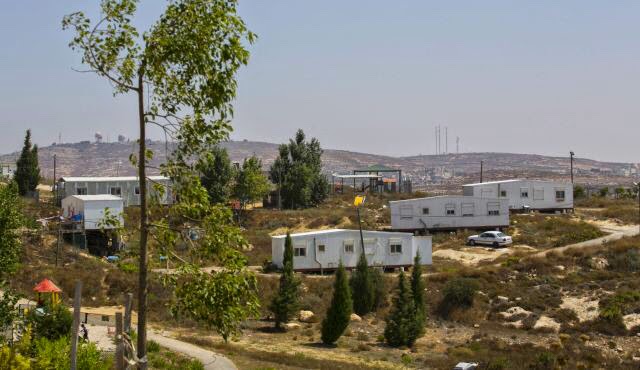
Khan al-Ahmar, a village of 180 people, is about 15km northeast of Jerusalem and falls within what is known as Area C of the occupied West Bank, as defined by the Oslo Accords. The area has been inundated with more than 300,000 Israelis living in 125 illegal settlements and is under Israeli administrative control. Under the Oslo Accords, the Palestinian Authorities was supposed to take over administering the area, but, of course, Israel never let that happen.
As a result, it is now the Israeli state that controls the land in Area C and that decides on building permits. Khan al-Ahmar existed before the state of Israel was created in 1948. In the 1950s, Palestinian Bedouins expelled from the Negev desert by the Israeli army moved to the West Bank and settled in the village, expanding it. Read More
In the five years since the discovery of the Tamar and Leviathan natural gas fields off the coast of Israel, the Israeli energy discourse has focused on questions like what to do with the gas, how much of it to export and to whom, and what the fairest distribution of profits would be among the gas partners, headed by Noble Energy and Delek Energy, and the Israeli public.
Click to expand
But after years of delays and billions of dollars spent, a new and increasingly likely scenario should be considered – the premature – and tragic – death of the Israeli gas dream. I alluded to this option in an August 2013 article titled "Israel's Zero Gas Game" in which I warned that Israel has become so busy dividing the pie that its leaders forgot it must first be baked and that due to the failure of the government to present a clear vision for the country's energy sector, articulate the rights and responsibilities of foreign investors and most importantly set rules and stick to them, "the gas will be left in the ground and the startup nation will be more worthy of the title 'shutdown nation'." Perhaps that sounded crazy at the time. Today, with the decision of the Israeli Anti-Trust Authority to revoke an arrangement permitting Noble-Delek partners to develop Leviathan, declaring them a cartel - a move that will require the separation of Leviathan from Tamar and the sale of Leviathan to a new partnership, effectively postponing the development of Leviathan indefinitely - the scenario of "zero gas" - and perhaps even the withdrawal of Noble from Israel altogether - should be considered seriously.
In deciding to enter Israel Noble has taken a huge financial, regulatory and geopolitical risk. However, the size of the discoveries, the potential of finding oil under the gas layers and the doubling of the company's market capitalization made the move easy to justify to its shareholders. But the Texas company, the only international energy company that was willing to set foot in Israel, was welcomed with no red carpet. Instead it was ushered through a Via Dolorosa of bureaucratic torture which eliminated any chance for gas production before the end of 2018 – ten years from the beginning of exploration. A ten year lead time from discovery to production is a lot to ask of a publicly traded company which has to satisfy quarterly thinking and profit hungry shareholders. But in light of Noble's recent stock performance, dropping from $80 in the summer to $50 today, the decision of the Israeli government provides an impetus to the company's leadership, not to mention the new CEO David Stover, to reconsider the commitment to Israel and begin to seek greener pastures.
There are very few oil and gas companies who have both the experience of drilling in deep waters and the willingness to associate themselves with Israel, especially in light of Noble's experience.
The Israeli government's ruling has huge implications for the future of the region as it means that at best the supply of gas from Leviathan will be delayed into the 2020s. At worst it will not happen at all. The government's concern about a gas monopoly is a legitimate one, especially during an election campaign when issues of cost of living dominate the local political discourse. But its hopes that the hot potato called Leviathan can somehow be sold to new partners require a lot of faith. There are many people with money who may be tempted to buy into a partnership in a 22 trillion cubic feet (tcf) field, but owning a stake in a gas field without an operator at hand is like owning a gold mine on the moon. There are very few oil and gas companies who have both the experience of drilling in deep waters and the willingness to associate themselves with Israel, especially in light of Noble's experience. With falling energy prices worldwide, the chance of a Noble-like operator popping out of nowhere is slim. This means that in its desire to avoid the creation of a monopoly, Israel is taking the risk that Leviathan, the world's largest offshore gas discovery of the past decade, will not be developed for many years to come - if ever. The losers will first and foremost be the Israeli people who will lose not only billions of dollars in tax revenue and the main engine of growth of their economy but also the prospects of securing their energy supply for generations. The scenario is equally bad for Jordan, Egypt and the Palestinian Authority who are counting on Leviathan gas for their economic well-being and which have all signed letters of intent to buy Israeli gas despite local opposition from their respective Israel-hating Islamists. Europe will also be a casualty since a portion of Leviathan was aimed for two LNG terminals in Egypt from where it would have been shipped to European countries aspiring to become less dependent on Russia's gas.
Other than the handful of lawyers who will earn millions litigating the dispute between Noble and the Israeli government in international courts, the biggest winner will be Cyprus. In December 2011 Noble announced the discovery of 7 tcf in a field northwest of Leviathan called Aphrodite (block 12). Other blocks have been opened for bids since attracting interest from a handful of large oil and gas companies including Total of France, Kogas of South Korea, ENI of Italy and Petronas of Malaysia. But with all eyes on Leviathan, Cyprus became an uninteresting side show. This may soon change. Cyprus may not be a paragon of regulatory stability and certainly not an investors' haven and its tense relations with Turkey pose some geopolitical risk, but the fatigue from Israel's energy shenanigans could bring about a shift from Israel to Cyprus as the new center of gravity in the East Mediterranean energy play.
There is no polite way of saying this. Israel's latest decision is tantamount to nationalization of the kind seen in Argentina, Venezuela, Mexico and Russia. All of those governments sugarcoated their decision invoking the need to protect the public interest. The investment community and global oil industry got the message and wrote off those countries. With this miserable decision, Israel has just lodged itself into this notorious club. The price will be paid in spades – and sooner than most Israelis realize. More
-------------
As the map above shows the gas field in offshore Gaza who should be the benefliciaries. Under international law Israel has no legal claim and Gaza most certainly does. I would give Gaza an income to rebuild the infrastracture destroyed by Israel as well as giving them fossil fuel to generate electricity. Editor
It is impossible to overstate the significance of the High Court of Justice ruling ordering the state to demolish within two years the Amona illegal outpost, which was built on private Palestinian land. After years of evasion, legal tricks, forged documents and unfulfilled pledges, even the High Court came to realize that the state cannot be trusted, not to mention the settlers, to voluntarily agree to return the land they plundered from their owners.
Amona was born in sin in 1997, when a group of settlers established residence in an area that had been earmarked for an archaeological site and a Mekorot Water Company reservoir. Cease and desist orders issued by Civil Administration inspectors in 2004 halted building for four years, but it resumed in force despite new stop-work orders.
In 2006, after the High Court ordered the demolition of Amona’s permanent structures, the settlers made clear that they were not bound by the court’s authority and they turned the “battle for Amona” into a national event in which they violently confronted the police. If there was no alternative to demolition, they would make Amona a “national trauma” that would threaten any future plans to evacuate outposts or settlements.
Even now, after the High Court ruling, the settler leaders are adamant: “We swear today to fight this with all our might,” Amona spokesman Avihai Boaron said. This is nothing but a continuation of the settlers’ common view that the state and its institutions are their servants, and when they do not fulfill their mission they must be fought. Particularly infuriating is the idea that “the left-wing government and the High Court are leading the country”; That is, in the struggle between land theft and the law, the High Court is not only a legal and ideological enemy but it also violates the political reality in which the right wing is in control. That perception is no less distorted and dangerous than the settlers’ position that the theft of Palestinian land is part of the Redemption.
The government of Israel cannot continue to avoid carrying out the High Court’s ruling, according to which “there is no possibility of authorizing the construction, even retroactively,” — a recognition of the tricks the cabinet could try. Two years is sufficient time to find alternative housing, and it would be best not to not wait until the last moment. The Palestinian landowners have waited too many years for the Israeli wheels of justice to turn. They have the right to have their property returned to them, with appropriate compensation. More
The horrific pictures of the beheading of American reporter James Foley, the images of executions of alleged collaborators in Gaza and the bullet-ridden bodies left behind in Iraq by the Islamic State of Iraq and the Levant are the end of a story, not the beginning.
A Palestinian youth wears a bandoleer of cartridge casings left by the Israeli army next to his destroyed home in Beit Hanoun, Gaza Strip, earlier this month. AP/Hatem Moussa
They are the result of years, at times decades, of the random violence, brutal repression and collective humiliation the United States has inflicted on others.
Our terror is delivered to the wretched of the earth with industrial weapons. It is, to us, invisible. We do not stand over the decapitated and eviscerated bodies left behind on city and village streets by our missiles, drones and fighter jets. We do not listen to the wails and shrieks of parents embracing the shattered bodies of their children. We do not see the survivors of air attacks bury their mothers, fathers, brothers and sisters. We are not conscious of the long night of collective humiliation, repression and powerlessness that characterizes existence in Israel’s occupied territories, Iraq and Afghanistan. We do not see the boiling anger that war and injustice turn into a caldron of hate over time. We are not aware of the very natural lust for revenge against those who carry out or symbolize this oppression. We see only the final pyrotechnics of terror, the shocking moment when the rage erupts into an inchoate fury and the murder of innocents. And, willfully ignorant, we do not understand our own complicity. We self-righteously condemn the killers as subhuman savages who deserve more of the violence that created them. This is a recipe for endless terror.
Chaim Engel, who took part in the uprising at the Nazis’ Sobibor death camp in Poland, described what happened when he obtained a knife and confronted a German in an office. The act he carried out was no less brutal than the beheading of Foley or the executions in Gaza. Isolated from the reality he and the other inmates endured at the camp, his act was savage. Set against the backdrop of the extermination camp it was understandable.
“It’s not a decision,” Engel said. “You just react, instinctively you react to that, and I figured, ‘Let us to do, and go and do it.’ And I went. I went with the man in the office, and we killed this German. With every jab, I said, ‘That is for my father, for my mother, for all these people, all the Jews you killed.’ ”
Any good cop, like any good reporter, knows that every criminal has a story. No one, except for perhaps a few psychopaths, wakes up wanting to cut off another person’s head. Murder and other violent crimes almost always grow out of years of abuse of some kind suffered by the perpetrator. Even the most “civilized” among us are not immune to dehumanization.
The enemies on the modern battlefield seem elusive because death is usually delivered by industrial weapons such as aerial drones or fighter jets that are impersonal, or by insurgent forces that leave behind roadside bombs or booby traps or carry out hit-and-run ambushes. This elusiveness is the curse of modern warfare. The inability of Sunni fighters in Iraq to strike back at jets and drones has resulted in their striking a captured journalist and Shiite and Kurdish civilians.
U.S. soldiers and Marines in the occupations of Iraq and Afghanistan, and Israeli soldiers in assaults on Gaza, have been among those who committed senseless acts of murder. They routinely have gunned down unarmed civilians to revenge killings of members of their units. This is a reaction I saw in several wars. It is not rational. Those murdered were not responsible, even indirectly, for the deaths of their killers’ comrades, just as Foley and the Shiites and Kurds executed in Iraq were not responsible for the deaths of Sunni militants hit by the U.S. Air Force.
J. Glenn Gray, who fought in World War II, wrote about the peculiar nature of vengeance in “The Warriors: Reflections on Men in Battle”:
When the soldier has lost a comrade to this enemy or possibly had his family destroyed by them through bombings or through political atrocities, so frequently the case in World War II, his anger and resentment deepen into hatred. Then the war for him takes on the character of a vendetta. Until he has himself destroyed as many of the enemy as possible, his lust for vengeance can hardly be appeased. I have known soldiers who were avid to exterminate every last one of the enemy, so fierce was their hatred. Such soldiers took great delight in hearing or reading of mass destruction through bombings. Anyone who has known or been a soldier of this kind is aware of how hatred penetrates every fiber of his being. His reason for living is to seek revenge; not an eye for an eye and a tooth for a tooth, but a tenfold retaliation.
Those killed are not, to the killers, human beings but representations of what they fear and hate. The veneer of the victim’s humanity, they believe, is only a mask for an evil force. The drive for vengeance, for “tenfold retaliation,” among those who are deformed by violence cannot be satiated without rivers of blood—even innocent blood. And Americans do as much of this type of revenge killing as those we fight. Our instruments of war allow us to kill from a distance. We therefore often lack any real consciousness of killing. But this does not make us any less depraved. More
An excerpt from the unpublished memoirs of the former TIME journalist Murray J. Gart describing the occupied West Bank city of Nablus at the height of the first intifada, or uprising, could have been written today.
Murray J. Gart interviews Yasser Arafat on a plane en route to Baghdad on 25 October 1988
Closure under the pretext of "security," tear gas and lethal fire against unarmed protesters was what Gart observed in the city in 1990.
Gart’s granddaughter, Brooke DeNisco, says of her grandfather that "the Middle East was his passion and he spent years living and traveling there."
When he retired from TIME, the publication with which he spent most of his career, Gart "began working on a book about the Middle East peace process, but died in 2004 before its completion. I inherited some of the notes and drafts for the book, including a narrative of five weeks he spent living in the West Bank," DeNisco explains.
"My grandfather was proudly Jewish and enjoyed traveling often to Israel," she adds. "He voted for Ronald Reagan and was a member of George Bush Sr.’s Council on Foreign Affairs."
The following "is a small excerpt from his pages of notes about his experiences in Nablus, forty miles north of Jerusalem in the occupied West Bank," DeNisco told The Electronic Intifada. "He wrote on the manuscript that this is a draft and had not been thoroughly fact-checked."
The excerpt from Murray J. Gart’s memoirs follows.
Nablus, occupied West Bank, 1990
Though I was there only five weeks, it was long enough for a good look at Nablus life.
I had to remind myself of the baggage I carried, limitations of culture, sense of history, background and language. But, after twenty years of visits to Israel, I was also aware that my experiences and preparations for the trip, including long interviews for TIME with Ariel Sharon and Yasser Arafat would help to shield me from being unfair.
I had tried to reach Nablus the previous year but was turned away by Israeli soldiers who said the city was a closed "security zone." An invitation to consult at An-Najah National University got me into the West Bank’s most active cultural and political center. But when I arrived, the university’s campus was as closed as a tomb and prohibited from opening or operating.
By the end of the week I became accustomed to bursts of Israeli gunfire, exploding gas and other disturbing noises of daily urban warfare.
Distracted
One of my first mornings in Nablus I was distracted by heavy gunfire. When I leaned out my open first-floor window, I saw fires in my street at the corner of a walled schoolyard, teenage boys running and teachers shouting.
The yard filled with smoke, driving students into the school directly opposite my window. I could see cannisters landing, exploding and spewing out more smoke. In seconds, the gas got my face and forced me to fall back and grope my way blindly to the bathroom for a wet towel. When I was able to look out the window again, perhaps ten minutes later, there wasn’t a person in sight outdoors. Later the ashes and rubble were cleaned up. The job was done by Palestinians rousted from passing cars and made to do it by soldiers pointing guns.
The Israelis had turned the most vital center of Palestinian life into something resembling a vast, maximum security prison. That at least, was how it felt from the inside.
Armed troops did all the work of police, tightly controlled every life in the city and dispensed summary justice. They guarded entry and exit roads like prison gates and enforced Israel’s iron-fist occupation rules, which in practice meant repressive martial-law measures like collective punishment and preventive detention.
They used force to suppress the slightest hint of civil resistance, and responded to nonviolent protest with the force of lethal arms. To conceal these conditions to the world, the city was almost always a "closed military zone" which barred entry by the press, diplomats, clergy and anyone else the army chose to keep out.
There was no one to witness the real conditions of the Nablus lockup. Twenty-four hours a day every day of their lives, residents saw soldiers, as I did, close by on foot and in vehicles keeping relentless house-to-house pressure on every neighborhood. They broke into private homes, mosques and even hospital operating rooms, leaving a tornado-like aftermath.
A lot of residents have died. Doctors in Nablus said the number of wounded or dead was probably ten to twenty times more than reported. Injuries from beatings and stonings, illnesses made worse by gas, including the loss of human fetuses ran into the thousands.
Dozens of Nabulsis were dragged off daily for interrogations, beatings, jailing or imprisonment, without trial, for terms that can last years. On walks or from my window, it was common to see people carted off in military vehicles. A command car drove past me with two feet in white sneakers sticking out the rear. Inside, the prisoner’s face was being smashed into the floor by an Israeli soldier’s boot.
No safety
In Nablus I met old and young people, activists, businessmen, doctors, writers, lawyers and students. Not one of them felt safe or secure anywhere in town, and I came to understand why. Thousands of violent incidents, few of them ever reported, had touched the life of every person in town.
They stated their views respectfully, but asked me heated questions about American policy. The bitterness they felt toward the US for supporting Israel against the Palestinians poured out. They saw the American-Israeli alliance as hostile and directed against them.
A tall fellow about twenty put it this way: "Americans send bullets and gas for Israelis to shoot at us. Why do you hate us too?" When asked, I stated frankly the unwelcome opinion that the US will not, as Palestinians I met almost universally hope it will, punish Israel if it does not leave the West Bank and Gaza.
My biggest discovery was that there was no big discoveries to be made about the conflict beyond its awesome scope and pervasiveness, and the degree to which Israel had come to rely on brute force dealt out by a clumsy army to beat Palestinians into submission.
I saw what I already knew, but somehow had refused to believe could be happening in the same Jewish state meant to shelter an oppressed people. It was why the Palestinians in lands Israel rules under martial law so passionately oppose occupation, why they hate Israelis and why they feel so strongly that their struggle must continue, whatever the cost. They do believe they have little left to lose. Murray J. Gart, 1990 More
Israel’s takeover of West Bank lands for settlement construction has proceeded without interruption since 1967. But the legal strategies for carrying out land acquisition and legitimating it in the eyes of the Israeli public and the international community have evolved over the 45 years. There are now signs that the regime of expropriation is once again changing its shape, this time making even fewer concessions to international law and opinion.
Since the beginning of Israel’s occupation of the West Bank, Israeli courts have allowed the army to expropriate private Palestinian-owned land. International law allows for the occupier’s use of land in cases of “military necessity,” and Israel’s High Court of Justice gave “military necessity” an extremely liberal interpretation, in effect allowing seizure of land whenever the military authorities claimed that it would benefit the security of the state.
Thus many of the early settlements were established on private land seized by the army and legitimated by the court. That was until 1979, when the High Court of Justice, in the face of a flagrant mockery of the spirit of international law, ruled that the military could not confiscate land for the sole purpose, with no security rationale, of establishing a permanent settlement. The extreme religious settlement of Elon Moreh was forced to relocate, and the era of military pretexts for the theft of private land for settlements was brought to a close.
But of course the Elon Moreh decision did not slow the acquisition of Palestinian land for the illegal settlement enterprise. It led to two new techniques. The first involved the spurious legal distinction between private Palestinian lands, and “state lands” to which no one held legal title. The court declared that private land could not be used for settlements (although military requisition was still approved), but state lands were fair game. Thus the courts created a legal avenue for the theft of lands, some of which had been cultivated for many generations, and all of which constitute the only territory left for the future Palestinian state.
The other consequence of the landmark Elon Moreh decision was the practice of seizing hilltops and claiming unauthorized but unofficially-sanctioned outposts. The networks of religious settler activists, and well placed bureaucrats in the ministries of defense and housing continued to spread across the central spine of the West Bank, oblivious to whom the land’s legal owners might be. The Elon Moreh ruling was bypassed as settlers grabbed hilltops, while government agencies quickly connected them to the electric grid, water services, and road network.
Now this thirty-year-old regime of land acquisition, with its dual offensives of legal procedure for so-called “state lands,” and after-the-fact normalization of illegal “outposts,” might be undergoing another transformation. Recent years have placed some obstacles in the path of the settler movements, from the work of Peace Now, to Dalia Sasson’s government-sponsored expose of the deeply rooted corruption that enables the illegal settlements. And most recently, in July of this year, a government-appointed commission headed by retired jurist Edmond Levy called for an end to the two-faced policy of unofficially promoting outposts while officially placing them outside the law. The Levy commission called for the immediate legalization of the outposts, even preserving those built on private Palestinian land, perhaps compensating the owners. More
Earlier this week, an Israeli military court judge ordered the release of a Palestinian whose violent arrest by non-uniformed Israeli soldiers a month ago was captured on video.
According to a press release from B’Tselem, the judge made his decision to free ‘Abd al-’Aziz Fakhouri “after watching two videos” of the incident: the first, published at the time, and a second, “recently uncovered” by the Israeli human rights group (also seen above).
The event occurred on the 14.08.2012 in Tel Rumeida in Hebron. A video filmed by a foreign citizen depicts soldiers from the Shaham battalion of the Nahal brigade, during a fitness exercise, violently dragging the young man into a stairwell near the checkpoint, with some of them even kicking him.
The second clip obtained by B’Tselem shows footage leading up to the incident, when an Israeli soldier falsely accuses Fakhouri “of having cursed him”, before the Palestinian young man is violently snatched.
Making his decision, the military judge said “it’s clear that the respondent was attacked by a soldier apparently in civilian dress, through no fault of his own, because he [the soldier] thought the respondent had spoken disparagingly to him”. He went on to call it
an example of unreasonable use of force by soldiers in civilian clothes, who it isn’t clear even had the authority to distance the respondent from the area and to arrest him.
Compare this to the response by the Israeli army spokesperson after the first video became public. In comments that appeared in Ha’aretz (and a similar response was given to +972), the Israeli military claimed:
The video does not display all of the incidents leading up to the event. Yesterday, during a routine security check in Hebron, the Palestinian refused to identify himself. The Palestinian man confronted the IDF force on scene, an incident not shown in the video, when the soldiers, who were there unintentionally, assisted the force in completing its mission.
There were additional anonymous remarks by “security sources”, included in a reportfor The Jerusalem Post by Tovah Lazaroff, that “during questioning the Palestinian man admitted that he physically resisted the inspection” and that “it turned out the Palestinian man was wanted for investigation.”
Meanwhile, Israeli army spokesperson for “Judea and Samaria Division” Captain Barak Raz – who coincidentally was at a ceremony in Hebron at the time – had responded to me on Twitter with the following remarks:
At the time of the Oslo accords, the mild-mannered Edward Said was intemperate in his denunciation of Yasser Arafat and the PLO for accepting the deal. I could see there were problems, but thought he was a bit over the top in his rhetoric. Within a year or so, however, it was clear that Said was entirely correct. The government of the Land of Milk and Honey maintained its reputation as the regime of fig leaves and phony diplomacy.
Oslo was not about peace with the Palestinians: it was about breaking Israeli isolation worldwide, and providing diplomatic camouflage for Israel and its supporters in Washington—which of course included the Clinton White House and Congress—to pretend that Israel was seeking peace. The doubling of the number of Jewish settlers while talking about negotiations based on an agreement which pledged that neither side would make any unilateral changes is an example of prestidigitatory diplomacy of a prize-winning kind. Just as the conjuror's patter is designed to lull the audience's attention so they do not focus on what his hands are doing, Israeli diplomatic practice is to keep on nagging and hectoring so that the U.S. can pretend it does not see what is happening on the ground.
But there are other aspects to Israel's continual chatter—above all its leadership's continual attempts to persuade itself that its behavior, despite violating almost every tenet of international law and of Jewish ethics, is really moral and legal.
That was epitomized with the recent commission which "found" that Israel's settlement policy was entirely legal. The commission, chaired by former Judge Edmond Levy, has caused controversy worldwide by finding that Israel is not an "occupier" in the West Bank and that all Jewish settlements are legal—including those even the Israeli government itself calls unauthorized.
We can tell what a responsible and objective body the commission was: it included former Israeli Ambassador to Canada Alan Baker, who lived in a settlement himself and whose law firm had been contracted to prove that very point before he joined the entirely unbiased investigatory committee! The committee was, of course, commissioned by Prime Minister Binyamin Netanyahu, whose views on settlements are obvious since he has refused all President Barack Obama's appeals to stop building them!
So the only purpose of the Levy commission is to reinforce Israel's incestuous political isolation, which is analogous to the prisoner in the dock telling the judge, jury and public that he knows the law better than they do. It will certainly have no persuasive effect outside the country. More
Last Friday, Palestinian activist Mohammed Khatib, dubbed “a modern-day Gandhi” by the LA Times, was beaten by Israeli armed forces at a peaceful protest. A leader of popular resistance in the West Bank town of Bil’in, Khatib lives by the credo: “Nonviolence is our most powerful weapon.”
That perhaps, along with global exposure of the documented human rights abuses and recognized violations of international law by the state of Israel and its collaborators.
In 2009, the Russell Tribunal on Palestine was founded to do exactly that. First in Barcelona, then London, Cape Town, and now coming to New York City in early October, the tribunal gathers legal experts, scholars, activists, and other people of note to help shed light on the reality of Israel’s occupation of Palestine, and demands accountability from Israel’s corporate and international enablers.
Coming to the doorstep of the United Nations in the financial capital of the United States is a bold move for the Russell Tribunal. Amidst the pre-election campaign buzz in which both major parties unequivocally support Israel’s actions, these non-binding hearings will place UN and US policies vis-à-vis Israel on trial.
Among the renowned figures who will publicly offer and weigh testimony in New York City are Noam Chomsky, Alice Walker, Angela Davis, Russell Means, Saleh Hamayel, Dennis Banks, and a Who’s Who of others on the international human rights front.
Khatib himself was a witness at the Cape Town hearings, testifying to the fact that Israel is in breach of the prohibition on apartheid under international law. New York’s tribunal aims to go back to the root of the conflict and focus on UN and US responsibility in the denial of the Palestinian right to self-determination.
Walker, Davis, Means, and Banks—all of whom are Black or Native American—are among the Russell Tribunal participants to issue an “urgent call to others who share our commitment to racial justice, equality, and freedom.” They invite people to attend the hearings in New York City on October 6 and 7, writing, “Each and every one of us—particularly those of us and our fellow jury members who grew up in the Jim Crow South, in apartheid South Africa, and on Indian reservations in the United States—is shocked by what Israel is doing to the Palestinians.” They continue:
Not since Operation Wetback and Operation Gatekeeper have so many families been torn apart; not since Jim Crow have so many rights been denied; not since reservations and internment camps has the United States invested in so many apartheid walls, fences, and cages.
There is no pretense about these hearings. Its participants understand that institutions held in high esteem, such as the International Court of Justice (ICJ) in The Hague, have documented Israel’s crimes in the past. The ICJ, in a 1,067-page dossier, has already delineated many violations of international law concerning the “separation barrier” or “apartheid wall,” the 470-mile-long barrier guarded by soldiers with high-powered weapons and checkpoints. More
JERUSALEM, Sep 3 2012 (IPS) - By mining natural resources from the occupied Palestinian territories for its own economic purposes, Israel is committing the war crime of pillage in the Dead Sea area, according to a report released Monday by Palestinian human rights group Al Haq.
“Israel is openly in violation of its obligations as an Occupying Power in the (occupied Palestinian territories), because it is encouraging and facilitating the exploitation of Palestinian natural resources and actively assisting their pillaging by private actors,” said the Al Haq report, titled ‘Pillage of the Dead Sea: Israel’s Unlawful Exploitation of Natural Resources in the Occupied Palestinian Territory’.
Criminal responsibility for the crime of pillage does not only extend to the state of Israel, but can also be applied to individuals, namely Israeli settlers who benefit from the extraction of resources from the Dead Sea, Al Haq said.
“Although settlers and companies involved in the exploitation of the natural resources of the Dead Sea are mainly encouraged to do so by the State of Israel, they cannot ignore that such resources are considered Palestinian under international law. This should be sufficient to substantiate the ‘mental element’ of the crime of pillage, thus allowing for some Israeli settlers to be considered as the direct perpetrators of that crime,” the report stated.
Israel has maintained that numerous covenants of international humanitarian law do not apply to the occupied Palestinian territories since these areas are not under Israel’s jurisdiction. Recently, an Israeli government-appointed committee, known as the Levy Committee, also ruled that Israel is not an occupying power and that therefore, Israeli settlements in the West Bank are legal.
Nonetheless, many international jurists have maintained that Israel is violating basic principles of international law in its occupation of the Palestinian territories and exploitation of the area’s resources. Article 47 of the Hague Convention (1907), which outlines war crimes under international humanitarian law, states that “pillage is formally forbidden.”
Activists have launched a worldwide boycott campaign against Israeli products that are manufactured in the occupied Palestinian territories, and are inaccurately labeled as “Made in Israel.”
Recently, the South African government stated that it wouldn’t import goods produced in the occupied West Bank that are marked as Israeli-made. The United Church of Canada, the country’s largest Protestant church, also passed a similar boycott resolution against all settlement products.
The consequences of Israel’s exploitation of Palestinian resources don’t end at the Dead Sea, however. In 2009, Israeli human rights group Yesh Din submitted a petition the Israeli Supreme Court challenging the legality of Israeli quarrying activities taking place throughout the West Bank. More
Israel is forcing Palestinians out of East Jerusalem as part of a deliberate policy that might constitute a war crime, a prominent Israeli non-governmental organisation said, a charge rejected by Jerusalem's mayor.
The Israeli Committee Against House Demolitions (ICAHD) has presented the United Nations with its findings on Monday [October 2011] and demanded an inquiry, saying Israel targeted Palestinians by demolishing homes, revoking residency and eroding quality of life.
"We are witnessing a process of ethnic displacement," said Michael Sfard, a lawyer who helped draw up a 73-page report into the issue. "Israel is manifestly and seriously violating international law ... and the motivation is demographic."
Stephan Miller, a spokesman for Israel's mayor of Jerusalem, Nir Barkat, dismissed the report. He said in a statement it was based on "misleading facts, blatant lies and political spin about Jerusalem, so I'm sure the UN will enjoy it".
Israel seized East Jerusalem, including the Old City, in the 1967 Middle East war. It later annexed the area and surrounding West Bank villages into a Jerusalem municipality that it declared the united and eternal capital of Israel.
World powers have not recognised Israel's annexations - which, according to international law, are illegal. Moreover, Palestinians want E Jerusalem for the capital of their future state.
There are some 300,000 Palestinians residents in East Jerusalem, representing about 35 per cent of the city's total population, but ICAHD said that since Israel took control of largely Arab areas it had systematically prevented their development.
One third of land in East Jerusalem was taken for the construction of Jewish neighbourhoods, while only nine per cent of the remaining land is legally available for housing. This has all been built on, making expansion impossible.
ICAHD said it was virtually impossible for Palestinians to obtain building permits to house their growing families.
"They have no other option than to leave East Jerusalem, build illegally or live in appalling, cramped conditions," said Emily Schaeffer, who authored the report.
'War crime'
Those who leave lose residency rights if they are gone for seven or more years and cannot return.
Some 14,000 Palestinians lost their residency between 1967 and 2010, with half of those revocations taking place after 2006, ICAHD said. More
The recent verdict in the Rachel Corrie case has once again thrown the spotlight on the Israeli policy of house demolitions.
Nearly 10 years ago, the 23-year-old American activist was killed by an Israeli army bulldozer while trying to obstruct the demolition of a Palestinian home in the Gaza Strip.
Corrie and a group of activists from the International Solidarity Movement (ISM) were acting as human shields to try to stop the Israeli army demolishing Palestinian homes and clearing land around the Palestinian town of Rafah.
Since 1967, Israel has practised a range of policies leading to the internal displacement of about 160,000 Palestinians within the occupied West Bank and Gaza. Of these actions, house demolitions are the most visible.
These are carried out by the Israeli army for a number of reasons, including "administrative" demolitions, where Palestinian homes have been built without Israeli-issued permits, as well as punitive demolitions – where a family member is accused of being involved in militant activity.
The most devastating demolitions, however, are caused by large-scale military operations, such as those during the war on Gaza in 2008-09.
Jeff Halper of the Israeli Committee Against House Demolitions (ICAHD) argues that, seen in their totality since 1967, these home demolitions amount to an intentional "policy of displacement".
Last year, ICAHD presented the United Nations with a report, charging that Israel had a deliberate policy of forcing Palestinians out of East Jerusalem, and that this might constitute a war crime. More
One has to question why the Israeli regime allowed to to continue this policy which is clearly against international law. it could be argued that the international comunity is collectivly guilty of crimes against humanity. Editor
Zenuta, West Bank – At around 10 a.m. on Tuesday, a group of Palestinians from the village of Zenuta watched from across a valley in the South Hebron Hills as two Israeli army bulldozers suddenly appeared and destroyed their village’s water cisterns, cave dwellings and stables. The village, divided by a valley, is just 3 kilometers from the Green Line, at the southern tip of the West Bank.
The bulldozers in Zenuta were accompanied by five army jeeps, three vehicles from the Israeli Civil Administration, and a charter bus of Israeli soldiers, trying to keep activists and members of the press from entering the village. A group of about 20-25 Palestinian men, women, and children who were there at the time sat in front of one of the bulldozers in an effort to stop them. They were quickly removed, however, by the army and the destruction commenced.
In total, four water cisterns, two caves, two houses and six stables were destroyed. Zenuta is a small village of seven families with a herd of 400 sheep. The army destroyed the houses of two families, each with seven children, as well as six stables holding sheep. Perhaps most devastating of all in a region starved for water, the army bulldozed the village’s cisterns, holding water collected from winter rains. The cisterns cost NIS 15,000 each, an incredible toll amounting to about a year and half’s wages for the average Palestinian worker in the area. The cisterns had been filled with water after a winter that brought the best rainfall in at least 10 years, according to residents of the area. Now two young boys walked around with the only two bottles of water left in the village offering it to visitors.
Mohammed Khaled Samamry, the owner of one of the houses destroyed, was indignant. “Can you live without water?” he asked, his hand trembling slightly with frustration. ”What can we do without water? What can we drink? You see what they do to us, the Israelis? They left the kids sitting under the sun, the sheep in the field. Where will we sleep tonight?”
A handful of children sat quietly, shocked and sad, in the midst of twisted metal rods and pots and pans scattered on the ground. The sheep wandered aimlessly in a field, nibbling at the straw.
According to Israeli activists, three tents were also destroyed Tuesday morning in Susya, a nearby village that is under threat of demolition. The tents were built by the UN’s OCHA department, and were destroyed by the army once before, last November.
The destruction comes in the midst of a wider threat to the villages in this region. In July, Israel issued orders to wipe out the nearby villages of Jinba, Farkheti, Majaz, Sfai, Khoruba, Tabban, Mirkez, and Halawah. Demolition orders have also been issued for structures in the villages of Mufagara and Tuba. In all, over 1,500 residents are at risk of losing their homes. More
Who were these people harming? They were only struggling to live onder a brutal occupation.Editor


 © 2014