Showing posts with label right of return. Show all posts

Thursday, April 4, 2013

‘The soldiers answered his screams with laughter and then shot more bullets’

As Palestinian Child Day is celebrated on 5 April, Omsiyat Kamal ‘Awaja (15) is one of many Palestinian children for whom the day, like every other, will be marked by unbearable loss and suffering.

It is impossible to count the number of children in the Gaza Strip who have been directly affected by loss. Since the outbreak of al-Aqsa Intifada on 28 September 2000, PCHR has documented the killing of 958 Palestinian children and injury of 6,355 others in the Gaza Strip. 313 children were killed during ‘Operation Cast Lead’ (2008-9), and a further 35 children were killed during ‘Operation Pillar of Defence’ in November 2012. PCHR has also documented the tragic consequences on thousands of children of the destruction of their homes, denying them the right to shelter.

A small, mud house with a small yard in the front, piles of pots and kitchen utensils scattered here and there, a number of books leaning against the wall of the house, which barely shelters its residents. That is what the house in which Omsiyat currently lives looks like. The house was built by UNRWA as a temporary alternative for the ‘Awaja family home, which was destroyed by Israeli forces in 2009 during ‘Operation Cast Lead’.


“Before moving to the house that you are seeing now, we lived in a tent for around two years. During that time, we realised exactly what it feels like to be a displaced person with no home. We did not get used to living in a tent. It took us a long time to adjust, as we used to live in a big house with most of the things we needed.”


On 4 January 2009, Israeli forces destroyed the ‘Awaja building in Beit Lahia without any prior warning. The residents fled to a neighbouring tract of land when Israeli bulldozers began to destroy their home. After the house had been destroyed, the children’s mother, Wafaa’ (36), went back to collect what could be salvaged from under the rubble. She was accompanied by three of her children, Diaa, Sobhi, and Ibrahim, each of whom was younger than 13 years of age.


Omsiyat recalls: “My brother, Ibrahim, was the first to be injured, sustaining injuries in his waist. Mom screamed out, so Dad went to check on her, and picked up my brother. They left the house, or what remained of it, and Dad was screaming, ‘My son is injured. We need an ambulance.’ The Israeli soldiers were still in the area. They answered his screams with laughter and then shot more bullets, so that Dad was injured, as well as my mother. My father was left lying on the street and Ibrahim was lying next to him. My mother crawled until she reached my siblings and me where we were hiding behind a wall. We saw the Israeli soldiers approaching and shooting at Ibrahim, and Dad told us later that he had died.”

More than four years later, Omsiyat is still torn apart by regret. Though very young, she feels guilty about the death of her brother because she failed to help him. “When my Dad, Mom, and Ibrahim were injured, I stood there, unable to do anything, though I am the oldest of my siblings. I cannot forget what happened and I feel so much pain whenever I remember that I did not try to help. The idea that my help might have done something, in some way or another, to rescue my brother never leaves my mind, and it causes my stomach to ache. Maybe if I had tried to pull Ibrahim away from the Israeli crossfire, he would still be alive.”


Omsiyat was severely affected by the suffering that she and her family went through. Her father, Kamal (51), says, “Omsiyat suffered so much after the death of her brother and the destruction of our house. It took us a long time to settle into our new life in the tent, and then in the mud house, as neither could compare to the house we used to live in and what I used to provide for my children. My child was executed, my house was destroyed, and I turned from being a father who provided the best he could for his family to a father who is incapable even of providing a suitable house for his family. Days pass by meaninglessly. This how we all feel. Even psychotherapy sessions could not help us to get over this. My wife, children, and I share an indescribable feeling of oppression.”


Omsiyat describes how her father, Kamal (51), tried his best to create a nice environment for his children to live in: “Dad installed an internet line in the tent and bought us a computer. He also replaced most of the electronic devices we used to have in our house, but unfortunately he could not build a new house because he did not have enough money. UNRWA built us this temporary house and told my Dad recently that they are planning to demolish it to build a new permanent house. We are preparing to go back to living in a tent.”


The family will live in a tent again until UNRWA finishes building the permanent house. “Although I know from experience how harsh it is to live in tents, the idea of going back to the tent does not worry me. In comparison to what we have been through, tents seem luxurious.”


Omsiyat used to love drawing landscapes, but today she only draws scenes of death and destruction. “I can see no beauty around me and I am no good at drawing anything but warplanes, tanks, and funerals. I used to love drawing landscapes. All I drew in my paintings were flowers, butterflies, and trees. Now, when I intend to draw a flower, I automatically draw a tank, a tent, or a destroyed house.”


Omsiyat’s story is included in a report that PCHR has recently published, ‘The Best is Yet to Come’, along with the accounts of 14 more children in the Gaza Strip who have experienced bereavement, injury, the injury of a loved one, the destruction of a home, or long-term separation from a father who is in prison. The report was funded by UNICEF.


Palestinian children are a particularly vulnerable group and are among those most affected by Israeli forces' violations in the West Bank and the Gaza Strip, which have been ongoing since 1967. International humanitarian law (IHL) grants children two forms of protection: first, the general protection granted to them as non-combatant individuals; second, special protection as they are considered to be a particularly vulnerable group in times of war and armed conflict.[1]


Under the principle of distinction, parties to a conflict must, at all times, distinguish between civilians and combatants, and civilian objects and military targets. Violations of this principle constitute war crimes, as defined in, inter alia, Articles 8(2)(b)(i), and (ii) of the Statute of the International Criminal Court.[2] Depending on the scale of such attacks, and whether they form part of a plan or policy, such attacks may also constitute the crime of wilful killing and be a grave breach of the Geneva Conventions.[3]


In addition, IHL requires that any attack must be proportionate. An attack which may be expected to cause incidental loss of civilian life, injury to civilians, damage to civilian objects, or a combination thereof, which would be excessive in relation to the concrete and direct military advantage anticipated.[4] Furthermore, under the principle of precaution, customary IHL requires that all feasible precautions must be taken to avoid, or at least to minimise, incidental loss of civilian life, injury to civilians and damage to civilian objects.[5] More

 

Wednesday, March 27, 2013

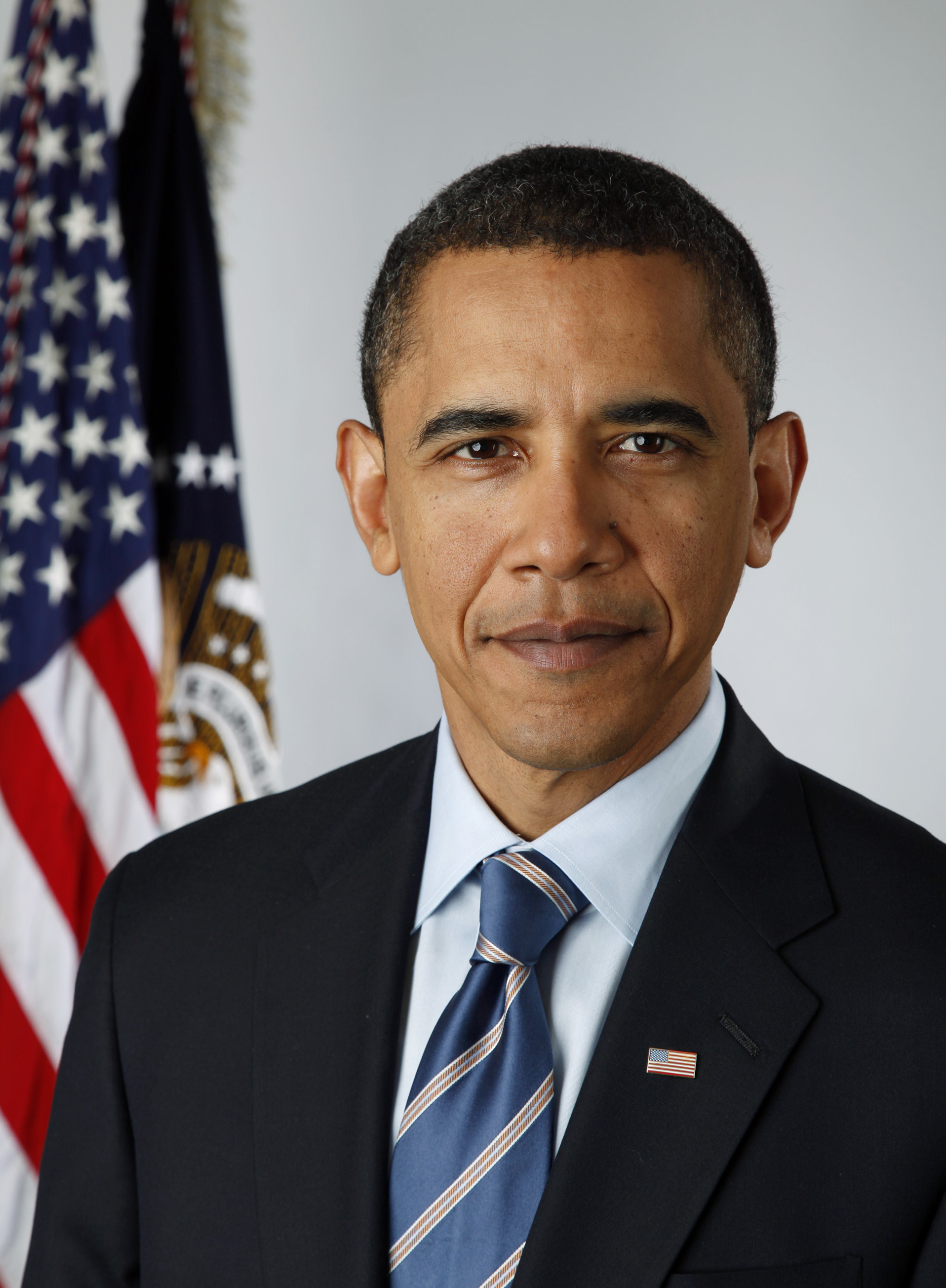
What Was Wrong With Obama’s Speech In Jerusalem by Richard Falk

It was master-crafted as an ingratiating speech by the world’s most important leader and the government that has most consistently championed Israel’s cause over the decades. Enthusiastically received by the audience of Israeli youth, and especially by liberal Jews around the world.

Despite the venue, President Obama’s words in Jerusalem on March 21st seemed primarily intended to clear the air somewhat in Washington. Obama may now have a slightly better chance to succeed in his second legacy-building presidential term despite a deeply polarized U.S. Congress, and a struggling American economy if assessed from the perspective of workers’ distress rather than on the basis of robust corporate profits.

As for the speech itself, it did possess several redeeming features. It did acknowledge that alongside Israeli security concerns “Palestinian people’s right of self-determination, their right to justice must also be recognized.” This affirmation was followed by the strongest assertion of all: “..put yourself in their shoes. Look at the world through their eyes.” To consider the realities of the conflict through Palestinian eyes is to confront the ugly realities of prolonged occupation, annexationist settlement projects, an unlawful separation wall, generations confined to the misery of refugee camps and exile, second-class citizenship in Israel, ethnic cleansing in Jerusalem, and a myriad of regulations that make the daily life of Palestinians a narrative of humiliation and frustration. Of course, Obama did not dare to do this. None of these realities were specified, being left to the imagination of his audience of Israeli youth, but at least the general injunction to see the conflict through the eyes of the other pointed the way toward empathy and reconciliation.

Obama also encouraged in a helpful way Israeli citizen activism on behalf of a just peace based on two states for two peoples. A bit strangely he urged that “for the moment, put aside the plans and process” by which this goal might be achieved, and “instead..build trust between people.” Is this not an odd bit of advice? It seems a stretch to stress trust when the structures and practice of occupation are for the Palestinians unremittingly cruel, exploitative, and whittle away day after day at the attainability of a viable Palestinian state. But this farfetched entreaty was coupled with a more plausible plea: “I can promise you this: Political leaders will never take risks if the people do not push them to take some risks. You must create the change that you want to see. Ordinary people can accomplish extraordinary things.” There is some genuine hope to be found in these inspirational words, but to what end given the present situation.

In my opinion the speech was deeply flawed in three fundamental respects:

>> by speaking only to Israeli youth, and not arranging a parallel talk in Ramallah to Palestinian youth, the role of the United States as ‘dishonest broker’ was brazenly confirmed; it also signaled that the White House was more interested in appealing to the folks in Washington than to those Palestinians trapped in the West Bank and Gaza, an interpretation reinforced by laying a wreath at the grave of Theodor Herzl but refusing to do so at the tomb of Yasir Arafat. This disparity of concern was further exhibited when Obama spoke of the children of Sderot in southern Israel, “the same age as my own daughters, who went to bed at night fearful that a rocket would land in their bedroom simply because of who they are and where they live.” To make such an observation without even mentioning the trauma-laden life of children on the other side of the border in Gaza who have been living for years under conditions of blockade, violent incursions, and total vulnerability year after year is to subscribe fully to the one-sided Israeli narrative as to the insecurity being experienced by the two peoples.

>> by speaking about the possibility of peace based on the two state consensus, the old ideas, without mentioning developments that have made more and more people skeptical about Israeli intentions is to lend credence to what seems more and more to be a delusionary approach to resolving the conflict. Coupling this with Obama’s perverse injunction to the leaders of the Middle East that seems willfully oblivious to the present set of circumstances makes the whole appeal seem out of touch: “Now’s the time for the Arab world to take steps towards normalizing relations with Israel.” How can now be the time, when just days earlier Benjamin Netanyahu announced the formation of the most right-wing, pro-settler government in the history of Israel, selecting a cabinet that is deeply dedicated to settlement expansion and resistant to the very idea of a genuine Palestinian state? It should never be forgotten that when the Palestinian Liberation Organization announced back in 1988 that it was prepared to make a sustained peace with Israel on the basis of the 1967 borders. By doing this, the Palestinians were making an extraordinary territorial concession that has never been reciprocated, and operationally repudiated by continuous settlement building. The move meant accepting a state limited to 22% of historic Palestine, or less than half of what the UN had proposed in its 1947 partition plan contained in GA Resolution 181, which at the time was seen as grossly unfair to the Palestinians and a plan put forward without taking account of the wishes of the resident population. To expect the Palestinians to be willing now to accept significantly less land than enclosed by these 1967 borders to reach a resolution of the conflict seems highly unreasonable, and probably not sustainable if it should be imprudently accepted by the Palestinian Authority.

>> by endorsing the formula two states for two peoples was consigning the Palestinian minority in Israel to permanent second-class citizenship without even being worthy of mention as a human rights challenge facing the democratic Israel that Obama was celebrating. As David Bromwich has pointed out [“Tribalism in the Jerusalem speech,”] http://mondoweiss.net/2013/03/tribalism-jerusalem-speech.html Obama was also endorsing a tribalist view of statehood that seem inconsistent with a globalizing world, and with secularist assumptions that a legitimate state should never be exclusivist in either its religious or ethnic character. Obama went out of his to affirm the core Zionist idea of a statist homeland where all Jews can most fully embrace their Jewishness: “Israel is rooted not just in history and tradition, but also in a simple and profound idea: the idea that people deserve to be free in a land of their own.” And with embedded irony no mention was made of the absence of any Palestinian right of return even for those who were coerced into fleeing from homes and villages that had been family residences for countless generations.

Such a regressive approach to identity and statehood was also by implication attributed to the Palestinians, also affirmed as a a lesser entitlement. But this is highly misleading, a false symmetry. The Palestinians have no guiding ethno-religious ideology that is comparable to Zionism. Their quest has been to recover rights under international law in the lands of their habitual residence, above all, the exercise of their inalienable right of self-determination in such a manner as to roll back the wider claims of settler colonialism that have been so grandiosely integral to the Greater Israel vision and practice of the Netanyahu government. And what of the 20% of the current population of Israel that lives under a legal regime that discriminates against them and almost by definition is a permanent consignment to second-class citizenship. Indeed, Obama’s speech was also an affront to many Israeli post-Zionists and secularists who do not affirm the idea of living under in a hyper-nationalist state with pretensions of religious endowments. More


Friday, March 15, 2013

Palestinian cartoonist detained for a month as prisoner protests grow

Mohammad Saba’aneh, an important Palestinian political cartoonist, has been in prison for about a month now. Friends and supporters suspect his detention is related to the growing protests on the issue of Palestinian prisoners and the international concern over hunger strikers, including a new resolution in the European Parliament.

Mohammad Saba’aneh (30) was arrested on February 16 while returning from a work-related trip to Jordan. After taking part in an Amman conference of the Arab-American University in Jenin (a private institute that works in coordination with the PA’s Ministry of Education and the California and Utah State Universities), where he works in the spokesperson’s office, Saba’aneh was captured by Israeli authorities at the Allenby border crossing and taken for interrogation.

The young cartoonist, whose drawings are regularly published in the Al-Hayat al-Jadida newspaper, was not allowed to see an attorney for the first three weeks of his interrogation, and so far, no official charges have been brought against him. The Ofer Military Court has prolonged his detention time after time, and an appeal against the latest addition to his detention was denied by the Military Appeals Court on Monday. Attorney Jawad Boulos, who was finally allowed to see Saba’aneh last week, told his family that he is doing well and that he is being broadly interrogated for allegedly aiding an illegal organization. Last week, soldiers raided the family’s house and arrested Saba’aneh’s brother, and confiscated computers.

Since his arrest, local and international artists and journalists have been calling for Saba’aneh’s release, claiming that his only crime is criticizing the occupation with his pen and palate of colors. The Palestinian Journalists’ Syndicate, Reporters without Borders, the Committee to Protect Journalists and several Israeli cartoonists and artists have already taken a stand against their colleague’s prolonged detention without charge, and some demonstrated outside the courthouse during the latest detention hearing. Cartoons advocating his release were published on the Cartoon Movement website, and other works of art by Israeli artists were gathered as a form of petition in the Erev-Rav website. “As Israeli artists we call for the release of Mohammad Saba’aneh,” they wrote, “his pictures of reality are not a crime – reality itself is the crime, and the criminals are the ones who had made it so.”

Members of the Saba’aneh family, who have not yet been allowed to see their son, also released a statement, calling on individuals and NGOs around the world “to work hard to save our son and all prisoners from the Occupation prisons to end their suffering by raising their case in international forums to assure their safety and their legal right.”

Saba’aneh’s friends and colleagues fear that the real reason for the detention is the cartoonist’s devotion to the issue of Palestinian prisoners, shown in many of his recent works. In other works, collected by Haaretz columnist Tamer Masalha (Hebrew), the cartoonist has also been critical of the illusion of an “independent” PA, and of the sad results of the Arab Spring. More


Wednesday, November 14, 2012

Gaza Under Attack: Israeli Military Assassinates Hamas Leader in First Salvo of Bombing Campaign

The Israeli military launched a campaign of air strikes against the Hamas-ruled Gaza Strip November 14 by assassinating the head of the Palestinian group’s armed wing.

Ahmed Al-Jabari, the head of Hamas’ Qassam military brigades, was killed when an Israeli jet dropped a bomb on a car he was traveling in along with another man, whose name is not yet known.

The Israel Defense Forces announced that the assassination was the beginning of “Operation Pillar of Defense,” a campaign targeting Hamas and Islamic Jihad, another armed group in Gaza.

The New York Times reports [3] that Al-Jabari was “the most senior official of the group to be killed by the Israelis since their invasion of Gaza four years ago.”

After the assassination, the Israeli Air Force continued to pound the Gaza Strip with air strikes, leading to the deaths of more people, including a one-year-old baby, according to a French photographer [4] on the ground there. Gaza is home to 1.5 million civilians, half of whom are children. The Strip has endured a devastating air, land and sea blockade from Israel ever since Hamas came to power after winning elections in the Palestinian territories in 2006.

Israel has long used extrajudicial assassinations as a favored tool against Palestinian armed groups.

“Israel's latest bombing campaign in Gaza, and in particular its assassination of Palestinian leaders, highlights once again that Israel views itself as above the law,” said Diana Buttu, a former advisor to the Palestine Liberation Organization, in a statement. “This is precisely why the international community, and in particular the United States, must hold Israel accountable for its provocative and illegal actions, in order to stop another bloodbath in Gaza before it happens. It is time for the world to send Israel the message that it is not above the law and the Palestinians are not beneath it.”

In response to the killing of Al-Jabari, Hamas promised to make Israel “pay a high price.” Rockets fired from Palestinian armed groups have already been shot into Israel in response, according to the Israeli daily Haaretz. And like clockwork, the U.S. military has come out in support of Israel’s campaign. “We're monitoring the situation closely. We stand by our Israeli partners in their right to defend themselves against terrorism,” said a Pentagon spokesperson. [5] More

It is beyond the time that the international community stood with Palestine and Gaza against Israeli terrorism and theft of the majority of the Palestinain's territory. Editor


Friday, August 31, 2012

Choose a kid at random, "aim at his body": Israeli soldiers confess their violence

This video, shot by the Research Journalism Initiative, shows Israeli soldiers using Palestinian children as human shields in Balata refugee camp near Nablus in the occupied West Bank in 2007.

Using children as human shields


Two more such incidents - in Tulkarm and Hebron - are reported in a new publication from the Israeli veterans’ organization Breaking The Silence with disturbing testimonies from Israeli soldiers about the maltreatment of Palestinian children under Israeli occupation.

Children are exposed to a harsh daily reality of constant friction with occupation forces, arrests, violence, intimidation and harassment. They are wounded or killed because soldiers ignore them at the scene of events, or by targeting them directly, sometimes at random. The disturbing actions the soldiers describe — some undoubtedly amounting to war crimes — took place in the occupied Palestinian territories between 2005-2011. This post is the first of two which summarize shocking examples of the abuse of children by Israeli forces.

Two soldiers testified how children were used as human shields. In Tulkarm in 2005, the “neighbor procedure” was used in an arrest mission.

Usually a resident of the neighboring house is summoned and required to enter the wanted person’s home and call all its inhabitants to come outside. “We got all the people out. No one was the wanted person. We feared he was still there, inside. So at first neighbors were used, then some kid. Bilal, I even recall his name. I remember because I got very angry over this. And they kept sending him into that house to check that no one was inside, open all the doors, turn on all the lights, open all the windows.”

“So there’s a school there. We’d often provoke riots there. We’d be on patrol, walking in the village, bored, so we’d trash shops, find a detonator, beat someone to a pulp, you know how it is,” said a soldier relating incidents in Hebron in 2006-2007. “Search, mess it all up. Say we’d want a riot? We’d go up to the windows of a mosque, smash the panes, throw in a stun grenade, make a big boom, then we’d get a riot,” he continued.

Once, “We fired a lot of rubber ammo. A lot. Every time we’d catch Arab kids, hold them like this, with stones, like retards. You know, so that the others would throw stones at them, not at us.” When asked if the children were turned in human shields, the soldier replied “Yes.” The kids cannot run away, he explains, because they will be badly beaten. “You catch him, push the gun against his body, he can’t make a move, he’s totally petrified.” More


Tuesday, August 28, 2012

Israeli army destroys water cisterns and dwellings in southern West Bank

Zenuta, West Bank – At around 10 a.m. on Tuesday, a group of Palestinians from the village of Zenuta watched from across a valley in the South Hebron Hills as two Israeli army bulldozers suddenly appeared and destroyed their village’s water cisterns, cave dwellings and stables. The village, divided by a valley, is just 3 kilometers from the Green Line, at the southern tip of the West Bank.

The bulldozers in Zenuta were accompanied by five army jeeps, three vehicles from the Israeli Civil Administration, and a charter bus of Israeli soldiers, trying to keep activists and members of the press from entering the village. A group of about 20-25 Palestinian men, women, and children who were there at the time sat in front of one of the bulldozers in an effort to stop them. They were quickly removed, however, by the army and the destruction commenced.

In total, four water cisterns, two caves, two houses and six stables were destroyed. Zenuta is a small village of seven families with a herd of 400 sheep. The army destroyed the houses of two families, each with seven children, as well as six stables holding sheep. Perhaps most devastating of all in a region starved for water, the army bulldozed the village’s cisterns, holding water collected from winter rains. The cisterns cost NIS 15,000 each, an incredible toll amounting to about a year and half’s wages for the average Palestinian worker in the area. The cisterns had been filled with water after a winter that brought the best rainfall in at least 10 years, according to residents of the area. Now two young boys walked around with the only two bottles of water left in the village offering it to visitors.

Mohammed Khaled Samamry, the owner of one of the houses destroyed, was indignant. “Can you live without water?” he asked, his hand trembling slightly with frustration. ”What can we do without water? What can we drink? You see what they do to us, the Israelis? They left the kids sitting under the sun, the sheep in the field. Where will we sleep tonight?”

A handful of children sat quietly, shocked and sad, in the midst of twisted metal rods and pots and pans scattered on the ground. The sheep wandered aimlessly in a field, nibbling at the straw.

According to Israeli activists, three tents were also destroyed Tuesday morning in Susya, a nearby village that is under threat of demolition. The tents were built by the UN’s OCHA department, and were destroyed by the army once before, last November.

The destruction comes in the midst of a wider threat to the villages in this region. In July, Israel issued orders to wipe out the nearby villages of Jinba, Farkheti, Majaz, Sfai, Khoruba, Tabban, Mirkez, and Halawah. Demolition orders have also been issued for structures in the villages of Mufagara and Tuba. In all, over 1,500 residents are at risk of losing their homes. More

Who were these people harming? They were only struggling to live onder a brutal occupation.Editor

Friday, July 20, 2012

Israeli Delusions - We are not occupiers: We do not terrorizee Palestinians.

Censorship? Haaretz deletes Amira Hass article on surging settler violence.


Israel’s Haaretz has mysteriously deleted a powerful article by Amira Hass headlined “The anti-Semitism that goes unreported,” about an unchecked upsurge in violence against Palestinians by Israeli settlers.

This is at least the second notable act of apparent censorship by Haaretz in recent months. In December, as we reported, the newspaper expunged from its website an article by David Sheen on a horrifying anti-African rally in Tel Aviv.

Hass’ article, originally published on 18 July, likened the alarming increase in settler attacks to the period leading up to the 1994 settler massacre of Palestinians in Hebron:

For the human rights organization Al-Haq, the escalation is reminiscent of what happened in 1993-1994, when they warned that the increasing violence, combined with the authorities’ failure to take action, would lead to mass casualties. And then Dr. Baruch Goldstein of Kiryat Arba came along and gunned down 29 Muslim worshipers at the Ibrahim Mosque.

Hass is one of Haaretz’s best known writers, renowned internationally for documenting Israeli human rights abuses against Palestinians.

Article disappears

The Hebrew version of Hass’ article still appears on the newspaper’s Hebrew language website. It is the English version that is gone.

An image of the now deleted English version can still be seen via Google Cache (above).

However, the original url for the article now redirects to an unrelated page:http://www.haaretz.com/opinion/the-anti-semitism-that-goes-unreported-1.394279.

A search of Haaretz archive for articles by Amira Hass indicates that as of today, her most recent article was from 16 July. The 18 July article is nowhere to be found.

Ironically the url originally leading to Hass’ article now links to one by a man subtitled “Women, don’t be suckers; The protest’s female voice is not being heard.” Hass is one of Haaretz’s few prominent female writers, and apparently her voice cannot be heard.

Full text of censored article

Luckily, The Electronic Intifada captured the text of the article Haaretz didn’t want you to read. Here it is in full:

Amira Hass: The anti-Semitism that goes unreported

18 July 2012
By Amira Hass, Haaretz - 18 July 2012
Tens of thousands of people live in the shadow of terror

Here’s a statistic that you won’t see in research on anti-Semitism, no matter how meticulous the study is. In the first six months of the year, 154 anti-Semitic assaults have been recorded, 45 of them around one village alone. Some fear that last year’s record high of 411 attacks - significantly more than the 312 attacks in 2010 and 168 in 2009 - could be broken this year. More


Tuesday, July 10, 2012

Israel rewrites international law and Geneva conventions - New York Times

JERUSALEM — Flouting international opinion, an Israeli government-appointed commission of jurists said Monday that Israel’s presence in the West Bank was not occupation and recommended that the state grant approval for scores of unauthorized Jewish settlement outposts there.

The committee’s legal arguments, while nonbinding, could provide backup for the government should it decide to grant the outposts retroactive official status. But such a move would inevitably stir international outrage and deal a significant blow to prospects for an Israeli-Palestinian peace settlement.

“The report relates to the question of legality and legitimacy of the settlement enterprise in Judea and Samaria,” Prime Minister Benjamin Netanyahu said in a statement issued by his office, referring to the West Bank by its biblical name. He added that the report’s conclusions would be submitted to a ministerial committee on settlement affairs for discussion and that “the facts and claims” presented in the report “merit serious examination.” More


Sunday, July 8, 2012

Separation of East Jerusalem from West Bank is destroying city’s economy

So much for the economic peace the Israeli right is regularly trumpeting. A fine report by Ben Lynfield in the Forward shows the economic destruction of East Jerusalem under Israeli annexation. Great headlines for an American Jewish publication: "East Jerusalem Suffers Economic Tailspin. Checkpoints and Barrier Cuts City Off From Palestinian Customers":

The failure of the Addar Mall is part of an alarming economic meltdown in East Jerusalem. The Palestinian sector of the city was once the shopping and business hub for Palestinians throughout the Israeli-occupied West Bank. But now, thanks to Israeli security checkpoints and a separation barrier begun a decade ago after a series of bloody Palestinian suicide bombings, East Jerusalem is isolated from its customer base in the West Bank — and caught in a seemingly bottomless economic tailspin.

“The city is dying,” businessman Nabil Feidy said. “East Jerusalem has always been poor, but the political situation and the wall have destroyed the economy completely.”...

According to a January 2011 report by the Israeli human rights group B’Tselem, since annexing East Jerusalem and many surrounding areas to form Jerusalem’s current borders, Israel has expropriated about one-third of the annexed territory — most of it privately owned Arab property — for residential construction reserved exclusively for Jews and for “green areas” within which building is not permitted.

No Palestinians sit on the planning boards that make these zoning and construction decisions. Wary that participating in elections would legitimize Israeli annexation, Palestinians have refrained from seeking posts on the city council and have no influence on the municipality. The key decisions impacting their daily lives are made entirely by Israelis. More


Thursday, July 5, 2012

Israel is an apartheid regime: UN official

The United Nations Special Rapporteur on Palestinian human rights has accused the international community of complicity in Israeli settlement policies and says Israel is implementing an apartheid system.

Richard Falk United Nations Special Rapporteur
Richard Falk made the remarks during a press conference after addressing the UN Human Rights Council in Geneva on Monday and delivering a report, AFP reported.

"The international community is conspiring -- maybe unwittingly -- in a process that has no way of bringing justice to the people involved in this conflict," Falk said about the Israeli settlements.

He noted that Palestinians in the occupied West Bank are offered no protection in Israeli law, adding that their treatment is akin to apartheid.

"I think one has to begin to call the reality by a name," he said, likening the "discriminatory dualistic legal system" in the West Bank to the former system in South Africa.

Falk criticized the work of former British Prime Minister Tony Blair in the region as the so-called Middle East Quartet's peace envoy, calling the process “a trick rather than a way to find a solution to the problem.”

In his report, Falk also expressed concern about Israel's use of administrative detention, the expansion of settlements, and violence by settlers.

Administrative detention is a sort of imprisonment without trial or charge that allows Israel to incarcerate Palestinians for up to six months. The detention order can be renewed for indefinite periods of time. More


Tuesday, May 15, 2012

Israeli Court rejects Israeli citizenship of non-Jews

Twenty percent of the population of Israel could be affected by a court ruling in Haifa on Tuesday in which a judge ordered that only Jews should be allowed to have Israeli citizenship, and non-Jews, even those born and raised in what is now Israel, should not be allowed to claim Israeli citizenship.

The ruling rejected an appeal by Uzzi Ornan, who claims no religious faith, but was born in what is now Israel. It is unclear what impact this will have on the Christian, Muslim and atheist citizens of Israel, which constitute around twenty percent of the population.

Tuesday's court decision also brings into question the Israeli government's claim that it is both a Jewish and democratic state. As the plaintiff in the case, Uzzi Ornan, told reporters Tuesday, “A judge appeals to Jewish law, and the ruling shows that Israel is a Jewish community and not a civilian state.” Orman and others say that this verifies that Israel is a Jewish state, and not a democratic one.

In his ruling, Judge Daniel Fisch appealed to Jewish religious law, and the 'Right of Return' which allows anyone born of a Jewish mother anyone in the world to claim Israeli citizenship. The displacement of the indigenous Palestinian population by this and other Israeli laws was not mentioned by the judge. More