So far, the diplomatic effort to end the violence in Gaza has failed miserably, with Israel on Friday rejecting a cease-fire proposal from U.S. Secretary of State John Kerry. (On Saturday Israel and Hamas agreed to a 12-hour humanitarian pause in the fighting brokered by the United Nations.)
Washington’s attempt is representative of the overall failure of American policy toward the Israeli-Palestinian conflict, only on this occasion the consequences can be measured in the growing pile of dead bodies and the widespread devastation that includes numerous homes, public buildings and even artillery damage to several United Nations schools sheltering Palestinian civilians.
The U.S. approach fails because it exhibits extreme partisanship in a setting where trust, credibility and reciprocity are crucial. Kerry is undoubtedly dedicated to achieving a cease-fire, just as he demonstrated for most of the past year in pushing for a negotiated peace agreement between Israel and the Palestinian Authority. Yet the United States exhibited its tendency toward extreme partisanship when it designated Martin Indyk, a former staff member of the America Israel Public Affairs Committee (AIPAC) and former ambassador to Israel, as the U.S. special envoy to the peace talks.
The U.S. approach up to this point to achieving a cease-fire in Gaza has been undertaken in a manner that is either woefully ignorant of the real constraints or callously cynical about their relevance. This is especially clear from the attempt to garner a cease-fire by consulting only one side, Israel — the party bearing the major responsibility for causing massive casualties and damage — and leaving Hamas out in the cold. Even if this is a consequence of Hamas being treated as “a terrorist entity,” it still makes no sense. When Israel wanted to deal with Hamas in the past, it had no trouble doing so — for instance, when it arranged the prisoner exchange that led to the release of the single captured Israeli soldier Gilad Schalit back in 2011.
The basic facts are astounding: The U.S. relied on Egypt as the broker of a proposal it vetted, supposedly with the text delivered personally by Tony Blair to President Abdel Fattah El Sisi in Cairo, endorsed by the Netanyahu government, and then announced on July 15 via the media as a cease-fire proposal accepted by Israel, without Hamas even knowing the details. It’s a diplomatic analogue to the theater of the absurd. Last July, then-General Sisi was the Egyptian mastermind of a coup that brutally cracked down on the Muslim Brotherhood and criminalized the entire organization. The Sisi government has made no secret of its unrelenting hostility to Hamas, which it views as an offshoot of the Muslim Brotherhood. It destroyed the extensive tunnel network connecting Gaza with the outside world to circumvent the punitive Israeli blockade that has been maintained since 2007. Is there any reason for Hamas to go forward with such a cease-fire arrangement? As some respected Israeli commentators have suggested, most prominently Amira Hass, the “normalization” of the occupation is what the Israeli military operation Protective Edge is all about. Hass suggests that Israel seeks a compliant Palestinian response to an occupation that has for all intents and purposes become permanent. Such periodic shows of force aim to break once and for all the will to resist, associated with Hamas and its rockets.
Even more telling, the cease-fire’s terms were communicated to Hamas via the media, making the proposal “take it or leave it.” It also ignored the reasonable conditions Hamas had posited as the basis of a cease-fire it could accept. These conditions included ending the unlawful seven-year siege of Gaza, releasing prisoners arrested in the anti-Hamas campaign prior to launching the military operation on July 8, and stopping interference with the unity government that brought Hamas and the Palestinian Authority together on June 3. Kerry, by contrast, has urged restoring the cease-fire text that had been accepted by both sides in November 2012 after the previous major Israeli military attack upon Gaza.
Hamas’ chief leader, Khaled Meshaal, has been called “defiant” by Kerry because he would not go along with this tilted diplomacy. “Everyone wanted us to accept a cease-fire and then negotiate for our rights,” Meshaal said. This was tried by Hamas in 2012 and didn’t work. As soon as the violence ceased, Israel refused to follow through on the cease-fire agreement that had promised negotiations seeking an end of the blockade and an immediate expansion of Gazan fishing rights.
In the aftermath of Protective Edge is it not reasonable, even mandatory, for Hamas to demand a firm commitment to end the siege of Gaza? Israel as the occupying power has an obligation under the Geneva Conventions to protect the civilian population of an occupied people. Israel claims that its “disengagement” in 2005, involving the withdrawal of security forces and the dismantling of settlements, ended such obligations. Such a position is almost uniformly rejected in the international community, since the persistence of effective Israeli control of entry and exit, as well as air and sea, and violent incursions amounts to a shift in the form of occupation — not its end. Israel is certainly right to complain about the rockets, but it is wrong to impose an oppressive regime of collective punishment on the civilians of Gaza. More

On 15 May, Israeli security forces fatally shot Nadim Nuwara, 17, and Muhammad Abu al-Thahir, 16, at a demonstration near the Ofer military prison in the occupied West Bank village of Beitunia. Four days after the killings, on 19 May, Defence for Children International—Palestine (DCI-Palestine) released footage from Zayed’s security cameras that showed the boys walking slowly in a calm scene when they were shot.
Now the Israeli military has ordered Fakher Zayed, the man whose security cameras captured the closed circuit TV footage that shows Israeli security forces shooting the two teenaged boys, to dismantle his cameras within 24 hours or face legal proceedings (The footage and an earlier interview with Zayed can be seen in the DCI-Palestine video above).
The Israeli military had already confiscated Zayed’s recording equipment on 22 May, and on 13 June seized all other recording equipment in the area — such as that owned by other shopkeepers. They now demand that Zayed remove his security camera as well, from which a live stream can be watched but not saved for subsequent viewing or examination.
On 22 May, CNN released its own footage from the day’s events showing an Israeli security officer shoot in the direction of Nuwara. The soldier caught firing the gun in that footage was suspended. On 11 June the autopsy on Nuwara was completed. It indicated the boy had been killed by live ammunition, confirming all other physical evidence and eyewitness reports.
In the face of the autopsy and video footage, the Israeli military continues to claim that the footage was doctored and that no live ammunition was fired. It is currently conducting its own investigation into the killings.
According to statements given to Human Rights Watch (HRW) and DCI-Palestine, on the afternoon of 17 June, four Israeli military vehicles and over twenty Israeli soldiers arrived at Zayed’s carpentry shop in Beitunia while he was making deliveries, and warned an unnamed witness, “if [Zayed] is not here in five minutes we are going to burn this carpentry shop down.”
When Zayed returned, the Israeli soldiers “confiscated his identification document, told him and his employees that he was not being arrested but taken for questioning, and drove him to the nearby Ofer military base,” as DCI-Palestine and HRW reported.
At the military base, the military officers repeated their original allegation that his footage was forged; and told Zayed that he was “up against a very powerful force.” He said that they told him, “We will squish you like a bug, you are nothing” and threatened to “unleash dogs on my children.”
The videos prompted international attention and outcry. After reviewing the footage, witness statements, and photographs, Human Rights Watch called the shootings a “willful killing of civilians” and a “war crime.” But it must be noted: while the attention these killings garnered is exceptional, the use of lethal force by the Israeli military during demonstrations by Palestinians is not: in February, Amnesty International published “Trigger-happy: Israel’s use of excessive force in the West Bank,” a report that documented Israel’s use of force against Palestinians protesters. In 2013 alone, for example, 22 people were killed, 14 during demonstrations.
Speaking about his interrogation by the Israeli military, Zayed told HRW and DCI-Palestine:“They told me that the video I gave to the press was fabricated, that everything I said and all my testimonies are a lie, that this is a serious violation of the law, and that I made the IDF [Israel Defense Forces] look bad and caused a lot of problems.”
On 13 June, the Israeli military, led by “Sabri” (the same commander that detained Zayed this Tuesday) came to Beitunia and confiscated all video recording equipment in the vicinity of Zayed’s shop.
DCI—Palestine and Human Rights Watch have stated that these actions suggest the military is not conducting “good faith investigations” into the killings.
Israeli impunity has always been guaranteed by the military’s insistence on conducting internal investigations — for most of which the findings have yet to be revealed. Clearly, Zayed’s camera poses a threat to this impunity. More
On 28 May 28 2010, 42-year-old Anastacio Hernandez Rojas was detained by US Customs and Border Protection (CBP) agents while attempting to enter California from Mexico, at the San Ysidro border crossing near San Diego. Hernandez Rojas had previously spent 25 years living as an undocumented immigrant north of the border, where he worked as a swimming pool plasterer and fathered five American-born children.
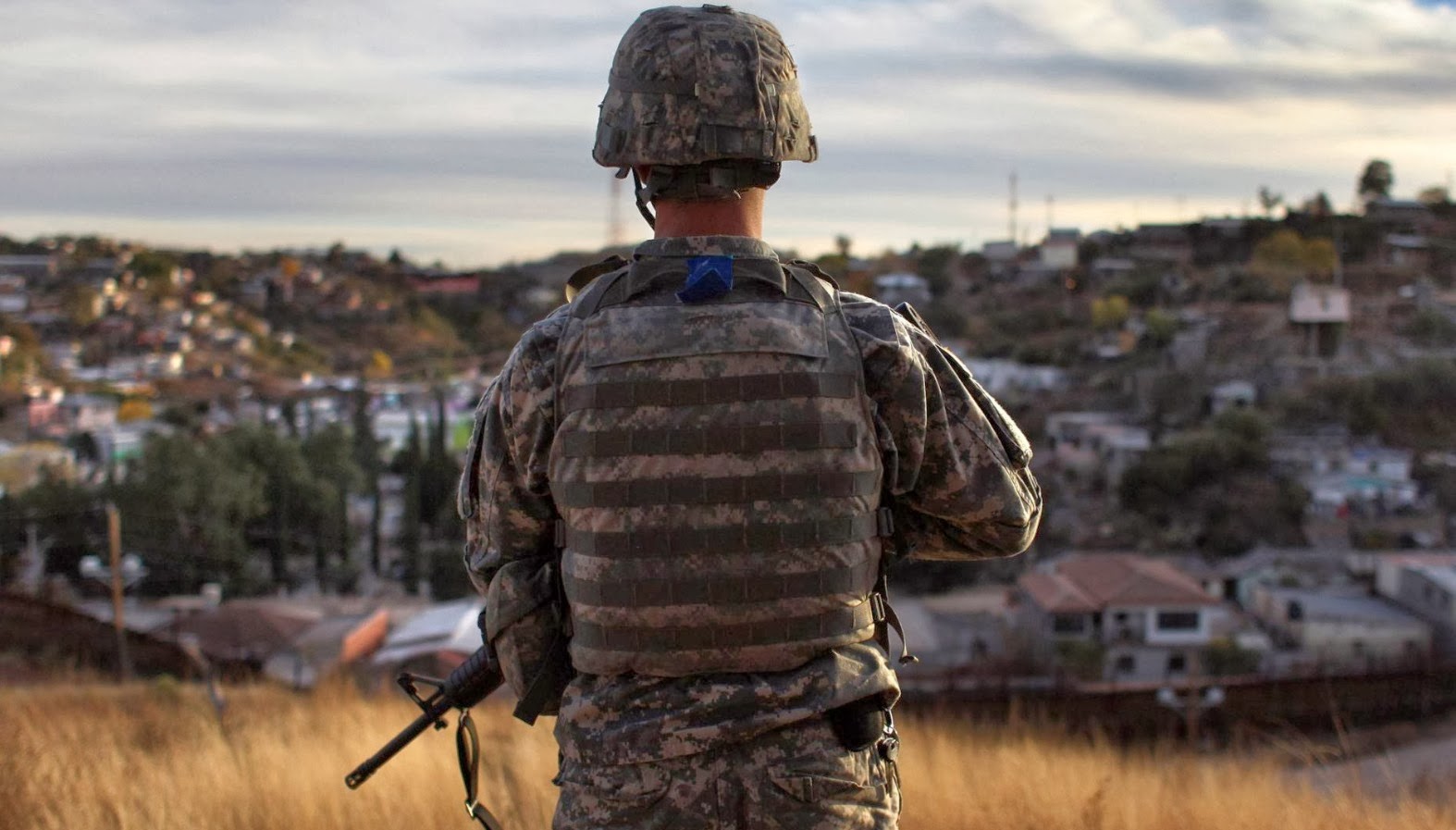
That evening, he was in the process of being deported back into Mexico when he was handcuffed and hog-tied on the tarmac close to the border, and surrounded by more than a dozen CBP agents and Border Patrol officers, who kicked and beat him until several of his ribs were broken. As he pleaded for help, one officer reportedly yanked down the Mexican’s trousers and shocked him with a taser gun at least five times. All told, the attack went on for almost half an hour. Hernandez Rojas was admitted to hospital, where, three days later, he died of his injuries.
San Ysidro is the busiest border crossing on Earth, so there were numerous eyewitnesses to the incident, several of whom recorded the violent scene on their phones.
Their videos undermine the official report, which claimed that Hernandez Rojas was hostile and combative. The San Diego medical examiner ruled his death a homicide, but the US attorney decided that the CBP response had been “appropriate”.
When the victim’s widow filed a wrongful death suit, her attorney Eugene Iredale asked to view the footage from the CBP’s own closed-circuit cameras. “There are video cameras throughout the facility,” Iredale recently told the Arizona Republic.
“But somehow, the video cameras weren’t turned on, or they were facing the other way. I could say something cynical, but I don’t need to.”
The Hernandez Rojas case is one of many detailed in a lengthy investigative report by the Republic, published this week, which found that since 2005 Border Patrol agents and CBP officers have killed some 42 people along the length of the US-Mexican border, without facing any public consequences, and in spite of numerous appeals made directly to the Obama administration by campaigners, the victim’s families and the Mexican government.
Roberto Lovato, the co-founder of Presente, a Latino advocacy group based in California, told The Independent, “The case of Anastacio Hernandez Rojas is emblematic of a disease that runs to the cold heart of the Obama administration’s immigration policy. The administration’s silence before the killing of innocents is enabling the Border Patrol to continue to kill and abuse with utter impunity. This is an agency that refuses to be accountable to anyone.”
Last year in Nogales, near the border with Arizona, 16-year-old Jose Antonio Elena Rodriguez was shot 10 times by Border Patrol agents firing through the border fence from the US side. The official report suggested the teenager had been throwing rocks at his killers, a claim that eyewitnesses refuted. According to the Republic, incidents in which people do throw rocks at Border Patrol agents are routinely resolved with the use of non-lethal deterrents, including pepper spray. Yet “rockings” have also led to eight killings by Border Patrol agents since 2010.
Observers say these troubling statistics stem from a 2007 decision by the Bush administration to double the ranks of the US Border Patrol. Within five years, the force swelled from 11,000 to more than 21,000 agents. To attract such numbers, the agency reportedly took on recruits with minimal qualifications, made only cursory background checks, and relaxed its training regime. Thus almost half of the heavily armed force are relatively inexperienced.
John Carlos Frey, an investigative reporter who has covered the US-Mexican border for around 10 years, said he knew of hundreds of examples of brutality perpetrated by the Border Patrol, ranging from verbal abuse to torture to murder. “I don’t consider what happened to Anastacio Hernandez Rojas to be an isolated incident,” Frey said.
“There is a culture of brutality within the US Border Patrol. It’s a federal agency, and it falls under the umbrella of the Department of Homeland Security, which gives its agents a cloak of protection. They basically get to do whatever they want and claim they’re protecting the country.”
In September, the Homeland Security Department’s Office of Inspector General released a report on the use of force by CBP, which served only to highlight the agency’s lack of transparency: the inspectors were unable to fully investigate hundreds of cases, because the CBP doesn’t track the allegations of excessive force made against it. Last year, 16 members of Congress wrote to the then Secretary of Homeland Security, Janet Napolitano, to demand a full investigation into Hernandez Rojas’s death. A federal grand jury investigation followed, but none of the officers involved has been charged. More
It seems there are still plenty of parties who would prefer that the death of the long-time Palestinian leader Yasser Arafat continues to be treated as a mystery rather than as an assassination.
 |
| Yasser Arafat |
It is hard, however, to avoid drawing the logical conclusion from the finding last week by Swiss scientists that the Palestinian leader’s body contained high levels of a radioactive isotope, polonium-210. An inconclusive and much more limited study by a Russian team published immediately after the Swiss announcement also suggests Arafat died from poisoning.
It is time to state the obvious: Arafat was killed. And suspicion falls squarely on Israel.
Israel alone had the means, track record, stated intention and motive. Without Israel’s fingerprints on the murder weapon, it may be impossible to secure a conviction in a court of law, but there should be evidence enough to convict Israel in the court of world opinion.
Israel had access to polonium from its nuclear reactor in Dimona, and has a long record of carrying out political assassinations, some ostentatious and others covert, often using hard-to-trace chemical agents. There is also plenty of evidence that Israel wanted Arafat “removed”. In January 2002, Shaul Mofaz, Israel’s military chief of staff, was caught on a microphone whispering to Israel’s then prime minister, Ariel Sharon, about Arafat: “We have to get rid of him.”
With the Palestinian leader holed up for more than two years in his battered compound in Ramallah, surrounded by Israeli tanks, the debate in the Israel government centred on whether he should be exiled or killed.
In September 2003, the cabinet even issued a warning that Israel would “remove this obstacle in a manner, and at a time, of its choosing”. The then-deputy prime minister, Ehud Olmert, clarified that killing Arafat was “one of the options”.
What stayed Israel’s hand – and fuelled its equivocal tone – was Washington’s adamant opposition. After these threats, Colin Powell, the US former secretary of state, warned that a move against Arafat would trigger “rage throughout the Arab world”.
By April 2004, however, Mr Sharon declared he was no longer obligated by his earlier commitment to George Bush not to “harm Arafat physically”. “I am released from that pledge,” he said. The White House too indicated a weakening of its stance: an unnamed spokesman responded feebly that the US “opposed any such action”.
So what about motive? How did Israel gain from “removing” Arafat? To understand Israel’s thinking, one needs to return to another debate raging at that time, among Palestinians.
The Palestinian leadership was split into two camps, centred on Arafat and Mahmoud Abbas, then Arafat’s heir apparent. The pair had starkly divergent strategies for dealing with Israel.
In Arafat’s view, Israel had reneged on commitments it made in the Oslo accords. He was therefore loath to invest exclusively in the peace process. He wanted a twin strategy: keeping open channels for talks while maintaining the option of armed resistance to pressure Israel. For this reason, he kept a tight personal grip on the Palestinian security forces.
Mr Abbas, on the other hand, believed that armed resistance was a gift to Israel, delegitimising the Palestinian struggle. He wanted to focus exclusively on negotiations and state-building, hoping to exert indirect pressure on Israel by proving to the international community that the Palestinians could be trusted with statehood. His priority was cooperating closely with the US and Israel in security matters. More
From Wikipedia:
Polonium is a very rare element in nature because of the short half-life of all its isotopes. It is found in uranium ores at about 0.1 mg per metric ton (1 part in 1010),[43][44] which is approximately 0.2% of the abundance of radium. The amounts in the Earth's crust are not harmful. Polonium has been found in tobacco smoke from tobacco leaves grown with phosphate fertilizers.[45][46][47]
Because of the small abundance, isolation of polonium from natural sources is a very tedious process. The largest batch was extracted in the first half of the 20th century by processing 37 tonnes of residues from radium production. It contained only 40 Ci (9 mg) of polonium-210.[48] Nowadays, polonium is obtained by irradiating bismuth with high-energy neutrons or protons.[16][49]
In 1934, an experiment showed that when natural 209Bi is bombarded with neutrons, 210Bi is created, which then decays to 210Po via beta-minus decay. The final purification is done pyrochemically followed by liquid-liquid extraction techniques.[50] Polonium may now be made in milligram amounts in this procedure which uses high neutron fluxes found in nuclear reactors.[49] Only about 100 grams are produced each year, practically all of it in Russia, making polonium exceedingly rare.[51][52]
One has therefore to question how many states in the Middle East have nuclear reactors?

Despite being heralded as the first time in history that U.S. lawmakers would hear directly from the survivors of a U.S. drone strike, only five elected officials chose to attend the congressional briefing that took place Tuesday.
Pakistani schoolteacher Rafiq ur Rehman and his two children—9 year-old daughter Nabila and 13 year-old son Zubair—came to Washington, DC to give their account of a U.S. drone attack that killed Rafiq's mother, Momina Bibi, and injured the two children in the remote tribal region of North Waziristan last October.

According to journalist Anjali Kamat, who was present and tweeting live during the hearing, the only lawmakers to attend the briefing organized by Rep. Alan Grayson (D-Fla.), were Rep. John Conyers (D-Mich.), Rep. Jan Schakowsky (D-Ill.), Rep. Rush Holt (D-NJ) and Rep. Rick Nolan (D-Minn.).
Before the handful of reporters and scant lawmakers, however, Rafiq and his children gave dramatic testimony which reportedly caused the translator to break down into tears.
In her testimony, Nabila shared that she was picking okra with her grandmother when the U.S. missile struck and both children described how they used to play outside but are now too afraid.
"I no longer love blue skies. In fact, I now prefer grey skies. Drones don't fly when sky is grey," said Zubair, whose leg was injured by shrapnel during the strike.
“My grandmother was nobody’s enemy," he added.
"Nobody has ever told me why my mother was targeted that day," Rafiq wrote in an open letter to President Barack Obama last week. "The media reported that the attack was on a car, but there is no road alongside my mother's house. Several reported the attack was on a house. But the missiles hit a nearby field, not a house. All reported that five militants were killed. Only one person was killed – a 65-year-old grandmother of nine."
"But the United States and its citizens probably do not know this," Rafiq continued. "No one ever asked us who was killed or injured that day. Not the United States or my own government. Nobody has come to investigate nor has anyone been held accountable."
He concluded, "Quite simply, nobody seems to care."
You can watch a recording of the briefing below and here:
The purpose of the briefing, Grayson told the Guardian, is "simply to get people to start to think through the implications of killing hundreds of people ordered by the president, or worse, unelected and unidentifiable bureaucrats within the Department of Defense without any declaration of war."
The family was joined by their legal representative Jennifer Gibson of the UK human rights organization Reprieve. Their Islamabad-based lawyer, Shahzad Akbar, was also supposed to be present but was denied a visa by the US authorities—"a recurring problem," according to Reprieve, "since he began representing civilian victims of drone strikes in 2011."
"The onus is now on President Obama and his Administration to bring this war out of the shadows and to give answers," said Gibson.
Also present was U.S. filmmaker Robert Greenwald, who first met Rafiq when he traveled to Pakistan to interview the drone strike victims for his documentaryUnmanned: America's Drone Wars. Before the briefing, Greenwald told the Guardian that he hoped the briefing "will begin the process of demanding investigation. Innocent people are being killed." More
Robert Fisk, Correspondent with The Independant discusses violence in Egypt.
One year since the assassination of Anwar al-Awlaki CagePrisoners publishes a report which reveals what role he really played in the Al-Qaeda leadership

“As for my husband who was assassinated by a US drone exactly one year from today, I believe strongly that his killing has nothing to do with the allegations by the US that he has links to terrorist attacks, but rather to silence him because of his influence on Muslims in the Western world as a Muslim scholar and preacher…the drone programme is wrong and illegal because it kills a lot more civilians than so called [high] valuable targets.”– Gihan Mohsen Baker, wife of Anwar al-Awlaki
Exactly a year ago, American citizen Anwar al-Awlaki was killed in a drone strike carried out by the US in Northern Yemen – only one of scores that are dying as part of a programme of extrajudicial killings.
On the anniversary of his killing, CagePrisoners releases its report “Unnecessary and Disproportional: The Killing of Anwar and Abdul-Rahman al-Awlaki”.
This report analyses and challenges the narrative developed by various governments and media outlets to justify the assassination of the Muslim cleric, presenting him as a leader of al-Qaeda in the Arabian Peninsula (AQAP) and the mastermind behind several attacks against the USA. The report also highlights how dangerous such a narrative can be as it extends to include the targeting and killing of Awlaki’s 16 year old son, also an American citizen, a few days later.
With only a few weeks left until Election Day, most people will be focused on the election campaigns of President Obama – few will remember that it is under Obama’s leadership that the policy of targeted killings has intensified and expanded.
This report will throw light on the legal and moral inconsistencies that appear as a Nobel Peace Prize winning President continues developing his drone programme enabling him to carry out extra-judicial killings across the globe, picking off targets on a ‘kill list’ once a week.
Through the case study of Anwar and Abdur Rahman al-Awlaki, questions are also raised about the UK’s involvement in targeted killings as more evidence emerges of British citizens that have been killed in drone attacks including evidence to suggest that British authorities actively assist the CIA in its drone programme.
CagePrisoners demands complete transparency in relation to the process by which individuals are placed on President Obama’s ‘kill list’, independent investigations into civilian deaths and injuries during drone strikes and the end to British complicity and the complicity of any other States, with US drone strikes. More
Download full report here

“We are at War. Somebody is Going to Pay.” —George W. Bush, Sept 11th, 2001.
The city of Fallujah remains under siege. Not from U.S. troops, but from a deluge of birth defects that have plagued families since the use of depleted uranium and white phosphorus by U.S. forces in 2004. No government studies have provided a direct link to the use of these weapons because no government studies have been undertaken, and none are contemplated.
The photographs are available online if you can bear to look at what we have wrought. George W. Bush will loudly proclaim his “Pro-life” bona fides, and he’ll tell you he believes “that every child, born and unborn, ought to be protected in law and welcomed into life.” Apparently, “every child” doesn’t apply to the children of Fallujah, and the “law” doesn’t apply to George W. Bush. MoreDr. Samira Alani, a pediatric specialist at Fallujah General Hospital, told Al Jazeera,
"We have all kinds of defects now, ranging from congenital heart disease to severe physical abnormalities, both in numbers you cannot imagine. There are not even medical terms to describe some of these conditions because we've never seen them until now."

Afghans have been excluded from the judicial process after the shooting that left 16 dead. No wonder anti-US feeling is growing
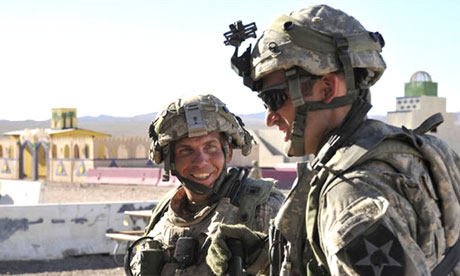
US army staff sergeant Robert Bales is accused of slaughtering 16 Afghan villagers, including nine children, and then burning some of the bodies. The massacre took place in two villages in the southern rural district of Panjwai. Though this horrific crime targeted Afghans on Afghan soil, Afghanistan will play no role in investigating the crime or bringing the perpetrator (or perpetrators) to justice. That is because the US almost immediately whisked the accused out of Afghanistan and brought him to an American army base in Fort Leavensworth, Kansas.
The rapid exclusion of Afghans from the process of trying the accused shooter has, predictably and understandably, exacerbated the growing anti-American anger in that country. It is hard to imagine any nation on the planet reacting any other way to being denied the ability to try suspects over crimes that take place on its soil. A Taliban commander quickly gave voice to that nationalistic fury, announcing: "We want this soldier to be prosecuted in Afghanistan. The Afghans should prosecute him."
Demands that the atrocity be investigated by Afghans are grounded in part by reports that Bales did not act alone. While US military officials decreed from the start that Bales was the lone culprit, eyewitnesses in the villages reported the presence of multiple attackers. Many Afghans simply cannot fathom how such a large-scale attack could have been perpetrated by a single shooter. Bacha Agha of the Balandi village told the Associated Press: "One man can't kill so many people. There must have been many people involved." He added: "If the government says this is just one person's act we will not accept it." President Hamid Karzai initially added fuel to those suspicions, notably accusing "American forces" of the attacks.
The suspicion that other American soldiers may have been involved, though unproven, is far from irrational. The notorious American "kill team"that deliberately executed random, innocent Afghan civilians (often teenagers) for sport, planted weapons on their bodies, and then posed with their corpses as trophies operated out a base in the same area. America's former top commander in Afghanistan, General Stanley McChrystal, admitted: "We've shot an amazing number of people and killed a number and, to my knowledge, none has proven to have been a real threat to the force." More
 © 2014