Showing posts with label mexico. Show all posts

Wednesday, April 9, 2014

'This Is Not Over': Gulf Life Still Reeling From Toxic BP Spill

Report on four year anniversary of worst oil disaster in US history details fourteen ailing species, and raises the question of

"What should be the legal liability for polluting the Global Commons'?


Nearly four years after BP's Deepwater Horizon oil catastrophe, plants, animals, and fish in the Gulf of Mexico are still reeling from the toxic spill, according to a report released Tuesday by the National Wildlife Federation.

The report, which arrives just ahead of the disaster's anniversary, examined 14 species of wildlife in the Gulf and found ongoing impacts of the disaster that could last for decades.

"Four years later, wildlife in the Gulf are still feeling the impacts of the spill," said Doug Inkley, senior scientist for the National Wildlife Federation. "Bottlenose dolphins in oiled areas are still sick and dying and the evidence is stronger than ever that these deaths are connected to the Deepwater Horizon. The science is telling us that this is not over."

According to the findings, in 2013 dolphins were dying at three times normal rates, with many suffering from "unusual lung damage" and immune system problems.

In addition to the ongoing plight of dolphins in Gulf waters, the researchers found that every year for the past three years roughly five hundred dead sea turtles are found near the spill, "a dramatic increase over normal rates." These sea turtles only recently recovered from near extinction—a recovery that has now been drastically threatened by the spill.

"The Kemp’s ridley sea turtle has long been the poster child for the possibilities of restoration in the Gulf," said Pamela Plotkin, associate research professor of oceanography at Texas A&M University and director of Texas Sea Grant. "Once close to extinction, it has rebounded dramatically over the past thirty years. But four years ago, the numbers of Kemp’s ridley appear to have flat-lined. We need to monitor this species carefully, as the next few years will be critical."

According to the report, sperm whales in the area are showing higher levels of "DNA-damaging metals" than others in other parts of the world—"metals that were present in oil from BP’s well."

In addition, deep sea coral colonies, which "provide a foundation for a diverse assortment of marine life," within seven miles from the site of the spill, were still "heavily impacted."

Other findings, as stated by the group, include:

  • Oyster reproduction remained low over large areas of the northern Gulf at least through the fall of 2012.
  • A chemical in oil from the Deepwater Horizon spill has been shown to cause irregular heartbeats in bluefin and yellowfin tuna that can lead to heart attacks, or even death.
  • Loons that winter on the Louisiana coast have increasing concentrations of toxic oil compounds in their blood.

"Despite what BP would have you believe, the impacts of the disaster are ongoing," said Sara Gonzalez-Rothi, the National Wildlife Federation’s senior policy specialist for Gulf and coastal restoration. "Last year, nearly five million pounds of oiled material from the disaster were removed from Louisiana’s coast. And that’s just what we’ve seen. An unknown amount of oil remains deep in the Gulf."

The Gulf oil disaster—which is the worst in U.S. history—"will likely unfold for years or even decades," NWF writes. "It is essential that careful monitoring of the Gulf ecosystem continue and that mitigation of damages and restoration of degraded and weakened ecosystems begin as soon as possible."

Despite the ongoing travesty the Environmental Protection Agency announced last month that it removed its ban on BP contracts in the U.S. and new drilling leases, including in the Gulf of Mexico.

Shortly after, the oil giant won bids to start new drilling operations in two dozen separate locations, a total pricetag of $54 million.

______________________

Given that the oceans are one continous body of water that encircle the globe, and furthermore that ocean currents will eventually spread the pollutants mentioned above around the world, affecting all inhabitants of the planet, I would argue that all States / countries would be justified in suing BP. Until we can implement Ecocide as the Fifth Crime Against Peace under the Treaty of Rome this may be the only way to stop the destruction of the ecosystem that all living things on Earth are dependant of for their survival. Editor


Saturday, March 1, 2014

Study links BP oil spill to dolphin deaths

US government scientists have for the first time connected the BP oil disaster to dolphin deaths in the Gulf of Mexico, in a study finding direct evidence of toxic exposure.

The study, led by scientists from the National Oceanic and Atmospheric Administration, found lung disease, hormonal abnormalities and other health effects among dolphins in an area heavily oiled during the BP spill.

The diseases found in the dolphins at Barataria Bay in Louisiana – though rare – were consistent with exposure to oil, the scientists said.

"Many disease conditions observed in Barataria Bay dolphins are uncommon but consistent with petroleum hydrocarbon exposure and toxicity," the scientists said.

Half of the dolphins were given a guarded prognosis, and 17% were expected to die of the disease, the researchers found.

"I've never seen such a high prevalence of very sick animals – and with unusual conditions such as the adrenal hormone abnormalities," Lori Schwake, the study's lead author, said in a statement.

The scientists caught, examined and released about 30 bottlenose dolphins from Barataria Bay in 2011, one year after the disaster. The area was one of the most heavily oiled areas following the April 2010 blowout of BP's deepwater well, that killed 11 workers and spewed millions of barrels of crude oil into the Gulf.

Government scientists and conservation groups had been concerned from the outset about the effects on marine life of the vast amounts of oil that entered the water.

But Wednesday's study, published in the peer-reviewed journal Environmental Science and Technology, produced the strongest evidence to date of the effects of the spill on marine life.

"The severe disease documented by this study and the continued elevation of mortalities raise significant concerns regarding both short-term and long-term impacts on the Barataria Bay dolphin population," the study said.

Jacqueline Savitz, senior campaign director of the Oceana conservation group, said the findings confirmed her fears at the time that the oil spill would take a high toll on dolphins, whales and other marine life in the Gulf.

"After the spill I saw dolphins swimming in and out of oil slicks, breathing air at the surface that I knew contained hydrocarbons from the spill since I could smell them myself," Savitz said. "The dolphins were likely exposed to the oil in other ways as well, by swallowing water, and through their food. While we have seen an unusual number of dolphin deaths during and after the spill, this report verifies that the oil took a larger toll on dolphins."

None of the symptoms in the Barataria Bay dolphins were reported among wild dolphin populations in Sarasota Bay, Florida, which was not oiled during the spill, the scientists said.

BP has in the past disputed any connection between the oil spill and a mysterious spike in dolphin deaths in the Gulf of Mexico that was first reported three months before the oil spill.

"The agency still has not provided BP with any data demonstrating that the alleged poor health of any dolphins was caused by oil exposure," Jason Ryan, a company spokesman, said.

He said the symptoms observed in the study had been seen in other wild dolphin populations exposed to other contaminants, and that there had been a number of unexplained die-offs of dolphins in the Gulf of Mexico over the years. More


Tuesday, December 24, 2013

Death on the US-Mexican border: the killings America chooses to ignore

On 28 May 28 2010, 42-year-old Anastacio Hernandez Rojas was detained by US Customs and Border Protection (CBP) agents while attempting to enter California from Mexico, at the San Ysidro border crossing near San Diego. Hernandez Rojas had previously spent 25 years living as an undocumented immigrant north of the border, where he worked as a swimming pool plasterer and fathered five American-born children.

That evening, he was in the process of being deported back into Mexico when he was handcuffed and hog-tied on the tarmac close to the border, and surrounded by more than a dozen CBP agents and Border Patrol officers, who kicked and beat him until several of his ribs were broken. As he pleaded for help, one officer reportedly yanked down the Mexican’s trousers and shocked him with a taser gun at least five times. All told, the attack went on for almost half an hour. Hernandez Rojas was admitted to hospital, where, three days later, he died of his injuries.

San Ysidro is the busiest border crossing on Earth, so there were numerous eyewitnesses to the incident, several of whom recorded the violent scene on their phones.

Their videos undermine the official report, which claimed that Hernandez Rojas was hostile and combative. The San Diego medical examiner ruled his death a homicide, but the US attorney decided that the CBP response had been “appropriate”.

When the victim’s widow filed a wrongful death suit, her attorney Eugene Iredale asked to view the footage from the CBP’s own closed-circuit cameras. “There are video cameras throughout the facility,” Iredale recently told the Arizona Republic.

“But somehow, the video cameras weren’t turned on, or they were facing the other way. I could say something cynical, but I don’t need to.”

The Hernandez Rojas case is one of many detailed in a lengthy investigative report by the Republic, published this week, which found that since 2005 Border Patrol agents and CBP officers have killed some 42 people along the length of the US-Mexican border, without facing any public consequences, and in spite of numerous appeals made directly to the Obama administration by campaigners, the victim’s families and the Mexican government.

Roberto Lovato, the co-founder of Presente, a Latino advocacy group based in California, told The Independent, “The case of Anastacio Hernandez Rojas is emblematic of a disease that runs to the cold heart of the Obama administration’s immigration policy. The administration’s silence before the killing of innocents is enabling the Border Patrol to continue to kill and abuse with utter impunity. This is an agency that refuses to be accountable to anyone.”

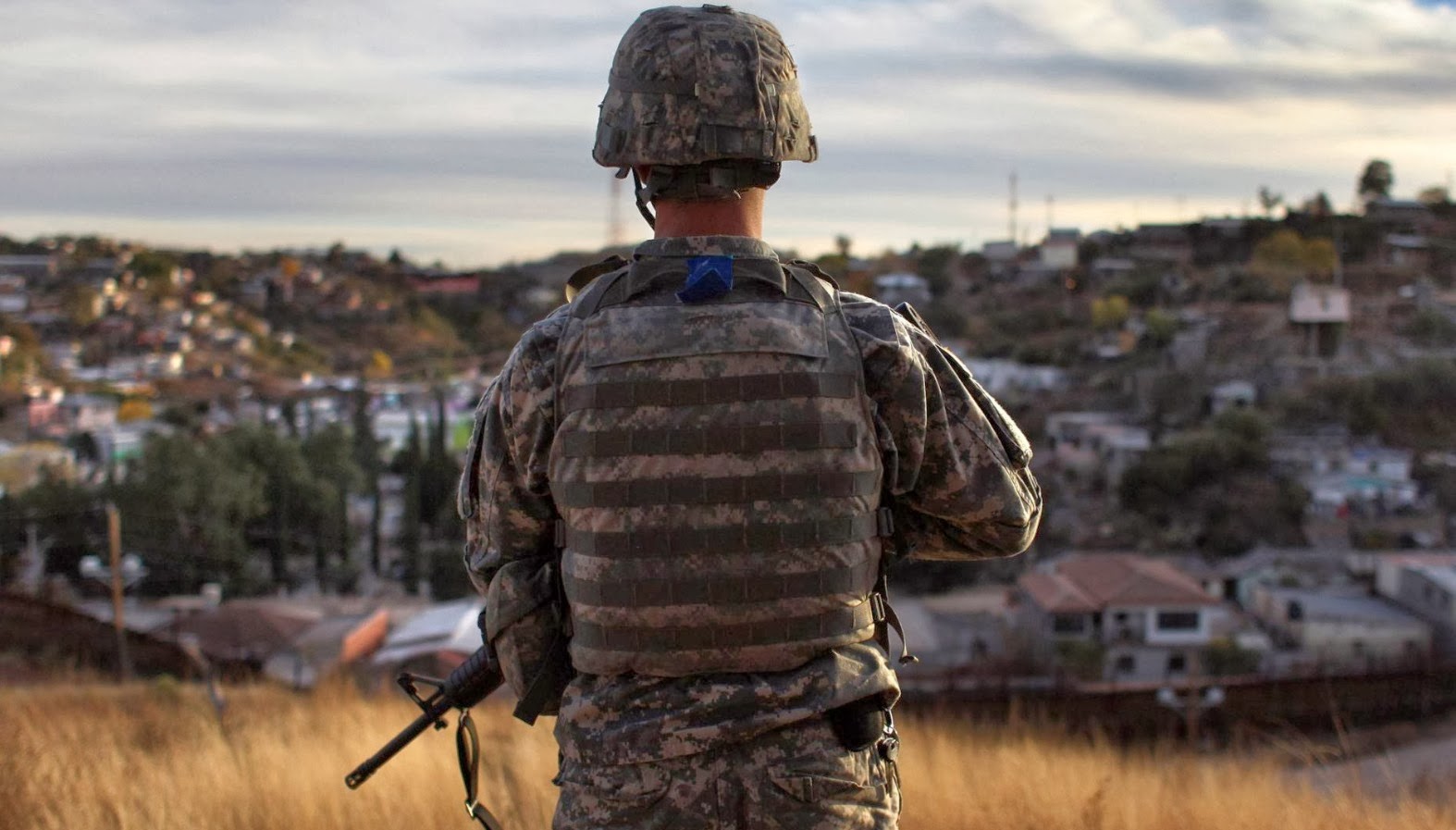
Last year in Nogales, near the border with Arizona, 16-year-old Jose Antonio Elena Rodriguez was shot 10 times by Border Patrol agents firing through the border fence from the US side. The official report suggested the teenager had been throwing rocks at his killers, a claim that eyewitnesses refuted. According to the Republic, incidents in which people do throw rocks at Border Patrol agents are routinely resolved with the use of non-lethal deterrents, including pepper spray. Yet “rockings” have also led to eight killings by Border Patrol agents since 2010.

Observers say these troubling statistics stem from a 2007 decision by the Bush administration to double the ranks of the US Border Patrol. Within five years, the force swelled from 11,000 to more than 21,000 agents. To attract such numbers, the agency reportedly took on recruits with minimal qualifications, made only cursory background checks, and relaxed its training regime. Thus almost half of the heavily armed force are relatively inexperienced.

John Carlos Frey, an investigative reporter who has covered the US-Mexican border for around 10 years, said he knew of hundreds of examples of brutality perpetrated by the Border Patrol, ranging from verbal abuse to torture to murder. “I don’t consider what happened to Anastacio Hernandez Rojas to be an isolated incident,” Frey said.

“There is a culture of brutality within the US Border Patrol. It’s a federal agency, and it falls under the umbrella of the Department of Homeland Security, which gives its agents a cloak of protection. They basically get to do whatever they want and claim they’re protecting the country.”

In September, the Homeland Security Department’s Office of Inspector General released a report on the use of force by CBP, which served only to highlight the agency’s lack of transparency: the inspectors were unable to fully investigate hundreds of cases, because the CBP doesn’t track the allegations of excessive force made against it. Last year, 16 members of Congress wrote to the then Secretary of Homeland Security, Janet Napolitano, to demand a full investigation into Hernandez Rojas’s death. A federal grand jury investigation followed, but none of the officers involved has been charged. More


Monday, February 18, 2013

Oil spill firm to pay $400 million to fix Gulf coast

The Deepwater Horizon spill has just provided a $400-million windfall for Louisiana's environment. Transocean, which worked with BP on the stricken Macondo well, pleaded guilty last week to a violation of the US Clean Water Act, and admitted that it was negligent in the 2010 spill.

The resultingmultimillion-dollar fine will be used to pay for a host of environmental projectsaround the Gulf of Mexico.

It is the second largest fine for environmental damage in history, after the $4.5-billion fine BP had to pay out for the same spill. Transocean has two years to pay up in full.

The National Academy of Sciences (NAS) will get $150 million, and another $150 million will go to the National Fish and Wildlife Foundation (NFWF), a non-profit based in Washington DC. The NAS will use its portion to research oil-spill prevention and better ways to respond to spills. The NFWF's Timothy DiCintio says it will distribute its award between the affected Gulf Coast states, for ongoing remediation efforts such as marsh and wetland clean-up.

The remainder of the money will go directly to Louisiana's $50-billion Coastal Master Plan, which aims to restore the state's degraded coastline. The money will fund a host of projects, including restoring barrier island reefs and creating diversions on the Mississippi to repair eroded coasts.

"The way Louisiana looks at it, their coastal problems are so pervasive that the degradation from the spill was a final indignity," says DiCintio. The modifications should not only allow the state to rebuild after the lingering effects of the spill and hurricane Katrina, but also help the coast cope with future disasters. More