Showing posts with label al-Nakba. Show all posts

Tuesday, April 2, 2013

The Staggering Cost of Israel to Americans

April 02, 2013 "Information Clearing House" -"If Americans Knew" - Israel has a population of approximately 7.8 million, or a million fewer than the state of New Jersey. It is among the world's most affluent nations, with a per capita income similar to that of the European Union.[1] Israel's unemployment rate of 5.6% is much better than America's 9.1%,[2] and Israel's net trade, earnings, and payments is ranked 48th in the world while the US sits at a dismal 198th.[3]


Yet Israel receives approximately 10% of America's foreign aid budget every year.[4] The US has, in fact, given more aid to Israel than it has to all the countries of sub-Saharan Africa, Latin America, and the Caribbean combined—which have a total population of over a billion people.[5] And foreign aid is just one component of the staggering cost of our alliance with Israel.


Given the tremendous costs, it is critical to examine why we lavish so much aid on Israel, and whether it is worth Americans' hard-earned tax dollars. But first, let's take a look at what our alliance with Israel truly costs.
Before the Iraq War in 2003

Direct Foreign Aid

According to the Congressional Research Service , the amount of official US aid to Israel since its founding in 1948 tops $112 billion, and in the past few decades it has been on the order of $3 billion per year.[6](In 2011, for example, this amounted to over $8.2 million every single day.)

But this money is only part of the story. For one thing, Israel gets its aid money at the start of each year, unlike other nations.[7] This is significant: It means Israel can start earning interest on the money right away. And it costs the US more than the typical year-end disbursements because the US government operates at a deficit, so it must borrow this money to pay Israel and then pay interest on the amount all year.

Israel is also the only recipient of US military aid that is allowed to use a significant portion annually to purchase products made by Israeli companies instead of US companies. (The costs to Americans caused by this unique perk are discussed below.)

In addition, the US gives roughly $2 billion per year to Egypt and Jordan in aid packages arranged largely in exchange for peace treaties with Israel. The treaties don't include justice for Palestinians, and are therefore deeply unpopular with the local populations.[8]

On top of this, the US gives roughly half a billion to the Palestinian Authority each year,[9] much of it used to rebuild infrastructure destroyed by Israel and to bolster an economy stifled by the Israeli occupation.[10] This would be unnecessary if Israel were to end the occupation and allow the Palestinians to build a functioning and self-sustaining economy.

Yet there's still much more to the story, because parts of US aid to Israel are buried in the budgets of various US agencies, mostly the Department of Defense. For example, since at least 2006, the American Defense budget has included between $130 and $235 million per year for missile defense programs in Israel.[11]

In all, direct US disbursements to Israel amount to approximately 10% of all U.S. aid abroad, even though Israelis only make up 0.001% of the world's population. In other words, on average, Israelis receive 10,000 times more US foreign aid per capita than other people throughout the world, despite the fact that Israel is one of the world's more affluent nations.[12] And that number rises significantly when one considers disbursements to Egypt, Jordan, and the Palestinian Authority and Defense spending on behalf of Israel.

Additional Ad hoc support for Israel

Dr. Thomas Stauffer, a Harvard economist and Middle East studies professor who twice served in the Executive Office of the President, wrote a comprehensive report about all components of the alliance with Israel's cost to American taxpayers for the Washington Report on Middle East Affairs in 2003. He wrote:

"Another element is ad hoc support for Israel, which is not part of the formal foreign aid programs. No comprehensive compilation of US support for Israel has been publicly released. Additional known items include loan guarantees... special contracts for Israeli firms, legal and illegal[13] transfers of marketable US military technology, de facto exemption from US trade protection provisions, and discounted sales or free transfers of 'surplus' US military equipment. An unquantifiable element is the trade and other aid given to Romania and Russia to facilitate Jewish migration to Israel; this has accumulated to many billions of dollars."[14]

Israel has often used its privileged access to US military technology against both the US government and US corporate interests. According to the Associated Press in 2002, "In France, Turkey, The Netherlands and Finland, Israeli companies have edged such U.S. firms as Raytheon, Northrop Grumman and General Atomics out of arms deals worth hundreds of millions of dollars in recent years. The irony, experts say, is that tens of billions of U.S. tax dollars and transfers of American military technology helped create and nurture Israel's industry, in effect subsidizing a foreign competitor."

The AP article quoted a vice president at the Aerospace Industries Association of America, who bluntly said, "We give them money to build stuff for themselves and the U.S. taxpayer gets nothing in return."[15]

Meanwhile, according to the Christian Science Monitor , Israel has also "blocked some major US arms sales, such as F-15 fighter aircraft to Saudi Arabia in the mid-1980s. That cost $40 billion over 10 years."[16]

Even worse, Israeli weapons "buttress the arsenals of nations such as China that the United States considers strategic competitors, alarming US military planners," the Associated Press article went on to report. "[In 2001] US surveillance planes flying along China's coast were threatened by Chinese fighter jets armed with Israeli missiles... Had Chinese fighter pilots been given the order to fire, they could have brought down the US planes with Israeli Python III missiles... US defense chiefs say Israel sold China the missiles without informing the United States."[17]

Lost jobs, trade, and standing

One of the most devastating indirect costs of the US alliance with Israel was the Arab oil boycott of 1973. The Arab states imposed the boycott in protest of US support of Israel during the 1973 war, in which Arab countries attacked Israel to try to reclaim lands Israel had invaded and occupied in 1967.

"Washington's intervention triggered the Arab oil embargo which cost the U.S. doubly: first, due to the oil shortfall, the US lost about $300 billion to $600 billion in GDP; and, second, the US was saddled with another $450 billion in higher oil import costs," wrote Stauffer in the Washington Report on Middle East Affairs.[18]

Then there's the cost in lost jobs. "US policy and trade sanctions reduce US exports to the Middle East about $5 billion a year, costing 70,000 or so American jobs," Stauffer estimates. "Not requiring Israel to use its US aid to buy American goods, as is usual in foreign aid, costs another 125,000 jobs."[19]

But perhaps the most damaging cost to the US has been its loss of standing in the Arab and Muslim worlds, where US largesse towards Israel as it commits human rights violations[20] provokes deep resentment. "To many of the world's Muslims, it places the US taxpayer on the Israeli side of its conflicts with Arabs," observed the Associated Press article.[21]

According to Harvard professor Stephen Walt, "The 9/11 Commission reported that 9/11 plotter Khalid Sheikh Mohammed's 'animus toward the United States stemmed not from his experiences there as a student, but rather from his violent disagreement with US foreign policy favoring Israel.' Other anti-American terrorists—such as Ramzi Yousef, who led the 1993 bombing of the World Trade Center—have offered similar explanations for their anger toward the United States."[22]

There are many more potential categories of costs that are even more difficult to quantify. All in all, Stauffer estimates that Israel cost the US about $1.6 trillion between 1973 and 2003 alone—more than twice the cost of the Vietnam war.[23]


Costs since Stauffer's study in 2003

Israel's cost to American taxpayers has remained high since Stauffer's 2003 study. The US currently gives Israel an average of $3 billion a year in military aid, under an agreement signed by the Bush administration to transfer $30 billion to Israel over ten years, starting in 2009.[24] More

 

Wednesday, March 27, 2013

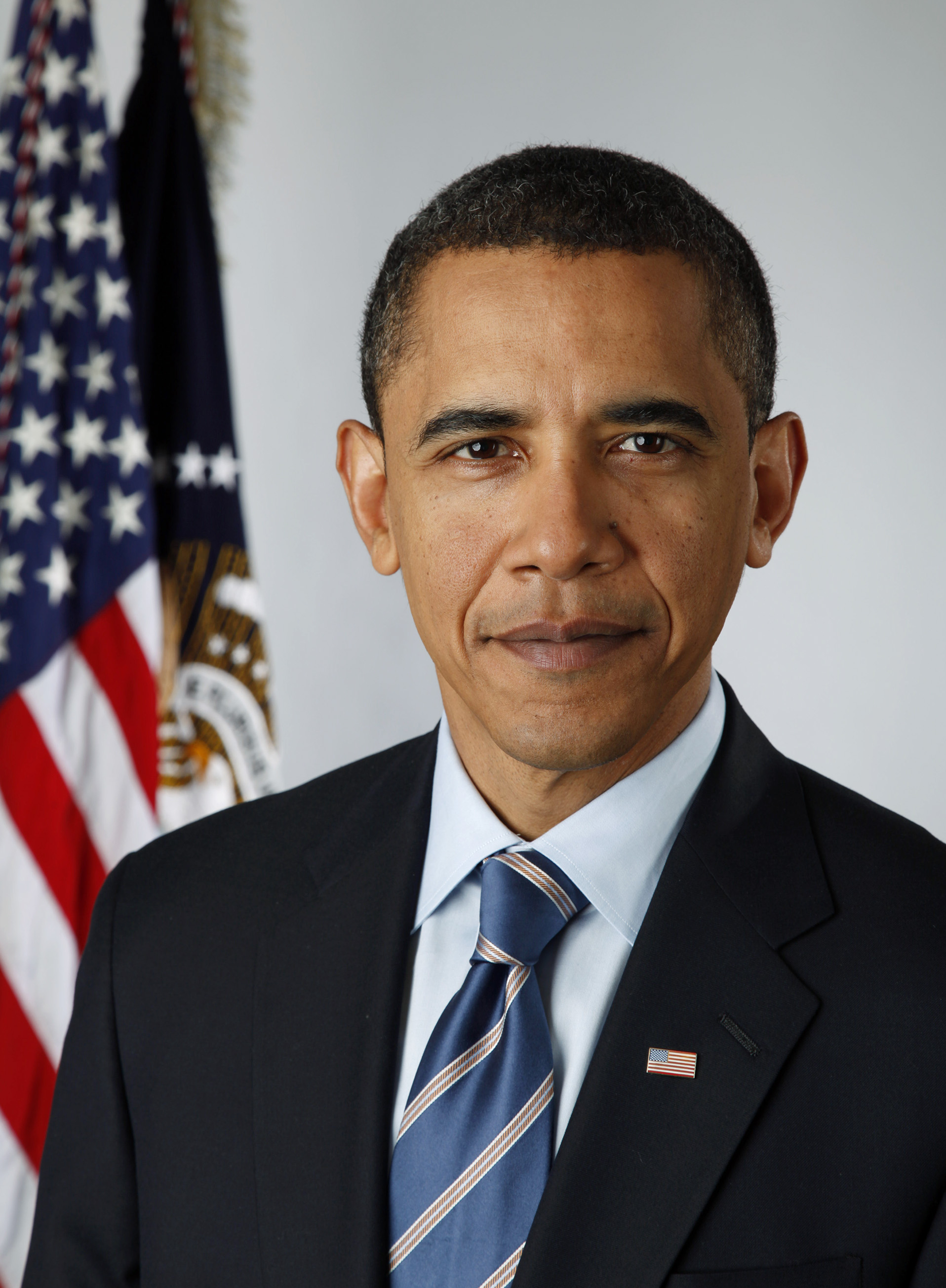
What Was Wrong With Obama’s Speech In Jerusalem by Richard Falk

It was master-crafted as an ingratiating speech by the world’s most important leader and the government that has most consistently championed Israel’s cause over the decades. Enthusiastically received by the audience of Israeli youth, and especially by liberal Jews around the world.

Despite the venue, President Obama’s words in Jerusalem on March 21st seemed primarily intended to clear the air somewhat in Washington. Obama may now have a slightly better chance to succeed in his second legacy-building presidential term despite a deeply polarized U.S. Congress, and a struggling American economy if assessed from the perspective of workers’ distress rather than on the basis of robust corporate profits.

As for the speech itself, it did possess several redeeming features. It did acknowledge that alongside Israeli security concerns “Palestinian people’s right of self-determination, their right to justice must also be recognized.” This affirmation was followed by the strongest assertion of all: “..put yourself in their shoes. Look at the world through their eyes.” To consider the realities of the conflict through Palestinian eyes is to confront the ugly realities of prolonged occupation, annexationist settlement projects, an unlawful separation wall, generations confined to the misery of refugee camps and exile, second-class citizenship in Israel, ethnic cleansing in Jerusalem, and a myriad of regulations that make the daily life of Palestinians a narrative of humiliation and frustration. Of course, Obama did not dare to do this. None of these realities were specified, being left to the imagination of his audience of Israeli youth, but at least the general injunction to see the conflict through the eyes of the other pointed the way toward empathy and reconciliation.

Obama also encouraged in a helpful way Israeli citizen activism on behalf of a just peace based on two states for two peoples. A bit strangely he urged that “for the moment, put aside the plans and process” by which this goal might be achieved, and “instead..build trust between people.” Is this not an odd bit of advice? It seems a stretch to stress trust when the structures and practice of occupation are for the Palestinians unremittingly cruel, exploitative, and whittle away day after day at the attainability of a viable Palestinian state. But this farfetched entreaty was coupled with a more plausible plea: “I can promise you this: Political leaders will never take risks if the people do not push them to take some risks. You must create the change that you want to see. Ordinary people can accomplish extraordinary things.” There is some genuine hope to be found in these inspirational words, but to what end given the present situation.

In my opinion the speech was deeply flawed in three fundamental respects:

>> by speaking only to Israeli youth, and not arranging a parallel talk in Ramallah to Palestinian youth, the role of the United States as ‘dishonest broker’ was brazenly confirmed; it also signaled that the White House was more interested in appealing to the folks in Washington than to those Palestinians trapped in the West Bank and Gaza, an interpretation reinforced by laying a wreath at the grave of Theodor Herzl but refusing to do so at the tomb of Yasir Arafat. This disparity of concern was further exhibited when Obama spoke of the children of Sderot in southern Israel, “the same age as my own daughters, who went to bed at night fearful that a rocket would land in their bedroom simply because of who they are and where they live.” To make such an observation without even mentioning the trauma-laden life of children on the other side of the border in Gaza who have been living for years under conditions of blockade, violent incursions, and total vulnerability year after year is to subscribe fully to the one-sided Israeli narrative as to the insecurity being experienced by the two peoples.

>> by speaking about the possibility of peace based on the two state consensus, the old ideas, without mentioning developments that have made more and more people skeptical about Israeli intentions is to lend credence to what seems more and more to be a delusionary approach to resolving the conflict. Coupling this with Obama’s perverse injunction to the leaders of the Middle East that seems willfully oblivious to the present set of circumstances makes the whole appeal seem out of touch: “Now’s the time for the Arab world to take steps towards normalizing relations with Israel.” How can now be the time, when just days earlier Benjamin Netanyahu announced the formation of the most right-wing, pro-settler government in the history of Israel, selecting a cabinet that is deeply dedicated to settlement expansion and resistant to the very idea of a genuine Palestinian state? It should never be forgotten that when the Palestinian Liberation Organization announced back in 1988 that it was prepared to make a sustained peace with Israel on the basis of the 1967 borders. By doing this, the Palestinians were making an extraordinary territorial concession that has never been reciprocated, and operationally repudiated by continuous settlement building. The move meant accepting a state limited to 22% of historic Palestine, or less than half of what the UN had proposed in its 1947 partition plan contained in GA Resolution 181, which at the time was seen as grossly unfair to the Palestinians and a plan put forward without taking account of the wishes of the resident population. To expect the Palestinians to be willing now to accept significantly less land than enclosed by these 1967 borders to reach a resolution of the conflict seems highly unreasonable, and probably not sustainable if it should be imprudently accepted by the Palestinian Authority.

>> by endorsing the formula two states for two peoples was consigning the Palestinian minority in Israel to permanent second-class citizenship without even being worthy of mention as a human rights challenge facing the democratic Israel that Obama was celebrating. As David Bromwich has pointed out [“Tribalism in the Jerusalem speech,”] http://mondoweiss.net/2013/03/tribalism-jerusalem-speech.html Obama was also endorsing a tribalist view of statehood that seem inconsistent with a globalizing world, and with secularist assumptions that a legitimate state should never be exclusivist in either its religious or ethnic character. Obama went out of his to affirm the core Zionist idea of a statist homeland where all Jews can most fully embrace their Jewishness: “Israel is rooted not just in history and tradition, but also in a simple and profound idea: the idea that people deserve to be free in a land of their own.” And with embedded irony no mention was made of the absence of any Palestinian right of return even for those who were coerced into fleeing from homes and villages that had been family residences for countless generations.

Such a regressive approach to identity and statehood was also by implication attributed to the Palestinians, also affirmed as a a lesser entitlement. But this is highly misleading, a false symmetry. The Palestinians have no guiding ethno-religious ideology that is comparable to Zionism. Their quest has been to recover rights under international law in the lands of their habitual residence, above all, the exercise of their inalienable right of self-determination in such a manner as to roll back the wider claims of settler colonialism that have been so grandiosely integral to the Greater Israel vision and practice of the Netanyahu government. And what of the 20% of the current population of Israel that lives under a legal regime that discriminates against them and almost by definition is a permanent consignment to second-class citizenship. Indeed, Obama’s speech was also an affront to many Israeli post-Zionists and secularists who do not affirm the idea of living under in a hyper-nationalist state with pretensions of religious endowments. More


Friday, March 22, 2013

Why Palestinians Have No Water - and No, It's Not That Palestine Has No Water by Abby Zimet

In honor of the U.N.'s World Water Day, new graphics from Visualizing Palestine show what happens to the water in Ramallah, which gets more annual rainfall than London. And no, it doesn't go to Palestinians. It just should. Ideas for equity from the Thirsting for Justice Campaign.

More


Thursday, March 21, 2013

WATCH: The Israeli-Palestinian Conflict Zone series produced by National Geographic

Just over a year ago I started filming for a web series produced by National Geographic. My goal was to highlight the conflicting narratives and the different points of view while inspiring hope. As Obama is visiting the region, I no longer believe that he or other leaders will bring an end to this conflict. It must be people who lead the leaders. However, I have found that the majority of Israelis and Palestinians are indifferent and ineffective. Indifference is the greatest enemy to peace and justice. In this series, I try to understand why this conflict is still going on. I try to examine the narratives and perspectives. But most importantly I also explore the effect of interactions between the sides.

This special online 4-part video series, Conflict Zone, follows Aziz Abu Sarah, a cultural educator, a native of Jerusalem, and a National Geographic Emerging Explorer who works in international conflict resolution.

Part 1: Uneasy Coexistence
This first segment shows Israelis and Palestinians trying to lead ordinary lives, but the complications of living in a conflict zone can be extraordinary.

Part 2: Israel Defense Force

This segment features the Nabi Saleh protest from the Israeli military’s point of view.


Part 3: Palestinian Protesters

This segment features the Nabi Saleh protest from the Palestinians’ point of view.

Part 4: A Space to Talk

This segment highlights the process of creating safe places for dialogue among people who are on opposing sides of a conflict.


For more original analysis and breaking news, visit +972 Magazine's Facebook page or follow us on Twitter. Our newsletter features a comprehensive round-up of the week's events. Sign uphere.

Miko Peled telling the truth about Palestine

Miko Peled is a peace activist who dares to say in public what others still choose to deny. He has credibility, so when he debunks myths that Jews around the world hold with blind loyalty, people listen. Miko was born in Jerusalem in 1961 into a well known Zionist family. His grandfather, Dr. Avraham Katsnelson was a Zionist leader and signer on the Israeli Declaration of Independence. His father, Matti Peled was a young officer in the war of 1948 and a general in the war of 1967 when Israel conquered the West Bank, Gaza, Golan Heights and the Sinai.

Wednesday, March 20, 2013

The truth, that has long been obvious, is revealed.


Obama comes to bless Israel’s government of settlers

Jonathan-cook.net – 20 March 2013

Those who hoped that Barack Obama would be arriving in Israel to bang Israeli and Palestinian heads together, after four years of impasse in the peace process, will be sorely disappointed.

The US president’s trip beginning today may be historic – the first of his presidency to Israel and the Palestinian territories – but he has been doing everything possible beforehand to lower expectations.

At the weekend, Arab-American leaders revealed that Obama had made it clear he would not present a peace plan, because Israel has indicated it is not interested in an agreement with the Palestinians.

Any lingering doubts about Israel’s intentions were removed by the announcement of a new cabinet, hurriedly sworn in before the president’s visit. This government makes Benjamin Netanyahu’s last one, itself widely considered the most hardline in Israel’s history, look almost moderate.

"The world is ruled by terror, not international law"- Noam Chomsky

Chomsky was speaking yesterday at Imperial College, London. He was referring to the USA, not Iraq, Afghanistan, North Korea, Iran or any other states labelled 'rogue' by the controlled media

Ynet, Israel’s popular news website, reported that settler leaders hailed this as their “wet dream” cabinet.

Zahava Gal-On, leader of the opposition Meretz party, concurred, observing that it would “do a lot for the settlers and not much at all for the rest of Israeli society”.

The settlers’ dedicated party, Jewish Home, has been awarded three key ministries – trade and industry, Jerusalem, and housing – as well as control of the parliamentary finance committee, that will ensure that the settlements flourish during this government’s term.

There is no chance Jewish Home will agree to a settlement freeze similar to the one Obama insisted on in his first term. Rather, the party will accelerate both house-building and industrial development over the Green Line, to make the settlements even more attractive places to live.

Uzi Landau, of Avigdor Lieberman’s far-right Yisraeli Beiteinu party, has the tourism portfolio and can be relied on to direct funds to the West Bank’s many Biblical sites, to encourage Israelis and tourists to visit.

The new defence minister, who oversees the occupation and is the only official in a practical position to obstruct this settler free-for-all, is Likud’s Moshe Yaalon, a former military chief of staff known for his ardent support of the settlements.

True, Yair Lapid’s large centrist party Yesh Atid is represented too. But its influence on diplomacy will be muted, because its five ministers will handle chiefly domestic issues such as welfare, health and science.

The one exception, Shai Piron, the new education minister, is a settler rabbi who can be expected to expand the existing programme of school trips to the settlements, continuing the settlers’ successful efforts to integrate themselves into the mainstream.

Far from preparing to make concessions to the US president, Netanyahu has all but declared his backing for Jewish Home’s plan to annex large parts of the West Bank.

The only minister with any professed interest in diplomatic talks, and that mostly driven by her self-serving efforts to stay popular with the White House, is Tzipi Livni. She is well aware that opportunities for negotiations are extremely limited: the peace process received just one perfunctory mention in the coalition agreement.

Obama, apparently only too aware he is facing an Israeli government even more intransigent than the last one, has chosen to avoid addressing the Knesset. Instead he will direct his speech to a more receptive audience of Israeli students, in what US officials have termed a “charm offensive”.

We can expect grand words, a few meagre promises and total inaction on the occupation.

In a sign of quite how loath the White House is to tackle the settlements issue again, its representatives at the United Nations refused on Monday to take part in a Human Rights Council debate that described the settlements as a form of “creeping annexation” of the West Bank and East Jerusalem. More


Monday, March 18, 2013

Is This Where the Third Intifada Will Start? By By BEN EHRENREICH - NYT

On the evening of Feb. 10, the living room of Bassem Tamimi’s house in the West Bank village of Nabi Saleh was filled with friends and relatives smoking and sipping coffee, waiting for Bassem to return from prison.

Protesters fleeing from tear gas

His oldest son, Waed, 16, was curled on the couch with his 6-year-old brother, Salam, playing video games on the iPhone that the prime minister of Turkey had given their sister, Ahed. She had been flown to Istanbul to receive an award after photos of her shaking her fist at an armed Israeli soldier won her, at 11, a brief but startling international celebrity. Their brother Abu Yazan, who is 9, was on a tear in the yard, wrestling with an Israeli activist friend of Bassem’s. Nariman, the children’s mother, crouched in a side room, making the final preparations for her husband’s homecoming meal, laughing at the two photographers competing for shots from the narrow doorway as she spread onions onto oiled flatbreads.

On the living-room wall was a “Free Bassem Tamimi” poster, left over from his last imprisonment for helping to organize the village’s weekly protests against the Israeli occupation, which he has done since 2009. He was gone for 13 months that time, then home for 5 before he was arrested again in October. A lot happened during this latest stint: another brief war in Gaza, a vote in the United Nations granting observer statehood to Palestine, the announcement of plans to build 3,400 homes for settlers, an election in Israel. Protests were spreading around the West Bank.

That night, the call came at about 7:30. Twenty people squeezed into three small cars and headed to the village square. More neighbors and cousins arrived on foot. (All of Nabi Saleh’s 550 residents are related by blood or marriage, and nearly all share the surname Tamimi.) Then a dark Ford pulled slowly into the square, and everyone fell silent.

Bassem, who is 45, stepped out of the car, straight-spined, his blue eyes glowing in the lamplight. He seemed a little thinner and grayer than the last time I saw him, in July. He hugged and kissed his eldest son. Ahed was next, then one by one, in silence, Bassem embraced family and friends, Palestinian activists from Ramallah and Jerusalem, Israeli leftists from Tel Aviv. When he had greeted everyone, he walked to the cemetery and stopped in front of the still-unmarked grave of his brother-in-law Rushdie, who was shot by Israeli soldiers in November while Bassem was in prison. He closed his eyes and said a quick prayer before moving on to the tomb of Mustafa Tamimi, who died after being hit in the face by a tear-gas canister in December 2011.

Back at home, Bassem looked dazed. Nariman broke down in his arms and rushed outside to hide her tears. The village was still mourning Rushdie’s death, but the young men couldn’t keep up the solemnity for long. They started with little Hamoudi, the son of Bassem’s cousin, tossing him higher and higher in the air above the yard. They set him down and took turns tossing one another up into the night sky, laughing and shouting as if they never had anything to grieve.

From most south-facing windows in Nabi Saleh, you can see the red roofs of Halamish, the Israeli settlement on the hilltop across the valley. It has been there since 1977, founded by members of the messianic nationalist group Gush Emunim, and growing steadily since on land that once belonged to residents of Nabi Saleh and another Palestinian village. Next to Halamish is an Israeli military base, and in the valley between Nabi Saleh and the settlement, across the highway and up a dirt path, a small freshwater spring, which Palestinians had long called Ein al-Qaws, bubbles out of a low stone cliff. In the summer of 2008, although the land surrounding the spring has for generations belonged to the family of Bashir Tamimi, who is 57, the youth of Halamish began building the first of a series of low pools that collect its waters. Later they added a bench and an arbor for shade. (Years after, the settlers retroactively applied for a building permit, which Israeli authorities refused to issue, ruling that “the applicants did not prove their rights to the relevant land.” Recently, several of the structures have been removed.) When Palestinians came to tend to their crops in the fields beside it, the settlers, villagers said, threatened and threw stones at them.

It took the people of Nabi Saleh more than a year to get themselves organized. In December 2009 they held their first march, protesting not just the loss of the spring but also the entire complex system of control — of permits, checkpoints, walls, prisons — through which Israel maintains its hold on the region. Nabi Saleh quickly became the most spirited of the dozen or so West Bank villages that hold weekly demonstrations against the Israeli occupation. Since the demonstrations began, more than 100 people in the village have been jailed. Nariman told me that by her count, as of February, clashes with the army have caused 432 injuries, more than half to minors. The momentum has been hard to maintain — the weeks go by, and nothing changes for the better — but still, despite the arrests, the injuries and the deaths, every Friday after the midday prayer, the villagers, joined at times by equal numbers of journalists and Israeli and foreign activists, try to march from the center of town to the spring, a distance of perhaps half a mile. And every Friday, Israeli soldiers stop them with some combination of tear gas, rubber-coated bullets, water-cannon blasts of a noxious liquid known as “skunk” and occasionally live fire.

Last summer, I spent three weeks in Nabi Saleh, staying in Bassem and Nariman’s home. When I arrived in June, Bassem had just been released from prison. In March 2011, Israeli soldiers raided the house to arrest him. Among lesser charges, he had been accused in a military court of “incitement,” organizing “unauthorized processions” and soliciting the village youth to throw stones. (In 2010, 99.74 percent of the Palestinians tried in military courts were convicted.) The terms of Bassem’s release forbade him to take part in demonstrations, which are all effectively illegal under Israeli military law, so on the first Friday after I arrived, just after the midday call to prayer, he walked with me only as far as the square, where about 50 villagers had gathered in the shade of an old mulberry tree. They were joined by a handful of Palestinian activists from Ramallah and East Jerusalem, mainly young women; perhaps a dozen college-age European and American activists; a half-dozen Israelis, also mainly women — young anarchists in black boots and jeans, variously pierced. Together they headed down the road, clapping and chanting in Arabic and English. Bassem’s son Abu Yazan, licking a Popsicle, marched at the back of the crowd.

Then there were the journalists, scurrying up hillsides in search of better vantage points. In the early days of the protests, the village teemed with reporters from across the globe, there to document the tiny village’s struggle against the occupation. “Sometimes they come and sometimes they don’t,” Mohammad Tamimi, who is 24 and coordinates the village’s social-media campaign, would tell me later. Events in the Middle East — the revolution in Egypt and civil war in Syria — and the unchanging routine of the weekly marches have made it that much harder to hold the world’s attention. That Friday there was just one Palestinian television crew and a few Israeli and European photographers, the regulars among them in steel helmets.

In the protests’ first year, to make sure that the demonstrations — and the fate of Palestinians living under Israeli occupation — didn’t remain hidden behind the walls and fences that surround the West Bank, Mohammad began posting news to a blog and later a Facebook page (now approaching 4,000 followers) under the name Tamimi Press. Soon Tamimi Press morphed into a homegrown media team: Bilal Tamimi shooting video and uploading protest highlights to his YouTube channel; Helme taking photographs; and Mohammad e-mailing news releases to 500-odd reporters and activists. Manal, who is married to Bilal, supplements the effort with a steady outpouring of tweets (@screamingtamimi).

News of the protests moves swiftly around the globe, bouncing among blogs on the left and right. Left-leaning papers like Britain’s Guardian and Israel’s Haaretz still cover major events in the village — deaths and funerals, Bassem’s arrests and releases — but a right-wing Israeli news site has for the last year begun to recycle the same headline week after week: “Arabs, Leftists Riot in Nabi Saleh.” Meanwhile, a pilgrimage to Nabi Saleh has achieved a measure of cachet among young European activists, the way a stint with the Zapatistas did in Mexico in the 1990s. For a time, Nariman regularly prepared a vegan feast for the exhausted outsiders who lingered after the protests. (Among the first things she asked me when I arrived was whether I was a vegan. Her face brightened when I said no.)

Whatever success they have had in the press, the people of Nabi Saleh are intensely conscious of everything they have not achieved. The occupation, of course, persists. When I arrived in June, the demonstrators had not once made it to the spring. Usually they didn’t get much past the main road, where they would turn and find the soldiers waiting around the bend. That week though, they decided to cut straight down the hillside toward the spring. Bashir led the procession, waving a flag. As usual, Israeli Army jeeps were waiting below the spring. The four soldiers standing outside them looked confused — it seemed they hadn’t expected the protesters to make it so far. The villagers marched past them to the spring, where they surprised three settlers eating lunch in the shade, still wet from a dip in one of the pools. One wore only soggy briefs and a rifle slung over his chest.

The kids raced past. The grown-ups filed in, chatting and smoking. More soldiers arrived in body armor, carrying rifles and grenade launchers. Waed and Abu Yazan kicked a soccer ball until a boy spotted a bright orange carp in one of the pools and Abu Yazan and others tried to catch it with their bare hands, splashing until the water went cloudy and the carp disappeared.

Four settlers appeared on the ledge above the spring, young men in sunglasses and jeans, one of them carrying an automatic rifle. Beside me, a sturdy, bald officer from the Israel Defense Forces argued with an Israeli protester. “I let you come,” the officer insisted. “Now you have to go.”

The children piled onto the swing the settlers had built and swung furiously, singing. A young settler argued with the I.D.F. officer, insisting that he clear the protesters away.

“What difference does 10 minutes make?” the officer said.

“Every 10 seconds makes a difference,” the settler answered.

But before their 10 minutes were up, one hour after they arrived, the villagers gathered the children and left as they had come, clapping and chanting, their defiance buoyed by joy. For the first time in two and a half years, they had made it to the spring.

They headed back along the highway, which meant they would have to pass the road leading to Halamish. Ahed, her blond hair in a long braid, clutched a cousin at the front of the procession. As they approached the road, a border-police officer tossed a stun grenade — a device that makes a loud bang and a flash but theoretically, at least, causes no bodily harm — at Ahed’s feet, and then another, and another. Within a few seconds, the marchers were racing up the hill back toward their village, tear-gas grenades streaking through the sky above their heads. More


Friday, March 15, 2013

Palestinian cartoonist detained for a month as prisoner protests grow

Mohammad Saba’aneh, an important Palestinian political cartoonist, has been in prison for about a month now. Friends and supporters suspect his detention is related to the growing protests on the issue of Palestinian prisoners and the international concern over hunger strikers, including a new resolution in the European Parliament.

Mohammad Saba’aneh (30) was arrested on February 16 while returning from a work-related trip to Jordan. After taking part in an Amman conference of the Arab-American University in Jenin (a private institute that works in coordination with the PA’s Ministry of Education and the California and Utah State Universities), where he works in the spokesperson’s office, Saba’aneh was captured by Israeli authorities at the Allenby border crossing and taken for interrogation.

The young cartoonist, whose drawings are regularly published in the Al-Hayat al-Jadida newspaper, was not allowed to see an attorney for the first three weeks of his interrogation, and so far, no official charges have been brought against him. The Ofer Military Court has prolonged his detention time after time, and an appeal against the latest addition to his detention was denied by the Military Appeals Court on Monday. Attorney Jawad Boulos, who was finally allowed to see Saba’aneh last week, told his family that he is doing well and that he is being broadly interrogated for allegedly aiding an illegal organization. Last week, soldiers raided the family’s house and arrested Saba’aneh’s brother, and confiscated computers.

Since his arrest, local and international artists and journalists have been calling for Saba’aneh’s release, claiming that his only crime is criticizing the occupation with his pen and palate of colors. The Palestinian Journalists’ Syndicate, Reporters without Borders, the Committee to Protect Journalists and several Israeli cartoonists and artists have already taken a stand against their colleague’s prolonged detention without charge, and some demonstrated outside the courthouse during the latest detention hearing. Cartoons advocating his release were published on the Cartoon Movement website, and other works of art by Israeli artists were gathered as a form of petition in the Erev-Rav website. “As Israeli artists we call for the release of Mohammad Saba’aneh,” they wrote, “his pictures of reality are not a crime – reality itself is the crime, and the criminals are the ones who had made it so.”

Members of the Saba’aneh family, who have not yet been allowed to see their son, also released a statement, calling on individuals and NGOs around the world “to work hard to save our son and all prisoners from the Occupation prisons to end their suffering by raising their case in international forums to assure their safety and their legal right.”

Saba’aneh’s friends and colleagues fear that the real reason for the detention is the cartoonist’s devotion to the issue of Palestinian prisoners, shown in many of his recent works. In other works, collected by Haaretz columnist Tamer Masalha (Hebrew), the cartoonist has also been critical of the illusion of an “independent” PA, and of the sad results of the Arab Spring. More


Sunday, March 10, 2013

Netanyahu’s Violent Fingerprint

The fruits of Netanyahu's policies are now on parade; The recent wave of attacks on Arabs are directly related to the devastating impact of his tenure.


By Gideon Levy

March 10, 2013 "Information Clearing House" - "Haaretz" - Benjamin Netanyahu’s children attacked an Arab cleaning man on the seaside promenade in Tel Aviv and caused him serious injuries. They attacked an Arab waiter in a Tel Aviv restaurant with chairs and their fists. They attacked an Arab from Upper Nazareth at the shore of Lake Kinneret because they heard him speaking Arabic. Netanyahu’s children waved hate-filled signs against Muslim players of the Beitar Jerusalem soccer team and set fire to its clubhouse. Netanyahu’s children attacked an Arab woman on a Jerusalem light rail train just because she was an Arab.

All these events took place in Israel within a few days. The attackers were of course not the prime minister’s biological children, but they all were the creation of his spirit, students of his views and pupils of his government’s policies. These Israeli skinheads are the fruits of the nationalistic and racist atmosphere that has grown greatly in recent years, the Netanyahu years.

Such a streak of anti-Arab violence is not just a coincidence of course. So many of these kind of violent acts in such a short time never happened here before. Their source is planted deep within the Israeli experience that Likud-led governments have acted to nurture. A Jewish child grows up in Israel with the feeling he is a member of the chosen people, one who is allowed to do almost anything. He learns that only his people have rights to this land. This child knows his country must be Jewish, and only Jewish.

During the Netanyahu years the child grew up with a feeling of continual danger, usually exaggerated and hollow. He hears all day long of the dangers lying in wait for him, all at the hands of Arabs and Muslims. He learns he is the member of a people who are always the greatest victims, there are no other victims. There are those who repeat for him that the Arabs are not people like he is, it is doubtful whether they are human beings at all; just suspicious objects, terrorists. They all want to throw him into the sea, stab him, plant a bomb, shoot a Qassam rocket at him or blow themselves up next to him. The child learns that Israel’s Arab citizens are a cancer, a stab in the back of the nation and a fifth column; and it is necessary to strip them of all their remnants of rights. He learns that Israel “gives” the Arabs too much.

He sees alongside the road a fancy house in an Arab village and tells himself: Look at that. He hears Arab members of Knesset and tells himself: Look at us, what a democracy. He sees a veiled woman or hears someone speaking Arabic and knows this means danger. He doesn’t even think to compare the treatment of Jews in Europe in the 1930s to the treatment of Arabs in Israel. He has never met an Arab Israeli for a real conversation, and there is absolutely no chance of that with a Palestinian from the territories.

This child knows nothing about the Nakba, except that it is an invention of Israel-haters and the very mention of it is treason. Of the hundreds of villages that were destroyed and the fate of their hundreds of thousands of residents, some of whom still live in Israel, torn away from their families, banished from their lands and villages − he knows nothing at all and wants to know nothing. He has no idea what it means to be an Arab child his age in Israel who hears the prime minister of both of them describe the Arab child as a demographic threat. The Jewish child has never heard a single good word from the prime minister on a fifth of the citizens of his country, only condemnation, threats, exclusion and danger. All this he learned in even more forceful terms in recent years, the latest Likud years.

These children have grown up now and become “youths.” They are the clear disciples of what they were taught, and now they think they must act. To attack an Arab whom they run across, to beat up a cleaner sweeping the streets of their city or to attack a passenger wearing a head scarf. They know that they are allowed to do so since no one will enforce the law against them. They even think they are required to do so. And they are right: That is what they were taught during the cursed Netanyahu years. More


Tuesday, February 26, 2013

Notes from an illegal military court in Israel

Standing at well over six feet tall and hunching as he enters the military court room at Kishon prison in Israel, Hassan Karajah’s hands and legs are bound with chains.

The fifth Palestinian detainee brought before us on this day, his very presence as a prisoner within the borders of Israel is a war crime, violating the Fourth Geneva conventions’ provision that you may not bring occupied prisoners into your own territory.

Yet compliance with international law and human rights on the part of Israel has never been a part of Hassan’s story. A well-respected and admired Youth Organiser for the Stop the Wall campaign, Hassan is a human rights defender who works to resist Israel’s annexation of Palestinian land through a ‘security barrier’ ruled to be illegal by the International Court of Justice eight years ago.

Hassan’s case has received much international attention, with appeals from Amnesty International and Friends of the Earth demanding his immediate release and respect for his human rights. In South America, Brazil’s largest trade union, the CUT, have called on their government to intervene in Hassan’s case, whilst vigils have been held in front of the Israeli consulate in Argentina. Despite this, mainstream media outlets in the UK and US continue to maintain their silence.

Arrested on the 22nd of January, Hassan’s house was raided in the middle of the night, while soldiers wrecked his home and took his family’s possessions. Taken to the Israeli prison Kishon, near Haifa, Hassan was denied access to a lawyer for over two weeks. Despite his arrest being almost a month ago, Hassan is yet to be charged with any criminal offence. Even if he is, human rights monitor Addameer have stressed that since every political party in Palestine is classed as illegal by Israel, even President Mahmoud Abbas of the PA could be ‘lawfully’ detained at any point and held indefinitely. Additionally, a gathering of ten or more persons is also criminalized by Military Order 101, so the scope of committing a ‘crime’ is great. Such is the rule of law under Israeli occupation.

The court I entered on Thursday, February 14th differs from those in the US and UK in every respect. There is no jury, only military-appointed judges, who like the prosecutor, doubles as an officer for the Israeli occupying forces. We know we are under the auspices of Israel here, with a Star of David flag on the wall and all proceedings in Hebrew, evidence and questions must be translated to Hassan by a third military officer. Soldiers make up the rest of the courtroom, glaring at the defendant as they stroll up and down the lawyers’ desks, picking up papers and reading them as they please.

This court, to be blunt, is not a real court. The prosecutor has few notes with him, and just makes vague obfuscations about ‘security’ as a pretext for denying a man’s liberty for another two weeks, while the activist is investigated for a crime he is yet to be charged with. This has happened several times, each hearing an evitable extension of his interrogation. During the hearing, the prosecutor claims he has ‘secret evidence’ which only he and the military judge can see, where he almost comically whispers into his superior’s ear, the rest of the court left in the dark. The soldiers continue to walk and talk throughout proceedings, making calls on their phones then smoking outside, while we the observers look on with interest.

Speaking with Hassan’s defense team, I am disturbed to hear of his conditions. Although the entrance to the prison facility boasts the sign ‘Kishon Detention Home’ this Israeli facility is more akin to a torture chamber than anything else, with reports of systematic abuse at the prison, including that of children. The prison was equipped, I hasten to add, by British security firm G4S, who have faced trenchant criticism for their involvement with Israel’s occupation, including from some British MPs. Hassan has been held in a windowless cell, two metres by two metres, with just a dirty mattress for sleeping and a hole in the floor as a toilet, which often overflows frequently, dirtying the cell. Hassan is interrogated for up to fourteen hours a day, all of which he spends shackled and cuffed to a chair, causing pain. He has been beaten and threatened, and after appealing his arrest he was dragged in for further interrogations at 3am and told it was a punishment. He has been denied access to a Koran, which is his right, and the prison officials have refused to supply him with an adequate dosage of the medicine he desperately needs to tend to the nerve damage he has in his leg. This is clearly designed to pressure Hassan, and to weaken his resolve both mentally and physically.

Though Israel has formally signed and ratified the UN Convention against Torture they show clear disregard for Article 1:

‘the term "torture" means any act by which severe pain or suffering, whether physical or mental, is intentionally inflicted on a person for such purposes as obtaining from him or a third person information or a confession’

Shocked and appalled though I am, it is only a sign of my own naivete in the circumstances. Hassan is one of 4,743 prisoners held by Israel, who have detained40% of Palestinian men since their occupation, the longest in modern history, began in 1967. Currently, 178 of these are languishing in administrative detention, Israeli-speak for imprisonment without trial. A previous youth coordinator with Stop the Wall, Mohammed Othman, was also arrested in 2009 and held for 113 days without charge or trial.

While Hassan’s hearing and detention is a deplorable scene to bear witness to, the man himself fills us observers with a hope and an inspiration uncommon and unnatural to such grim settings. Time and again Hassan and I shared a thoughtful nod and a half-smile, while friends read messages to him and passed notes from his family, attracting the opprobrium of the prison guards. Hassan’s family were unable to attend the hearing due to it taking place within Israel, where they are banned from travelling. The extraction of prisoners into Israel is not only illegal but creates stress for families who are denied access to their loved ones. Hassan’s indomitable spirit was never more prominent than after the hearing was read out. As he was led out of the court room he made the universal symbol of peace, the two raised fingers, at least to let the world know he would continue his struggle for human rights.

Hassan’s story, as I have said, is one of many, in fact one of thousands. Israel’s violation of Hassan Karajah’s fundamental human rights in its system of unjustifiable military courts is one of the many ways the Israeli occupation attempts to break the will of the Palestinian people. The continuing of this despicable occupation only requires our silence; Hassan’s freedom only requires our action. More

Please sign this petition calling for the respecting of Hassan Karajah’s human rights, and his immediate release: http://www.stopthewall.org/2013/02/08/e-action-immediate-release-hassan-karajah


Thursday, December 20, 2012

Democracy? Not!

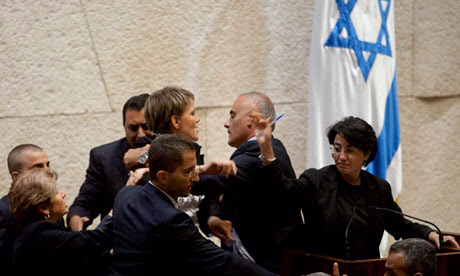
Arab-Israeli politician Haneen Zoabi disqualified from re-election

MP who was on board flotilla that attempted to breach Israel's blockade of Gaza in 2010 has faced long campaign for expulsion


An Israeli-Arab politician who took part in an attempt to breach the blockade of Gaza has been disqualified from standing in next month's general election after being accused of undermining the state of Israel.

The central elections committee voted 19-9 to back a motion brought by rightwingers against Haneen Zoabi's candidacy. The decision has been automatically referred to the supreme court, which must rule before the end of the month.

Before the hearing, Zoabi said her disqualification would mean "disqualifying an entire generation of young Arabs".

Danny Danon, a member of parliament for the ruling Likud party who presented a 11,000-signature petition calling for Zoabi's disqualification, told the Guardian: "Her place is not in the Knesset [Israeli parliament] but in jail. Democracy must have its limits." Zoabi had worked "against the interests of the state and for our enemies," he added.

One of 11 MPs representing Arab parties, Zoabi has faced a robust campaign since she took part in a flotilla of ships attempting to breach Israel's blockade of Gaza in May 2010. Nine Turkish activists were killed when Israeli commandos stormed the lead ship, the Mavi Marmara, on which Zoabi was a passenger.

Her parliamentary privileges were revoked but an attempt to bring criminal charges against her failed. She was assigned special protection after a number of death threats were made against her.

The committee cited Zoabi's participation in the flotilla as the chief reason for her disqualification.

David Rotem, an MP for the far-right Yisrael Beiteinu party, told the committee: "To say that a member of Knesset was aboard the Mavi Marmara does not constitute the critical mass equalling support for a terrorist organisation reflects a lack of understanding of what happened aboard that ship."

Another far-right MP, Michael Ben-Ari, said the aim of the disqualification was to ensure "our kids will be able to live in a normal Jewish state, not one in which 30 Zoabis serve in the Knesset". More


Saturday, November 17, 2012

Dissecting IDF propaganda: The numbers behind the rocket attacks

In this brief study, I examine the many numbers cited by the Israeli military relating to Gaza rocket attacks into Israel.

To begin, Israeli spokespeople frequently remind the world that a million Israeli citizens are within range of Gaza rockets, twelve thousand of which have been fired into Israel in the last twelve years, inflicting thousands of injuries and several dead.

However, we are rarely told exactly how many people have been killed by these rocket attacks.

Counting the dead

Below is a list of all the fatalities of rocket and mortar attacks fired from the Gaza Strip into Israel in the entire history of these attacks. Throughout the years of rocket attacks into Israel, a total of 26 people have been killed altogether.

Fatalities from rocket and mortar attacks in Israel from the Gaza Strip

Date of attackNameAgeLocationWeapon
2004.06.28Mordechai Yosephov49SderotQassam
2004.06.28Afik Ohion Zehavi4SderotQassam
2004.09.29Yuval Abebeh4SderotQassam
2004.09.29Dorit (Masarat) Benisian2SderotQassam
2005.01.15Ayala-Haya Abukasis17SderotQassam
2005.07.15Dana Gelkowitz22Moshav Nativ Ha‘asaraQassam
2006.03.28Salam Ziadin* ?Nahal OzQassam‡
2006.03.28Khalid Ziadin*16Nahal OzQassam‡
2006.11.15Faina Slutzker57SderotQassam
2006.11.21Yaakov Yaakobov43SderotQassam
2007.05.21Shirel Friedman32SderotQassam
2007.05.27Oshri Oz36SderotQassam
2008.02.27Roni Yihye47SderotQassam
2008.05.09Jimmy Kedoshim48Kibbutz Kfar Azamortar
2008.05.12Shuli Katz70Moshav YeshaQassam
2008.06.05Amnon Rosenberg51Kibbutz Nir-Ozmortar
2008.12.27Beber Vaknin58NetivotQassam
2008.12.29Lutfi Nasraladin*†38IDF base near Nahal Ozmortar
2008.12.29Irit Sheetrit39AshdodGrad
2008.12.29Hani al Mahdi*27AshkelonGrad
2010.03.18Manee Singueanphon*30Moshav Nativ Ha‘asaraQassam
2011.08.20Yossi Shushan38Be’er shevaGrad
2011.10.29Moshe Ami56AshkelonGrad
2012.11.15Yitzchak Amsalem24Kiryat Malachirocket
2012.11.15Mira Sharf25Kiryat Malachirocket
2012.11.15Aharon Smadja49Kiryat Malachirocket
Total fatalities in the history of rocket and mortar attacks
from Gaza into Israel: 26
Operation Cast Lead: December 27, 2008–January 18, 2009
Operation Pillar of Cloud: November 14, 2012–
(Refer to the bottom of the page for notes and sources.)

The shaded rows in the table refer to fatalities sustained during Operation Cast Lead (December 27, 2008–January 18, 2009) and Operation Pillar of Cloud(November 14, 2012–).

Note that of the 26 fatalities from rocket and mortar attacks, more than one out of every four deaths occurred during these two operations, which were ostensibly designed to deter rocket attacks. More