Showing posts with label security. Show all posts

Monday, June 25, 2018

Britain’s Brave New World Just Got Braver


Sajid Javid: Backs dodgy software to spy on crowds. (Photo by Carl Court/Getty Images)

British Home Secretary Sajid Javid unveiled a new counter-terrorism initiative last week that he says targets an ever-metastasizing threat, yet it raises a raft of new questions about people’s rights.

The government is acting on the imperative that something needs to be done. But MI5 – officially known as Britain’s domestic Security Service and the lead organization combating terrorism within the UK – has already, since the start of the “war on terror,” doubled in size and has been promised yet more staff over the next two years.

Yet despite these boosted resources for MI5, as well as increased funding and surveillance powers for the entire UK intelligence community, virtually every terror attack carried out in the UK over the last few years has been committed by someone already known to the authorities. Indeed, the Manchester bomber, Salman Abedi, had been aggressively investigated but MI5 ignored vital intelligence and closed down the active investigation shortly before he carried out the attack.

This failure to target known threats is not just a UK problem. Attacks across Europe over the last few years have repeatedly been carried out by people already on the local security radar.

New approaches are needed. But this latest offering appears to be a medley of already failed initiatives and more worryingly, a potentially dangerous blueprint for a techno-Stasi state. Read More

Saturday, August 25, 2012

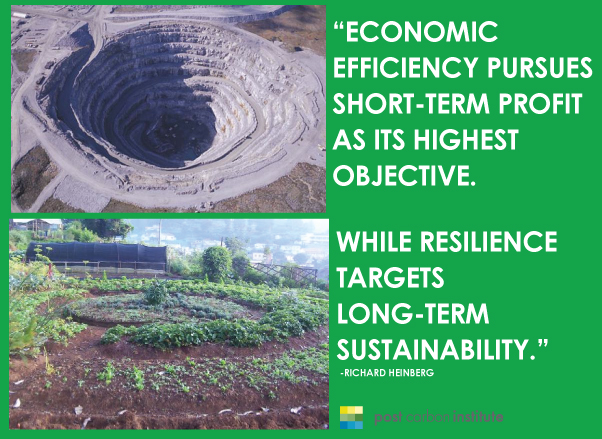
Building Resilience In A Changing Climate - Richard Heinberg

Climate shocks are on the way. We’ve already spewed so much carbon into the atmosphere that a cascade of worsening crop failures, droughts, floods, and freak storms is virtually guaranteed. You, your family, and your community will feel the effects.

Ironically, however, avoiding climate change also has its costs. It makes sense from a climate-protection standpoint to dramatically and rapidly reduce our use of fossil fuels, which drive global warming. But these fuels largely, well, fueled the spectacular economic growth of the past 200 years, and weaning ourselves from them quickly now—while most industrial economies are over-indebted and starved for growth—could risk financial upheaval.

Oil, the most economically pivotal of the fossil fuels, is getting more expensive anyway. Cheap, onshore, conventional crude is depleting; its replacements—deepwater oil, tar sands, and tight oil—cost more to produce, in both dollar and environmental terms. Though high oil prices discourage driving (good for the climate), they also precipitate recessions (bad for the economy). While renewable energy sources are our hope for the future and we should be doing everything we can to develop them, it will be decades before they can supply all our energy needs.

In the face of impending environmental and economic shocks, our best strategy is to build resilience throughout society. Resilience is the subject of decades of research by ecologists and social scientists who define it as “the capacity of a system to tolerate disturbance without collapsing into a qualitatively different state that is controlled by a different set of processes.” In other words, resilience is the capacity to absorb shocks, reorganize, and continue functioning.

In many respects a resilient society defies the imperative of economic efficiency. Resilience needs dispersed inventories and redundancy, while economic efficiency—in its ruthless pursuit of competitive advantage—eliminates inventories and redundancies everywhere it can. Economic efficiency leads toward globalization, resilience toward localization. Economic efficiency pursues short-term profit as its highest objective, while resilience targets long-term sustainability. It would appear that industrial society circa 2012 has gone about as far in the direction of economic efficiency as it is possible to go, and that a correction is necessary and inevitable. Climate change simply underscores the need for that course correction.

Building resilience means helping society to work more like an ecosystem—and that has major implications for how we use energy. Ecosystems conserve energy by closing nutrient loops: plants capture and chemically store solar energy, which is then circulated as food throughout the food web. Nothing is wasted. We humans—having developed the ability to draw upon ancient, concentrated, cheap, and abundant (though ultimately finite) fossil fuels—have simultaneously adopted the habit of wasting energy on a colossal scale. Our food, transport, manufacturing, and dwelling systems burn through thirty billion barrels of oil and eight billion tons of coal per year; globally, humans use over four hundred quadrillion BTUs of energy in total. Even where energy is not technically going to waste, demand for it could be substantially reduced by redesigning our basic systems. More


Thursday, August 23, 2012

We'll make a killing out of food crisis, Glencore trading boss Chris Mahoney boasts

Drought is good for business, says world's largest commodities trading company

23 August 2012 - The United Nations, aid agencies and the British Government have lined up to attack the world's largest commodities trading company, Glencore, after it described the current global food crisis and soaring world prices as a "good" business opportunity.

With the US experiencing a rerun of the drought "Dust Bowl" days of the 1930s and Russia suffering a similar food crisis that could see Vladimir Putin's government banning grain exports, the senior economist of the UN's Food and Agriculture Organisation, Concepcion Calpe, told The Independent: "Private companies like Glencore are playing a game that will make them enormous profits."

Ms Calpe said leading international politicians and banks expecting Glencore to back away from trading in potential starvation and hunger in developing nations for "ethical reasons" would be disappointed.

"This won't happen," she said. "So now is the time to change the rules and regulations about how Glencore and other multinationals such as ADM and Monsanto operate. They know this and have been lobbying heavily around the world to water down and halt any reform."

Glencore's director of agriculture trading, Chris Mahoney, sparked the controversy when he said: "The environment is a good one. High prices, lots of volatility, a lot of dislocation, tightness, a lot of arbitrage opportunities.

"We will be able to provide the world with solutions... and that should also be good for Glencore."

Glencore announced pre-tax global profits of £1.4bn. The G20 is considering holding an emergency summit on the world food crisis.

Oxfam was scathing about Glencore's exploitation of volatile world food prices. Jodie Thorpe, from the aid agency's Grow Campaign, said: "Glencore's comment that 'high prices and lots of volatility and dislocation' was 'good' gives us a rare glimpse into the little-known world of companies that dominate the global food system." More


Friday, February 24, 2012

Israeli Forces Destroy Hundreds of Olive Trees and Two Wells in Surif

24 FEBRUARY 2012 In the early hours on February 23, 2012, a combined group of Israeli settlers and soldiers came to Surif, a Palestinian village near the Separation Barrier in the southern West Bank, and cut down 700 trees and destroyed two water wells.

Surif, a large community of 17,000 Palestinian residents, routinely faces large scale acts of destruction and harassment from Israeli settlers and soldiers.

In this attack, Israeli Forces entered the area between the hours of 2am and 6am and cut down 400 olive trees and 300 apricot trees belonging to Ishaq Abdel Fatah Al Qadi.

Ishaq and his family are counting on the support of solidarity activists all over the world in order to buy and plant new trees in his field so that they can support themselves off of the land as they have done for decades. More

Saturday, February 18, 2012

The Carter Center Calls on Israel to Release Hunger Striker Khader Adnan

Atlanta…The Carter Center calls on the Israeli government to immediately charge or release Palestinian prisoner Khader Adnan, who was arrested on Dec. 17, 2011, based on "secret evidence" and has been held in administrative detention without charge.

<P><SPAN class=colCHeading>Press Releases</SPAN></P>

Mr. Adnan has undertaken a hunger strike since his arrest 62 days ago and his life is in imminent danger. His grave medical condition has been verified by Physicians for Human Rights-Israel.

Mr. Adnan's case highlights the inconsistencies of Israel's administrative detention policies with internationally recognized rights to due process.

As of Jan. 15, 2012, Israel is holding 307 Palestinians in administrative detention. Read the Carter Center's recent statement on the administrative detention of elected Palestinian legislators. More


Tuesday, January 17, 2012

French parliament report accuses Israel of water 'apartheid' in West Bank

 The French parliament's Foreign Affairs Committee published an unprecedented report two weeks ago accusing Israel of implementing "apartheid" policies in its allocation of water resources in the West Bank.

The report said that water has become "a weapon serving the new apartheid" and gave examples and statistics that ostensibly back this claim.

"Some 450,000 Israeli settlers on the West Bank use more water than the 2.3 million Palestinians that live there," the report said. "In times of drought, in contravention of international law, the settlers get priority for water."

The author of the report was Socialist Party MP Jean Glavany, who in the past served as agriculture minister under French President Lionel Jospin and as cabinet secretary for President Francois Mitterrand. More 


Tuesday, December 27, 2011

Confronting intimidation, working for justice in Palestine

If we had a wish list for 2012 as Palestinians and friends of Palestine, one of the top items ought to be our hope that we can translate the dramatic shift in recent years in world public opinion into political action against Israeli policies on the ground.

We know why this has not yet materialized: the political, intellectual and cultural elites of the West cower whenever they even contemplate acting according to their own consciences as well as the wishes of their societies.

This last year was particularly illuminating for me in that respect. I encountered that timidity at every station in 

the many trips I took for the cause I believe in. And these personal experiences were accentuated by the more general examples of how governments and institutions caved in under intimidation from Israel and pro-Zionist Jewish organizations.

A catalogue of complicity

Of course there were US President Barack Obama’s pandering appearances in front ofAIPAC, the Israeli lobby, and his administration’s continued silence and inaction in face of Israel’s colonization of the West Bank, siege and killings in Gaza, ethnic cleansing of the Bedouins in the Naqab and new legislation discriminating against Palestinians in Israel.

The complicity continued with the shameful retreat of Judge Richard Goldstone from his rather tame report on the Gaza massacre — which began three years ago today. And then there was the decision of European governments, especially Greece, to disallow campaigns of human aid and solidarity from reaching Gaza by sea.

On the margins of all of this were prosecutions in France against activists calling forboycott, divestment and sanctions (BDS) and a few u-turns by some groups and non-governmental organizations (NGOs) in Europe caving in under pressure and retracting an earlier decision to cede connections with Israel. More


Palestinian's in a Jewish state'

Palestinians living in Israel face institutionalised discrimination and segregation in a supposedly democratic state.

Israel’s crimes in the occupied Palestinian territories - like the settlements, the killing of civilians and the demolition of homes - are openly condemned in the West by human rights groups and others like never before. But as the peace process remains stuck, and Prime Minister Binyamin Netanyahu forces the issue of Israel as a “Jewish state” into the spotlight, understanding the situation of Palestinian citizens of Israel has become crucial to grasping the core of the entire conflict.

So-called “Israeli Arabs” have got it better than most Palestinians, who are either under military rule or forcibly excluded from their homeland. But the institutional discrimination they have faced since 1948 goes to the heart of the contradiction that Israel is “Jewish and democratic”.

Many people will concede that the military occupation of non-citizens for over 40 years is undemocratic. Yet, inside the pre-1967 borders, Israel is far from the “liberal democracy” central to the propaganda, in areas like land, planning, housing, immigration and state budgets. Rhetoric and policies associated with the far-right in Europe - like an obsession with “demographics” and birth rates, or boosting one kind of population in a given area to counterbalance an “undesirable” minority - are mainstream in Israeli politics.

In my new book, Palestinians in Israel: Segregation, Discrimination and Democracy, I unpack some of the core elements of how Israel’s Palestinian citizens have been treated since 1948. One aspect is the area of nationality and citizenship rights, as this short extract explains:

A poorly understood aspect of Israel as a Jewish state is the distinction between “citizenship” and “nationality”, an issue confused by the fact that, in English, the two terms can often be used interchangeably. In Israel, “‘nationality’ (Hebrew: le’um) and ‘citizenship’ (Hebrew: ezrahut) are two separate, distinct statuses, conveying different rights and responsibilities”. Palestinians in Israel, as non-Jews, can be citizens, but never nationals, and are thus denied “rights and privileges” enjoyed by those “who would qualify for Israeli citizenship under the 1950 Law of Return”. More


Wednesday, December 7, 2011

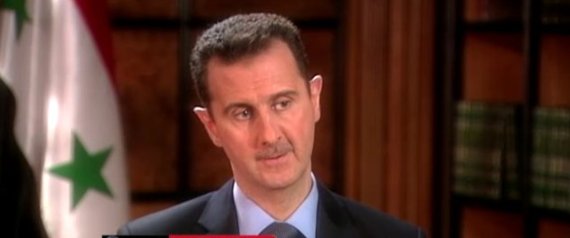
Syria: Bashar Al-Assad Denies Ordering Crackdown

BEIRUT — Syria’s president has denied he ordered the deadly crackdown on a nearly 9-month-old uprising, claiming he is not in charge of the troops behind the assault.

Speaking to ABC’s Barbara Walters in a rare interview that aired Wednesday, President Bashar Assad maintained he did not give a command “to kill or be brutal.” “They’re not my forces,” Assad responded when asked if Syrian troops had cracked down too hard on protesters. “They are military forces (who) belong to the government. I don’t own them. I’m president. I don’t own the country.”

In fact, in his role as president, Assad is the commander of Syria’s armed forces.

The U.N. estimates more than 4,000 people have been killed in Syria since the uprising began in March. “Who said the United Nations is a credible institution?” Assad said, when Walters asked him about allegations of widespread violence and torture. State Department spokesman Mark Toner said Assad was trying to shirk responsibility. “I find it ludicrous that he is attempting to hide behind some sort of shell game but also some sort of claim that he doesn’t exercise authority in his own country,” Toner said. Assad has responded with once-unthinkable promises of reform in one of the most authoritarian states in the Middle East. But he simultaneously unleashed the military to crush the protests with tanks and snipers.

Still, he insisted he still had the support of Syrians. More


Tuesday, November 1, 2011

Palestine, The United States and The UNESCO mess

It was bound to happen sooner or later. At some point, both the president and Congress would be faced with a clear choice between US national interests and the demands made by Israeli Prime Minister Binyamin Netanyahu and his powerful Washington lobby.

In the larger sense, it happens all the time. US policy toward the Palestinians endangers our interests throughout the Muslim world, including - first and foremost - our civilian and military personnel in the Middle East, as well as our strategic and economic interests.

But usually, as is the case with some Israeli violations of Palestinian human rights like the Gaza blockade, the situation is not completely clear-cut. The Palestinians charge illegality under international law; the Israelis cite a different law.

And the US can (and invariably does) say nothing, or it takes the side of the Israelis. The entire world expects that from the United States by now and understands precisely why we operate that way. It understands that Israel is an important friend whose security we would never jeopardise.

They understand quite clearly that it is our absurd system of campaign funding that dictates that we follow Israel's lead on defending the occupation and preventing Palestinians from achieving any kind of recognition or sovereignty. The US always chooses Netanyahu's interests over the rights of the Palestinians.

Watershed vote

However, Monday's United Nations vote to admit Palestine into the United Nations Educational, Scientific and Cultural Organisation (UNESCO) presented US policymakers with a watershed choice. US interests and the Israeli government's desires are directly pitted against each other. More