Saturday, October 5, 2013

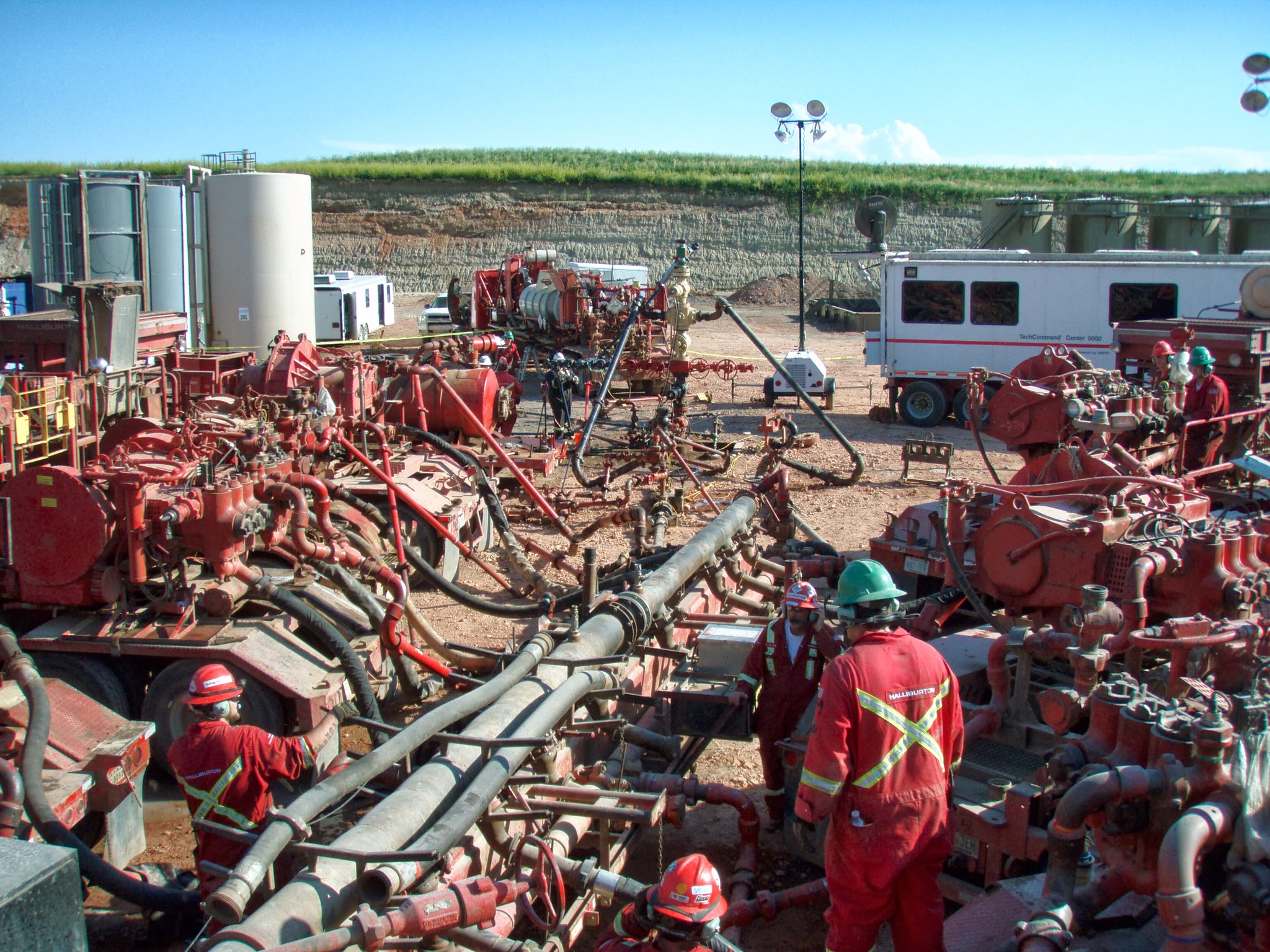
New Report First to Quantify Damage Done by Gas Drilling

“The numbers don't lie — fracking has taken a dirty and destructive toll on our environment. If this dirty drilling continues unchecked, these numbers will only get worse,” said John Rumpler, senior attorney for Environment America.

“At health clinics, we’re seeing nearby residents experiencing nausea, headaches and other symptoms linked to fracking pollution,” said David Brown, a toxicologist who has reviewed health data from Pennsylvania. “With billions of gallons of toxic waste coming each year, we’re just seeing the ‘tip of the iceberg’ in terms of health risks.”

The “Fracking by the Numbers” report measured key indicators of fracking threats across the country, including:

• 280 billion gallons of toxic wastewater generated in 2012,
• 450,000 tons of air pollution produced in one year,
• 250 billion gallons of fresh water used since 2005,
• 360,000 acres of land degraded since 2005,
• 100 million metric tons of global warming pollution since 2005.

Fracking also inflicts other damage not quantified in the report — ranging from contamination of residential wells to ruined roads to earthquakes at disposal sites.
Reviewing the totality of this fracking damage, the report’s authors conclude:

Given the scale and severity of fracking’s myriad impacts, constructing a regulatory regime sufficient to protect the environment and public health from dirty drilling — much less enforcing such safeguards at more than 80,000 wells, plus processing and waste disposal sites across the country — seems implausible. In states where fracking is already underway, an immediate moratorium is in order. In all other states, banning fracking is the prudent and necessary course to protect the environment and public health.

At the federal level, the report’s data on land destroyed by fracking operations comes as the Obama administration considers a rule for fracking on public lands, and as the oil and gas industry is seeking to expand fracking to several places which help provide drinking water for millions of Americans — including the White River National Forest in Colorado and the Delaware River basin, which provides drinking water for more than 15 million Americans.

Along with the new numbers in today’s report, Environment America’s John Rumpler added one more: the more than 1 million public comments submitted this summer to the Obama administration rejecting its proposed rule for fracking on public lands as far too weak. Environment America is urging President Obama to follow the recommendation of his administration’s advisory panel on fracking to keep sensitive areas as off-limits to fracking.

“We need decisive action from Washington to protect our communities,” said John Fenton, a rancher from Pavillion, Wyoming who last week appealed to federal officials to re-open an investigation into contamination of drinking water there.

“The bottom line is this: The numbers on fracking add up to an environmental nightmare,” said Rumpler. “For our environment and for public health, we need to put a stop to fracking.”
Of particular concern are the billions of gallons of toxic waste created from fracking, which threaten the environment, public health and drinking water. Environment America is calling on federal officials to close the loophole that exempts this waste from our nation’s hazardous waste law. Rep. Matt Cartwright (PA-17) has introduced the CLEANER Act, H.R. 2825, to close that loophole.

“The data from today’s report shows that fracking is taking a dirty and destructive toll on our environment and health,” said Rumpler. “It’s time for our federal officials to step up; they can start by keeping fracking out of our forests and away from our parks, and closing the loophole exempting toxic fracking waste from our nation’s hazardous waste law.” More

Download Report


Friday, October 4, 2013

A Fierce Green Fire - Trailer

Spanning 50 years of grassroots and global activism, this Sundance documentary brings to light the vital stories of the environmental movement where people fought -- and succeeded -- against enormous odds. From halting dams in the Grand Canyon to fighting toxic waste at Love Canal; from Greenpeace to Chico Mendes; from climate change to the promise of transforming our civilization, A Fierce Green Fire is "nothing less than the history of environmentalism itself." (Los Angeles Times)

From the Academy Award-nominated director of "Berkeley in the Sixties", and narrated by Robert Redford, Meryl Streep, Ashley Judd, Van Jones and Isabel Allende.

Transatlantic Free Trade Agreement: A Corporate Power Grab That Must Be Stopped

The Transatlantic Free Trade Agreement (TAFTA) between the US and EU intends to create the world's largest free trade area, 'protect' investment and remove ‘unnecessary regulatory barriers’. Corporate interests are driving the agenda, with the public having been sidelined. Unaccountable, pro-free-trade bureaucrats from both sides of the Atlantic are facilitating the strategy (1)

In addition to the biotech sector and Big Pharma, groups lobbying for the deal have included Toyota, General Motors, IBM and the powerful lobby group the Chamber of Commerce of the US. Business Europe, the main organisation representing employers in Europe, launched its own strategy on an EU-US economic and trade The Transatlantic Free Trade Agreement (TAFTA) between the US and EU intends to create the world's largest free trade area, 'protect' investment and remove ‘unnecessary regulatory barriers’. Corporate interests are driving the agenda, with the public having been sidelined. Unaccountable, pro-free-trade bureaucrats from both sides of the Atlantic are facilitating the strategy (1)

In addition to the biotech sector and Big Pharma, groups lobbying for the deal have included Toyota, General Motors, IBM and the powerful lobby group the Chamber of Commerce of the US. Business Europe, the main organisation representing employers in Europe, launched its own strategy on an EU-US economic and trade partnership in early 2012. Its suggestions were widely included in the draft EU mandate.

An increasing number of politicians and citizens groups have criticised the secretive negotiations and are demanding that they be conducted in an open way. This is growing concern that the negotiations could result in the opening of the floodgates for GMOs and shale gas (fracking) in Europe, the threatening of digital and labour rights or the empowering of corporations to legally challenge a wide range of regulations which they dislike.

One of the key aspects of the negotiations is that both the EU and US should recognise their respective rules and regulations, which in practice could reduce regulation to the lowest common denominator. The official language talks of ‘mutual recognition’ of standards or so-called reduction of non-tariff barriers. For the EU, that could mean accepting US standards in many areas, including food and agriculture, which are lower than the EU's.

The US wants all so-called barriers to trade, including controversial regulations such as those protecting agriculture, food or data privacy, to be removed. Even the leaders of the Senate Finance Committee, in a letter to U.S. Trade Representative Ron Kirk, made it clear that any agreement must reduce EU restrictions on genetically modified crops, chlorinated chickens and hormone-treated beef.

The public in Europe does not want such things. People want powerful corporations to be held to account and their pratices regulated by elected representatives who they trust to protect their interests, the public good. However, the TAFTA seems an ideal opportunity for corporations to force wholly unpopular and dangerous policies through via secretive, undemocratic means. They have been unable to do this in a democratic and transparent manner, so secret back room deals represent a different option.

Corporate demands include an “ambitious liberalisation of agricultural trade barriers with as few exceptions as possible.” Food lobby group Food and Drink Europe, representing the largest food companies (Unilever, Kraft, NestlĂ©, etc.), has welcomed the negotiations, with one of their key demands being the facilitation of the low level presence of unapproved genetically modified crops. This is a long-standing industry agenda also supported by feed and grain trading giants, including Cargill, Bunge, ADM and the big farmers' lobby COPA-COGECA. Meanwhile, the biotech industry on both sides of the Atlantic is offering its “support and assistance as the EU and the US government look to enhance their trade relationship.”

New Report

If the pro-free-market bureaucrats and corporations get their way and successfully bar the public from any kind of meaningful information input into the world’s biggest trade deal ever to be negotiated, Europeans could end up becoming the victims of one of the biggest corporate stitch ups ever. Left unchallenged, it will allow huge private interests to dig their profiteering snouts into the trough of corporate greed at the expense of ordinary people.

And that’s not hyperbole. Such a view is confirmed by the release of a new report on the eve of the second round of negotiations that are due to begin in Brussels next week.

The report, published by the Seattle to Brussels Network (S2B) (2), reveals the true human and environmental costs of the proposed TAFTA. ‘A Brave New Transatlantic Partnership’ highlights how the European Commission’s promises of up to 1% GDP growth and massive job creation through the EU-US trade deal are not supported even by its own studies, which predict a growth rate of just 0.01% GDP over the next ten years and the potential loss of jobs in several economic sectors, including agriculture.

The report also explains how corporations are lobbying EU-US trade negotiators to use the deal to weaken food safety, labour, health and environmental standards as well as undermine digital rights. Attempts to strengthen banking regulation in the face of the financial crisis could also be jeopardised as the financial lobby uses the secretive trade negotiations to undo financial reforms, such as restrictions on the total value of financial transactions or the legal form of its operations.

Kim Bizzarri, the author of the report:

“Big business lobbies on both sides of the Atlantic view the secretive trade negotiations as a weapon for getting rid of policies aimed at protecting European and US consumers, workers and our planet. If their corporate wish-list is implemented, it will concentrate even more economic and political power within the hands of a small elite, leaving all of us without protection from corporate wrongdoings.”

The report also warns that the agreement could open the floodgate to multi-million Euro lawsuits from corporations who can challenge democratic policies at international tribunals if they interfere with their profits.

Pia Eberhardt, trade campaigner with Corporate Europe Observatory and author of ‘A transatlantic corporate bill of rights’:

“The proposed investor rights in the transatlantic trade deal show what it is really about: It’s a power grab from corporations to rein in democracy and handcuff governments that seek to regulate in the public interest. It’s only a matter of time before European citizens start paying the price in higher taxes and diminished social protection.” in early 2012. Its suggestions were widely included in the draft EU mandate.

An increasing number of politicians and citizens groups have criticised the secretive negotiations and are demanding that they be conducted in an open way. This is growing concern that the negotiations could result in the opening of the floodgates for GMOs and shale gas (fracking) in Europe, the threatening of digital and labour rights or the empowering of corporations to legally challenge a wide range of regulations which they dislike.

One of the key aspects of the negotiations is that both the EU and US should recognise their respective rules and regulations, which in practice could reduce regulation to the lowest common denominator. The official language talks of ‘mutual recognition’ of standards or so-called reduction of non-tariff barriers. For the EU, that could mean accepting US standards in many areas, including food and agriculture, which are lower than the EU's.

The US wants all so-called barriers to trade, including controversial regulations such as those protecting agriculture, food or data privacy, to be removed. Even the leaders of the Senate Finance Committee, in a letter to U.S. Trade Representative Ron Kirk, made it clear that any agreement must reduce EU restrictions on genetically modified crops, chlorinated chickens and hormone-treated beef.

The public in Europe does not want such things. People want powerful corporations to be held to account and their pratices regulated by elected representatives who they trust to protect their interests, the public good. However, the TAFTA seems an ideal opportunity for corporations to force wholly unpopular and dangerous policies through via secretive, undemocratic means. They have been unable to do this in a democratic and transparent manner, so secret back room deals represent a different option.

Corporate demands include an “ambitious liberalisation of agricultural trade barriers with as few exceptions as possible.” Food lobby group Food and Drink Europe, representing the largest food companies (Unilever, Kraft, NestlĂ©, etc.), has welcomed the negotiations, with one of their key demands being the facilitation of the low level presence of unapproved genetically modified crops. This is a long-standing industry agenda also supported by feed and grain trading giants, including Cargill, Bunge, ADM and the big farmers' lobby COPA-COGECA. Meanwhile, the biotech industry on both sides of the Atlantic is offering its “support and assistance as the EU and the US government look to enhance their trade relationship.”

New Report

If the pro-free-market bureaucrats and corporations get their way and successfully bar the public from any kind of meaningful information input into the world’s biggest trade deal ever to be negotiated, Europeans could end up becoming the victims of one of the biggest corporate stitch ups ever. Left unchallenged, it will allow huge private interests to dig their profiteering snouts into the trough of corporate greed at the expense of ordinary people.

And that’s not hyperbole. Such a view is confirmed by the release of a new report on the eve of the second round of negotiations that are due to begin in Brussels next week.

The report, published by the Seattle to Brussels Network (S2B) (2), reveals the true human and environmental costs of the proposed TAFTA. ‘A Brave New Transatlantic Partnership’ highlights how the European Commission’s promises of up to 1% GDP growth and massive job creation through the EU-US trade deal are not supported even by its own studies, which predict a growth rate of just 0.01% GDP over the next ten years and the potential loss of jobs in several economic sectors, including agriculture.

The report also explains how corporations are lobbying EU-US trade negotiators to use the deal to weaken food safety, labour, health and environmental standards as well as undermine digital rights. Attempts to strengthen banking regulation in the face of the financial crisis could also be jeopardised as the financial lobby uses the secretive trade negotiations to undo financial reforms, such as restrictions on the total value of financial transactions or the legal form of its operations.

Kim Bizzarri, the author of the report:

“Big business lobbies on both sides of the Atlantic view the secretive trade negotiations as a weapon for getting rid of policies aimed at protecting European and US consumers, workers and our planet. If their corporate wish-list is implemented, it will concentrate even more economic and political power within the hands of a small elite, leaving all of us without protection from corporate wrongdoings.”

The report also warns that the agreement could open the floodgate to multi-million Euro lawsuits from corporations who can challenge democratic policies at international tribunals if they interfere with their profits.

Pia Eberhardt, trade campaigner with Corporate Europe Observatory and author of ‘A transatlantic corporate bill of rights’:

“The proposed investor rights in the transatlantic trade deal show what it is really about: It’s a power grab from corporations to rein in democracy and handcuff governments that seek to regulate in the public interest. It’s only a matter of time before European citizens start paying the price in higher taxes and diminished social protection.” More


Thursday, October 3, 2013

Diary by Patrick Cockburn

The media that failed woefully in their coverage of Afghanistan, Iraq and Libya are the media that we are supposed now to believe are giving us the unvarnished truth in Syria.

Patrick Cockburn points out some of the reasons why we shouldn't trust journalists' war coverage.
He also makes some good points about how war's greater exposure in the modern media often changes the nature of the fighting for the worse. Jonathan Cook - Journalist

The four wars fought in Afghanistan, Iraq, Libya and Syria over the past 12 years have all involved overt or covert foreign intervention in deeply divided countries. In each case the involvement of the West exacerbated existing differences and pushed hostile parties towards civil war. In each country, all or part of the opposition have been hard-core jihadi fighters. Whatever the real issues at stake, the interventions have been presented as primarily humanitarian, in support of popular forces against dictators and police states. Despite apparent military successes, in none of these cases have the local opposition and their backers succeeded in consolidating power and establishing stable states.

More than most armed struggles, the conflicts have been propaganda wars in which newspaper, television and radio journalists played a central role. In all wars there is a difference between reported news and what really happened, but during these four campaigns the outside world has been left with misconceptions even about the identity of the victors and the defeated. In 2001 reports of the Afghan war gave the impression that the Taliban had been beaten decisively even though there had been very little fighting. In 2003 there was a belief in the West that Saddam Hussein’s forces had been crushed when in fact the Iraqi army, including the units of the elite Special Republican Guard, had simply disbanded and gone home. In Libya in 2011 the rebel militiamen, so often shown on television firing truck-mounted heavy machine-guns in the general direction of the enemy, had only a limited role in the overthrow of Muammar Gaddafi, which was mostly brought about by Nato air strikes. In Syria in 2011 and 2012 foreign leaders and journalists repeatedly and vainly predicted the imminent defeat of Bashar al-Assad.

These misperceptions explain why there have been so many surprises and unexpected reversals of fortune. The Taliban rose again in 2006 because it hadn’t been beaten as comprehensively as the rest of the world imagined. At the end of 2001 I was able to drive – nervously but safely – from Kabul to Kandahar, but when I tried to make the same journey in 2011 I could go no further south on the main road than the last police station on the outskirts of Kabul. In Tripoli two years ago hotels were filled to capacity with journalists covering Gaddafi’s fall and the triumph of the rebel militias. But state authority still hasn’t been restored. This summer Libya almost stopped exporting oil because the main ports on the Mediterranean had been seized by mutinying militiamen, and the prime minister, Ali Zeidan, threatened to bomb ‘from the air and the sea’ the oil tankers the militiamen were using to sell oil on the black market.

Libya’s descent into anarchy was scarcely covered by the international media since they had long since moved on to Syria, and more recently Egypt. Iraq, home a few years ago to so many foreign news bureaux, has also dropped off the media map although up to a thousand Iraqis are killed each month, mostly as a result of the bombing of civilian targets. When it rained for a few days in Baghdad in January the sewer system, supposedly restored at a cost of $7 billion, couldn’t cope: some streets were knee-deep in dirty water and sewage. In Syria, many opposition fighters who had fought to defend their communities turned into licensed bandits and racketeers when they took power in rebel-held enclaves.

It wasn’t that reporters were factually incorrect in their descriptions of what they had seen. But the very term ‘war reporter’, though not often used by journalists themselves, helps explain what went wrong. Leaving aside its macho overtones, it gives the misleading impression that war can be adequately described by focusing on military combat. But irregular or guerrilla wars are always intensely political, and none more so than the strange stop-go conflicts that followed from 9/11. This doesn’t mean that what happened on the battlefield was insignificant, but that it requires interpretation. In 2003 television showed columns of Iraqi tanks smashed and on fire after US air strikes on the main highway north of Baghdad. If it hadn’t been for the desert background, viewers could have been watching pictures of the defeated German army in Normandy in 1944. But I climbed into some of the tanks and could see that they had been abandoned long before they were hit. This mattered because it showed that the Iraqi army wasn’t prepared to fight and die for Saddam. It was a pointer too to the likely future of the allied occupation. Iraqi soldiers, who didn’t see themselves as having been defeated, expected to keep their jobs in post-Saddam Iraq, and were enraged when the Americans dissolved their army. Well-trained officers flooded into the resistance, with devastating consequences for the occupying forces: a year later the Americans controlled only islands of territory in Iraq.

War reporting is easier than other types of journalism in one respect because the melodrama of events drives the story and attracts an audience. It may be risky at times, but the correspondent talking to camera, with exploding shells and blazing military vehicles behind him, knows his report will feature high up in any newscast. ‘If it bleeds it leads,’ is an old American media adage. The drama of battle inevitably dominates the news, but oversimplifies it by disclosing only part of what is happening. These oversimplifications were more than usually gross and deceptive in Afghanistan and Iraq, when they dovetailed with political propaganda that demonised the Taliban and later Saddam as evil incarnate, casting the conflict – particularly easy in the US in the hysterical atmosphere after 9/11 – as a black and white struggle between good and evil. The crippling inadequacies of the opposition were ignored.

By 2011 the complexity of the conflicts in Iraq and Afghanistan was evident to journalists in Baghdad and Kabul if not necessarily to editors in London and New York. But by then the reporting of the wars in Libya and Syria was demonstrating a different though equally potent form of naivety. A version of the spirit of 1968 prevailed: antagonisms that predated the Arab Spring were suddenly said to be obsolete; a brave new world was being created at hectic speed. Commentators optimistically suggested that, in the age of satellite television and the internet, traditional forms of repression – censorship, imprisonment, torture, execution – could no longer secure a police state in power; they might even be counter-productive. State control of information and communication had been subverted by blogs, satellite phones and even the mobile phone; YouTube provided the means to expose in the most graphic and immediate way the crimes and violence of security forces. More

Wednesday, October 2, 2013

How to Kill Goyim and Influence People: Life and Loathing in Greater Israel

A controversial, racist book sparked a national uproar in Israel.


On another dry, sunny day in Jerusalem during the summer of 2010, I weaved through the crowds of tourists, baby-faced soldiers, and packs of Orthodox settlers milling around on Ben Yehuda Pedestrian Mall, and headed toward Pomeranz, a Jewish book emporium on Be’eri Street, a busy road a few blocks away.

As soon as I was inside the shop, a short, mild-mannered man greeted me in American-accented English. He was the owner, Michael Pomeranz, a former undercover narcotics agent and firefighter from New Jersey who had experienced a religious awakening and immigrated to Israel. When I inquired about the availability of a widely discussed book called Torat Ha’Melech, or the King’s Torah, a commotion immediately ensued.

“Are you sure you want it?” Pomeranz, asked me half-jokingly. A middle-aged coworker chortled from behind a shelf. “The Shabak [Israel’s internal security service] is going to want a word with you if you do,” he warned. When a few customers stopped browsing and began to stare in my direction, Pomeranz pointed to a security camera affixed to a wall. “See that?” he said. “It goes straight to the Shabak! [Shin Bet]”

Upon its publication in 2009, Torat Ha’Melech sparked a national uproar. The controversy began when the Israeli paper, Maariv, panned the book’s contents as “230 pages on the laws concerning the killing of non-Jews, a kind of guidebook for anyone who ponders the question of if and when it is permissible to take the life of a non-Jew.” The description was absolutely accurate.

According to the authors, Rabbi Yitzhak Shapira and Rabbi Yosef Elitzur, non-Jews are “uncompassionate by nature” and may have been killed in order to “curb their evil inclinations.” “If we kill a gentile who has violated one of the seven commandments [of Noah] . . . there is nothing wrong with the murder,” Shapira and Elitzur insisted. Citing Jewish law as his source (or at least a very selective interpretation of it) he declared, “There is justification for killing babies if it is clear that they will grow up to harm us, and in such a situation they may be harmed deliberately, and not only during combat with adults.”

Torat Ha’Melech was written as a guide for soldiers and army officers seeking rabbinical guidance on the rules of engagement. Drawing from a hodgepodge of rabbinical texts that seemed to support their genocidal views, Shapira and Elitzur urged a policy of ruthlessness toward non-Jews, insisting that the commandment against murder “refers only to a Jew who kills a Jew, and not to a Jew who kills a gentile, even if that gentile is one of the righteous among the nations.”

The rabbis went on to pronounce all civilians of the enemy population “rodef,”or villains who chase Jews and are therefore fair game for slaughtering. Shapira and Elitzur wrote, “Every citizen in the kingdom that is against us, who encourages the warriors or expresses satisfaction about their actions, is considered rodef and his killing is permissible.”

Shapira and Elitzur also justified the killing of Jewish dissidents. “A rodef is any person who weakens our kingdom by speech and so forth,” they wrote. Finally, the rabbis issued an extensive but crudely reasoned justification for the killing of innocent children, arguing that in order to defeat “the evil kingdom,” the rules of war “permit intentional hurting of babies and of innocent people, if this is necessary for the war against the evil people.” They added, “If hurting the children of an evil king will put great pressure on him that would prevent him from acting in an evil manner—they can be hurt.”

Shapira and Elitzur justified killing babies and small children on the grounds of satiating the national thirst for revenge. “Sometimes,” the rabbis wrote, “one does evil deeds that are meant to create a correct balance of fear, and a situation in which evil actions do not pay off . . . and in accordance with this calculus, the infants are not killed for their evil, but due to the fact that there is a general need of everyone to take revenge on the evil people, and the infants are the ones whose killing will satisfy this need.” More


Tuesday, October 1, 2013

The BBC's subjective view of Israel's occupation should concern us all

Just over a week ago, Israeli armed forces dragged a French diplomat out of an aid vehicle in the occupied West Bank. The international news agency Reuters released subsequent photographs of the woman, Marion Fesneau-Castaing, lying in the dust at the feet of Israeli soldiers, a gun pointed at her face. Fesneau-Castaing and others had been attempting to deliver humanitarian aid to the villagers of Khirbet al-Makhul, whose homes had been demolished by the Israeli army four days earlier, on 16 September.

Amena Saleem

The BBC responded with an online story headlined: "Diplomats protest over West Bank clash with Israel troops"

As is the norm with the BBC's coverage of Palestine and Israel, the story was written without context or background. Israel's presence in the West Bank, its military occupation, is illegal under international law. Its demolition of Palestinian houses and the displacement of their inhabitants are in violation of the Geneva Convention. In a feature on the demolition of Khirbet al-Makhul, the Independent quotes Bill Van Esveld of Human Rights Watch as saying, "All the criteria appear to be met for this to be considered forcible transfer, which is a war crime."

None of this was reported by the BBC, whose headline reduced all of the above to "a clash with Israel troops". In the BBC's use of the word "clash" there is an implication that the diplomats were also at fault, that they waged some kind of battle against armed soldiers.

Khirbet al-Makhul is in the fertile Jordan Valley, a key area for Israeli settlement building. To obtain the necessary land for the illegal settlements, Palestinian villages have to be destroyed and the villagers moved on.

BBC Online's story chose to put the process this way: "The homes in Khirbet al-Makhul were knocked down on Monday after Israel's High Court ruled that they had been built without the correct permits."

The fault, then, seems to lie with the Palestinians who appear to be attempting to operate outside the planning system. A planning system, the average reader will assume, is fair, open and transparent, but nothing could be further from the truth. Under the practices of Israel's military occupation, it is a rarity for Palestinians to be granted a building permit, either to build new homes or extend existing ones.

The Israeli human rights group B'Tselem reports that the Israeli military refuses to give building permits to Palestinians in 99 per cent of Area C, which is where the Jordan Valley, containing the village of Khirbet al-Makhul, lies.

Oxfam reports: "Israel's planning policy in Area C is used to maintain reserves of land for future development of Israeli settlements. Palestinians are often left with no choice other than to build without a permit, despite the ever present risk of demolition which threatens thousands of buildings and puts thousands of families at risk of forced displacement."

Who, reading the BBC's report, would know that? There was nothing in this report to provide a context for the events of a week of Palestinian house demolitions and the manhandling of European diplomats.

To add insult to injury, the Palestinians, who were presented as infringing Israel's honest planning laws, are then depicted as being too intransigent to comply with the consequences. The article continues: "... the Bedouin villagers of Khirbet al-Makhul have refused to leave the land where they say they have grazed sheep for generations."

The fact that the Palestinians have indeed been on this land for generations is furthermore presented as no more than a claim with the addition of two simple words: "they say". The Palestinians' existence on this land and their dispossession of it is not a fact for the BBC, it is merely a claim.

Why is the way the BBC presents Israel's occupation of Palestinian land an issue? After all, it is not as if much of the mainstream media does any better on the subject.

There are several key reasons. According to the BBC's own figures, BBC News reaches 81 per cent of the UK each week across all platforms (television, news, online). That's a quite staggering percentage of the population consuming the BBC's output, including what it has to say on Palestine and the occupation. No other news organisation can claim to be reaching and influencing the vast majority of the British population in this way.

Even more worrying, the BBC Media Centre reports that, "The BBC remains the news provider that the UK public trusts the most by far." It quotes an Ipsos Mori survey, conducted in February 2013, in which 58 per cent of respondents said that the BBC was the "one source they would most likely turn to for news they trust". This was significantly ahead of the nearest other provider, ITV, on 14 per cent.

So here we have a news organisation with a vast reach, commanding a high level of trust, publicly funded, which is failing to tell its audiences the ugly truth of Israel's occupation.

As demonstrated by the article on Marion Fesneau-Castaing and Khirbet al-Makhoul, the BBC will leave out the facts and the context which, if included, would show Israel to be the rogue state it is. And, wherever possible, it will present its audience with the official Israel line only; in this report, for example, that the Palestinians allegedly had no legal right to build where they did. The Palestinian perspective, indeed the fact that Israel almost never gives planning permission to Palestinians, forcing them to build "illegally" is omitted.

Four days after publishing this article, BBC Online ran another piece, headlined "Israel 'to act' over West Bank diplomats scuffle". This contained a video showing Fesneau-Castaing pushing an Israeli soldier in the face as she was lifted up from the ground and led away. The BBC reports that "...video emerged of her lashing out at an Israeli border policeman."

The video that BBC audiences will not see is that of Israeli forces destroying the tents in which the homeless Palestinian villagers were sheltering, while they were still inside. Once again, the true extent of Israel's aggression against the Palestinian people has been carefully hidden from those receiving their news via the BBC.

Through its massive omissions in reporting, the BBC is keeping its audience, 81 per cent of the British population, in the dark about the reality of Israel's occupation. Where are the BBC's reports on the arbitrary arrests and detention without trial of Palestinian civilians; the dragging of Palestinian children from their beds at night by Israeli soldiers to be thrown into jail; the destruction of Palestinian farmland and olive groves by armed Israeli settlers; the ethnic cleansing of Palestinians from East Jerusalem in ever-increasing numbers; and the impact of the apartheid wall and the checkpoints which contain Palestinian movement?

They are not there in the BBC's world; they are non-existent. Instead we have offerings from BBC Online such as, "West Bank: Why do some UK Jews settle in Israeli occupied land?"

The article begins: "Every year hundreds of British Jews make the life-changing decision to emigrate to Israel. A small number of these decide to join settlements in the Israeli-occupied West Bank." What follows is a 1,000 word paean to Israeli settlers. They are not an obstacle to peace, they tell BBC reporter, Samantha Dalton, they are in the West Bank to "contribute to civil society" and are simply misunderstood.

This cosy little article, given to us by a news organisation funded by our licence-fees, somehow seems oblivious to the fact that the settlers' very presence in the occupied West Bank contravenes international law. It is not bothered by the fact that UN Resolution 446 says settlements "constitute a serious obstruction to achieving a comprehensive, just and lasting peace in the Middle East." From that point of view alone, this feature on the "life-changing" experiences of those who would be settlers is incredibly irresponsible.

And where is the Palestinian perspective? Again, as so often with the BBC, there is none. Not a single Palestinian is interviewed about the impact of settlers and settlements on Palestinians in the West Bank. There is nothing about the land theft necessary for the creation of settlements; nothing about the violent extremism of settlers in Hebron and elsewhere; and nothing about the allocation of 70 times more water to illegal Israeli settlers than to Palestinians.

For the BBC to include that kind of balanced information would be to inform its huge audience of the Palestinian experience of occupation and to expose too clearly the horrors of Israel's apartheid system. As we've seen, it's not the kind of information that the BBC is in the habit of giving out. That the BBC chooses to withhold important information which is vital for its audience to understand what is happening in Palestine and Israel is something that should concern us all. More

Amena Saleem is a journalist and activist, working closely with Palestine Solidarity Campaign in the UK. She has twice driven on convoys to Gaza with PSC. More information on PSC's solidarity work is available at www.palestinecampaign.org


Professor Paul Jackson: The unintended consequences of foreign intervention

After the horrors of the Westgate Mall attack in Nairobi, there will be inevitable questions about the nature of Islamic terrorism in East Africa. However, the attack itself is part of an on-going conflict in Kenya that in turn is part of a bigger regional conflagration based on Somalia. In fact the attack on the mall can be traced back to an international intervention that produced a number of unintended consequences, one of which has been the transformation of the group that perpetrated the attack, Al-Shabaab.

Kenyan troops at Westgate Mall

In fact the continued fighting in Somalia and the relative success of the African Union forces against Al-Shabaab fighters may have made the situation less stable and more dangerous for a number of reasons, not least because the movement may have splintered in to a number of cells capable of perpetrating terrorist atrocities rather than holding territory.

What of Al-Shabaab itself? A rather shady organisation that grew out of the youth wing (‘shabaab’ means ‘youth’) of a wider organisation, al-Ittihad al-Islami, one of the Somali extremist groups that existed in the 1980s and 90s, al-Shabaab itself remained relatively unimportant until 2007 following the invasion of Somalia by Ethiopian troops. At that time, al-Shabaab was serving as the military wing of a group known as the Islamic Courts Union (ICU), which established a form of governance within Mogadishu and in parts of the countryside. Following the Ethiopian invasion, the ICU collapsed and al-Shabaab took up arms against the Ethiopian forces, retreating in to a swampy area in the South.

At this point, the movement runs a very conventional guerrilla war against the Ethiopians, at various times supported by the Eritreans in a proxy war against her Ethiopian rival. However, the growing prominence of al-Shabaab and its Islamic roots make it fertile ground for the growth of Al-Qaeda links, as part of a regional spread of Islamic radicalism from Yemen, into the Horn and down the East coast. The increased links are attended by a change in philosophy of violence and a move to the use of suicide bombing as a means of spreading terror at the same time as continuing its conventional warfare against international forces.

In 2008 al-Shabaab mounts a series of suicide bombings against government offices and international agencies as well as the Ethiopian consulate, stating that the attacks are retaliation against the international community for the invasion of Somalia. With the advent of AMISOM in Somalia and African Union troops from Uganda and Burundi, al-Shabaab widened its terrorist campaign and in 2010 mounted its first international attack against an Ethiopian restaurant and rugby club in Uganda.

The AMISOM forces have been very successful on the ground in Somalia and al-Shabaab does not control the same level of territory as they did in 2008. The Kenyan military incursion that started in 2011 has been particularly successful, with the effective Kenyan military pushing back the fighters significantly, including capturing one of al-Shabaab’s last strongholds, Kismayo, a key source of revenue. It was this that led al-Shabaab to call the Westgate attack revenge for Kenyan involvement in Somalia.

The horrific attack can therefore be traced right back to an international intervention in a regional conflict. Not only does this point to a close link between terrorism and more conventional warfare, but also to the transnational nature of much conflict within Africa. The purpose of the attack itself was clearly to send a signal to the Kenyans that they should not send troops to Somalia, and yet it was also a signal that the African Union Somali offensive was being successful.

Losing territory and increasingly unable to hold territory against troops, al-Shabaab has been forced to rethink its strategy. Unfortunately the most logical model for a new strategy is localised cells of terrorists, usually connected to the Somali diaspora, which is very developed following twenty years of conflict. There are approximately 250,000 Somalis in Nairobi alone, which could provide a fertile breeding ground for radicalism, let alone other groups in Uganda and Tanzania.

The blueprint for this type of incident was the Mumbai hotel attack of 2008, which showed the weakness of many public areas frequented by westerners and wealthy locals and was capable of provoking an over-reaction by security forces that could lead to further radicalisation. More