Saturday, May 11, 2013

Rethinking ‘Red Lines’ by Richard Falk

The Wrong ‘Red Line’ (expanded and revised Al-Jazeera opinion piece)

Richard Falk

There are widespread reports circulating in the media that President Obama had not fully appreciated the political consequences of responding to a question at an August press conference that asked about the consequences of a possible future use of chemical weapons by the Assad regime. Obama replied that such a use, should it occur, would be to cross ‘a red line.’ Such an assertion was widely understood to be a threat by Obama either to launch air strikes or to provide rebel forces with major direct military assistance, including weaponry. There have been sketchy reports that Syria did make some use chemical weapons, as well as allegations that the reported use was ‘a false flag’ operation, designed to call Obama’s bluff. As the New York Times notes in a frontpage story on May 7th, Obama “finds himself in a geopolitical box, his credibility at stake with frustratingly few good options.” Such a policy dilemma raised tactical issues for the U.S. Government about how to intervene in the Syrian civil war without risking a costly and uncertain involvement in yet another Middle Eastern war. Not responding also raises delicate questions of presidential leadership in a highly polarized domestic political atmosphere, already shamelessly exploited by belligerent Republican lawmakers backed by a feverish media that always seem to be pushing Obama to pursue a more muscular foreign policy in support of alleged America’s global interests, as if hard power geopolitics still is the key to global security.

UN HQ - New York

What is missing from the debate on Syria, and generally from the challenge to American foreign policy, is a more fundamental red line that the United States at another time and place took the lead in formulating—namely, the unconditional prohibition of the use of international force by states other than in cases of self-defense against a prior armed attack. This prohibition was the core idea embodied in the United Nations Charter, embedded in contemporary international law, and it was also a natural sequel to the prosecution and punishment of surviving German and Japanese leaders afterWorld War II for their commission of Crimes against Peace, which was the international crime associated with engaging in aggressive warfare. The only lawful exception to this prohibition was a use of force consistent with the terms of a prior authorization given by theUN Security Council. The key hope for world peace was this consensus among the winners in World War II that in the future aggressive war and any acquisition of territory by force, even acquired in the exercise of self-defense, must be outlawed without exceptions. Such authorizations by the Security Council were obtained by the West in the Gulf War of 1991 and again in the NATO Libya War of 2011, but in each instance the actual undertaking became controversial as a result of the scope and intensity of the military operations far exceeding the UN mandate. As a consequence, there was a loss of trust on the part of China and Russia in endorsing limited uses of force under UN auspices, which became evident in the course of the gridlocked debate about what to do in response to the regionally dangerous violence in Syria that combined internal strife with external proxy involvements threatening the expansion of the war zone in a variety of menacing ways.

UN Logo

Actually the Charter red line has been surprisingly well respected over the period since 1945, at least in clear instances of border-crossing sustained violence. The UN authorized the defense of South Korea in response to an armed attack by North Korea in 1950. The UN, with surprising U.S. support, even exerted effective pressure in 1956 on the United Kingdom, France, and Israel to withdraw from territory seized after their attack on Egypt, which was the sole prominent example of law prevailing over geopolitics. In 1991 the UN successfully authorized force that followed sanctions, and succeeded in restoring the sovereignty of Kuwait after Iraq’s aggressive occupation and annexation of the country in the previous year. The UN red line held up reasonably well until the end of the last century, although all along its interpretation was subject to geopolitical manipulations by reference to a variety of loopholes and evasions associated with claims of humanitarian intervention, as well as a variety of strategically motivated covert interventions (e.g. Iran 1953, Guatemala 1954). This pattern of evasion was a prominent feature of the Cold War as both sides intervened in foreign states or in their respective spheres of influence (e.g. South Vietnam, Eastern Europe, Afghanistan) to uphold by force of arms an ideological alignment with one or the other superpower. Such uses of international force by rival superpowers without engaging the UN framework definitely eroded the authority of the anti-aggression red line and its stature in international law, but it did not lead political actors to call for its abandonment in view of the behavior of leading states. It is true that some anti-legalist international law specialists who subscribed to a realist worldview felt that patterns of state practice overrode the claims of international law and the UN Charter, and that, in effect, the red line had been erased, at least for the top tier of sovereign states. Although not made explicit, the American position was increasingly exhibiting the psychological characteristics of geopolitical bipolarity: no red line for American foreign policy, while maintaining a bright red line for others, especially for adversary states.

What weakened this red line even more decisively was undoubtedly the American led ‘coalition of the willing’ attack on Iraq in 2003 after an American plea for UN permission to use force had been rebuffed by the Security Council despite a concerted effort to convince its members that Iraq’s supposed possession of weapons of mass destruction was such a great menace to world peace as to justify what amounted to a ‘preventive war’. This undisguised defiance of this most fundamental red line of international law by the United States also defied world public opinion that had expressed itself in the most massive anti-war demonstrations in all of history held in some 80 countries on February 15, 2003, a little more than a month before the ‘shock and awe’ start of the Iraq War. Richard Perle, often touted as the most astute of the neocon intellectuals who fashioned American strategic policy during the Bush years, was exultant about this seemingly definitive breach of the red line, celebrating American aggression against Iraq in a Guardian article aptly headlined, “Thank God for the Death of the UN.” [March 20, 2003] Although the authority of the UN was definitely flouted by the invasion and occupation of Iraq, the UN is far from dead as an Organization in its manifold efforts to address the concerns of the world, and even its red line, although covered with dust, has not yet been erased. Maybe we should really thank God that the collective global consciousness is so forgetful!

What is baffling about the Obama approach is that it purports to be very mindful of the importance of exhibiting respect for international law. Just last September in a speech to the General Assembly Obama said, “We know from painful experience that the path to security prosperity does not lie outside the boundaries of international law..” In his Second Inaugural Obama repeated the sentiment: “We will defend our people and uphold values through strength of arms and rule of law.” And in arguing on behalf of taking collective action against states that violate international law told the Nobel Peace Prize audience in Stockholm, “[t]hose that claim respect for international law cannot avert their eyes when those laws are flouted.”
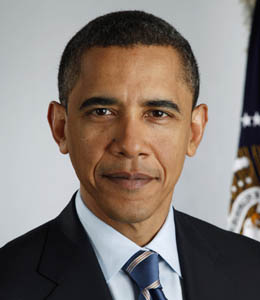
Barak Obama

And yet, when reflecting on intervening in Syria or resort to a military option in relation to Iran’s nuclear program, Obama is silent about the relevance of international law, although neither instance of contemplated uses of force can be remotely claimed to be justified as either individual or collective self-defense. And for obvious reasons, there is also no mention of circumventing the red line by failing to seek authorization for a contemplated used of force from the Security Council. Presumably since approval would not be forthcoming due to the anticipated opposition of Russia and China it was not even worth considering as a public tactic. It is true that the Clinton presidency in participating via NATO in the Kosovo War proceeded also to embark on a non-defensive war without seeking prior authorization for somewhat similar reasons as any resolution on Kosovo proposing use of force was sure to be vetoed by Russia and China. The Kosovo precedent generated worries about non-defensive military undertakings lacking a legal foundation. These were offset in the belief that a humanitarian catastrophe had been averted. The Kosovo undertaking was convincingly justified at the time on credible moral grounds of imminent genocide, on political grounds as enjoying support from almost all of Kosovo’s European neighbors, and on practical grounds as a military intervention that was feasible. In effect, the legitimacy of the was allowed to offset its illegality. As it turned out the military undertaking and political follow up was more difficult than anticipated, but still achieved at a reasonable cost, within a relatively short period, and productive of zero casualties among the intervening forces.

The question raised is whether from an overall perspective, the red line of international law at stake in Syria is more like Iraq or Kosovo/Libya. It is unlike Iraq in the sense that there is an ongoing unresolved civil war in Syria that is actively destabilizing the region and already spilling over national borders to cause unrest in neighboring countries. Syria is also the scene of severe Crimes Against Humanity that are being mainly committed by the regime. Finally, at present, there is no end of the violence is in sight give the relative strength of the two sides. It is, however, unlike Kosovo/Libya as there are proxy states acting as participants on both sides, the Damascus regime despite its behavior maintains considerable internal support while the opposition is widely viewed with deep suspicion and fear as to its democratic credentials, its lack of inclusiveness, and its uncertain respect for non-Sunni minorities. In a sense it is essential that each conflict be assessed within its own distinctive context, which should raise for discussion whether the red lines of international law and UN authority should be crossed in this instance on behalf of the blue lines of legitimacy (saving a vulnerable people from a humanitarian catastrophe) and white lines of feasibility (likelihood of success with minimum loss of life and high probability of positive net effects).

What is strange in all this is that Obama talks the talk, but seems unwilling to walk the walk. Such a disjunction invites cynicism about law and morality, and induces despair on the part of those of us who believe the world we inhabit badly needs red lines, but the right red lines.

Finally, it has been argued that the changing nature of conflict has made the red line embedded in the UN Charter obsolete or at least in need of a drastically modified interpretation. The rationale for rethinking the Charter approach to the use of force is associated with the global security situation that has resulted from terrorist attacks since 9/11 leading to the global war on terror being waged on a battlefield without national limits and increasingly doing the killing via reliance on robotic warfare on the one side and very primitive forms of disruptive violence by political extremists on the other side. Traditional ideas of deterrence, containment, and territorial defense seem almost irrelevant in relation to global security regimes when the perceived assailants are individuals who cannot be deterred, and are operating in non-territorial networks and exhibiting a readiness to die to complete their mission. As matters are proceeding the policy about force is being formulated without bothering with the red lines of international law and the UN, regressively producing once again a world of unregulated sovereign states and extremist non-states essentially deciding on their own when war is permissible. The recent Israeli air strikes on Syrian targets is illustrative: unprovoked and non-defensive, yet eliciting scant criticism in the media or even commentary about the dangers of unilateralism with respect to uses of international force. Such normative chaos in a world where already nine countries possess nuclear weapons seems like a prescription for eventual species suicide, an impression reinforced by the failure to take precautionary steps with respect to the menace of global warming. Never has the world more needed red lines that are drawn by major states, and upheld by them out of the realization that the national interest has also merged with the global interest. Arguably the red lines of the Charter need to be modified in light of the rise of non-state actors and the advent of non-territorial warfare, but such an undertaking is no where on the agenda of major states, and so the world drifts back to the pre-World War I era of unrestricted warfare, at least on the level of geopolitics. More


Wednesday, May 8, 2013

A Guantanamo Detainee's Perspective

Sami El-haj was working as a cameraman with Al Jazeera when he was captured and consequently detained at Guantanamo. He spent six years at the facility and is now the Manager the of Public Liberties and Human Rights Department at Al-Jazeera Network.

My story of the International Committee of the Red Cross (ICRC) is not exceptional. It more or less reflects the situation of all those who have languished or are languishing in the depths of Guantanamo or any dark prisons of injustice. However, it is my hope that, by telling this story and by clarifying certain notions and presenting some proposals, I may help to improve the ICRC’s humanitarian services and its relations with detainees.

The history of this time-honoured organization and its role in alleviating the suffering of victims of war, torture, and imprisonment are too well known to require an introduction. As for me, I regard the ICRC as having been born on the day that I came to know it and it came to know me, when I came to accept it – after rejecting it for a long time, because I was unaware of what it did and how, when it presented to me its system of values, which I had previously failed to understand.

Thus, my story began in January 2002, with a blank sheet of paper handed to me by the American investigator at Bagram who requested that I write a letter to my family and specify their address. I distrusted this request because I thought it was part of the investigation. My fellow prisoners and I felt the same distrust for the second time that year during our encounter with the ICRC in Kandahar prison when its delegates asked us to give them an account of how we had been detained and transferred there. The first instance of positive appreciation came shortly before the Eid al-Adha (Feast of the Sacrifice) when the ICRC presented us with copies of the Holy Qur’an that it had brought to Kandahar prison. It also brought us dishes of mutton from ritually sacrificed sheep, which had a highly positive effect on us. Someone had remembered us during the Eid and compensated us to a certain extent for our privation on that great occasion.

I received the first letter from my family, through the Qatar Red Crescent, in September 2002. It enclosed a photograph of my baby son Muhammad, whom I had left while he was taking his first faltering steps. The feeling was indescribable: a strange mixture of solace and sadness; tears were my first reaction. All my fellow prisoners in the neighbouring cells also broke into tears because they thought that something bad had happened to my family. This continued for more than an hour during which time I was unable to explain the situation or even to read the letter. The mere fact that I had received it, together with that photograph, had a tremendous impact, and not only on me!

Subsequently, there was a regular exchange of letters with my family through the ICRC, and my trust in it, and in its role, increased with the arrival of the first Arab delegate, from the Arab Maghreb, in whom we had even greater confidence when we found that he knew the Qur’an by heart. My reason for mentioning this is to draw attention to the prevalent notion among the detainees that an organization displaying a cross as its emblem must be a crusader organization. The fact that the ICRC delegate was a Muslim who had memorized the Qur’an rectified the misconceptions that we were harbouring concerning the organization with which we had not previously had any dealings in our countries.

He was followed by a succession of Arab delegates, which had a very positive effect on our attitude towards the ICRC insofar as their presence made us feel comfortable and confident since they were fellow Arabs with whom we could communicate more easily. At the very least, we could understand their facial expressions in which we perceived genuine feelings and a sympathy that seemed more authentic to us because of cultural similarities.

Later, the ICRC brought specialists and doctors. The availability of medical care gave us a feeling of relief and this feeling became stronger with the arrival of jurists who answered our questions. The provision of a library was even more welcome since the ICRC supplied more than 10,000 books, ranging from the principal Islamic reference works to the best detective stories. We were able to take advantage of this store of knowledge in order to organize a programme between the sunset and evening prayers. During these evening sessions one of us would read a book and summarize it for the others. We read to those who did not know how to read, and some of them began to master the Arabic language. Even more importantly, reading and exercising our imagination was very helpful in enabling us to preserve our sanity. In this connection, it is noteworthy that a consultant from the prison’s administration – this time of Arabic origin – deprived us of these books by warning the prison administration that it was ‘training theologians’. After that we started receiving Tintin and Milou stories and books bearing offensive titles such as A Donkey from the East!

The ICRC improved its interaction with the detainees by developing the means of communication between them and their families to include the Internet and a telephone line.

In the light of my above-mentioned experiences, I can point out some negative aspects that could have been avoided in the ICRC’s contacts with the detainees:

1. The dispatch of non-Arab delegates created a psychological barrier because of cultural and linguistic differences, resulting in a lack of trust in the ICRC on the part of the detainees.

2. Regarding the ICRC’s emblem, it would obviously be unreasonable to ask the organization to change its emblem in order to build bridges of confidence with the recipients of its humanitarian services. However, it would be extremely helpful if the ICRC could pay attention to this point and endeavour to clarify the issue of the emblem by giving a historical explanation in order to dispel people’s misconceptions, and especially those of people from Islamic backgrounds who might be unaware of the true facts. More


Monday, May 6, 2013

Israeli bombing of Syria and moral relativism

On Sunday, Israel dropped massive bombs near Damascus, ones which the New York Times, quoting residents, originally reported(then evidently deleted) resulted in explosions "more massive than anything the residents of the city. . . have witnessed during more than two years of war."

The Jerusalem Post this morning quoted "a senior Syrian military source" as claiming that "Israel used depleted uranium shells", though that is not confirmed. The NYT cited a "high-ranking Syrian military official" who said the bombs "struck several critical military facilities in some of the country's most tightly secured and strategic areas" and killed "dozens of elite troops stationed near the presidential palace", while the Syrian Observatory for Human Rights said that "at least 42 soldiers were killed in the strikes, and another 100 who would usually be at the targeted sites remain unaccounted for."

Israeli defenders claim that its air attack targeted weapons provided by Iran that would have ended up in the hands of Hezbollah. Obama officials quickly told media outlets that "the administration is fully supportive of Israel's airstrikes". Indeed, Democratic Sen. Pat Leahy noted: "Keep in mind the Israelis are using weapons supplied by us." There is, needless to say, virtually no condemnation of the Israeli assault in US media or political circles. At this point, the only question is how many minutes will elapse before Congress reflexively adopts a near-unanimous or unanimous resolution effusively praising Israel for the attack and unqualifiedly endorsing all past and future attacks as well.

Because people who cheer for military action by their side like to pretend that they're something more than primitive "might-makes-right" tribalists, the claim is being hauled out that Israel's actions are justified by the "principle" that it has the right to defend itself from foreign weapons in the hands of hostile forces. But is that really a "principle" that anyone would apply consistently, as opposed to a typically concocted ad hoc claim to justify whatever the US and Israel do? Let's apply this "principle" to other cases, as several commentators on Twitter have done over the last 24 hours, beginning with this:

Here's a similar question:

Or, for that matter, if Syria this week attacks a US military base on US soil and incidentally kills some American civilians (as Nidal Hasan did), and then cites as justification the fact that the US has been aiding Syrian rebels, would any establishment US journalist or political official argue that this was remotely justified? Or what if Syria bombed Qatar or Saudi Arabia on the same ground: would any US national figure defend the bombing as well within Syria's rights given those nation's arming of its rebels?

Few things are more ludicrous than the attempt by advocates of US and Israeli militarism to pretend that they're applying anything remotely resembling "principles". Their only cognizable "principle" is rank tribalism: My Side is superior, and therefore we are entitled to do things that Our Enemies are not. In more honest moments, they admit this. As soon as Hasan tweeted his question, he was instantly attacked by a writer for the Times of Israel and the Atlantic, dutifully re-tweeted by Jeffrey Goldberg, on this ground:

One could say quite reasonably that this is the pure expression of the crux of US political discourse on such matters: they must abide by rules from which we're immune, because we're superior. So much of the pseudo-high-minded theorizing emanating from DC think thanks and US media outlets boils down to this adolescent, self-praising, tribalistic license: we have the right to do X, but they do not. Indeed, the entire debate over whether there should be a war with Iran over its nuclear enrichment activities, as Israel sits on a massive pile of nuclear weapons while refusing UN demands to permit any international inspection of it, is also a perfect expression of this mentality.

The ultimate irony is that those who advocate for the universal application of principles to all nations are usually tarred with the trite accusatory slogan of "moral relativism". But the real moral relativists are those who believe that the morality of an act is determined not by its content by the identity of those who commit them: namely, whether it's themselves or someone else doing it. As Rudy Giuliani put it when asked if waterboarding is torture: "It depends on who does it." Today's version of that is: Israel and the US (and its dictatorial allies in Riyadh and Doha) have the absolute right to bomb other countries or arm rebels in those countries if they perceive doing so is necessary to stop a threat but Iran and Syria (and other countries disobedient to US dictates) do not. This whole debate would be much more tolerable if it were at least honestly acknowledged that what is driving the discussion are tribalistic notions of entitlement and nothing more noble. More


Thursday, May 2, 2013

Harrowing video shows Israeli soldiers arresting Hebron children

Two videos of Israeli soldiers arresting three young boys in Hebron give a harrowing glimpse into the everyday violence faced by children in the occupied West Bank city where settlers have taken over Palestinian homes under the protection of the army. (Videos embedded above and more at link below.)

The videos, published by the group Youth Against Settlements, show a chaotic scene of settlers confronting Israeli soldiers, Palestinian residents and international observers at Shuhada Street on Sunday. The heavily-armed Israeli soldiers drag away three young boys while Palestinians and an international activist attempt to intervene. One of the boys wails with fright as he is pulled away. A woman who identifies herself as the mother of one of the children defiantly goes into the Israeli army jeep and manages to remove one of the boys from it.

According to the International Solidarity Movement in Hebron, Palestinian children were walking home from school when they were attacked by a child from one of the settlements in the city center, who was accompanied by his two older brothers. Youth Against Settlements told The Electronic Intifada via email that the children from the settlement were waiting for the Palestinian students as they exited the school.

The younger child from the settlement began “throwing sticks, beating … and hurling insults” at one of the Palestinian children in the video, identified by the International Solidarity Movement as 12-year-old Ahmed Abu Heikel. More


WATCH: Israeli soldiers stand by, escort settlers as they attack Palestinian villages

Following the murder of a settler from Yitzhar on Tuesday, dozens of Israeli settlers from the region attacked several Palestinian villages. They threw stones at Palestinians, at cars and buses, smashed windows and burned houses. These videos, taken by B’Tselem photographers from the villages Asira al-Qibliya and Urif, show how IDF forces allow the riots against the Palestinian farmers to take place. In several cases the soldiers talk to the rioters or try to shove them away. In others, they simply provide escorts for them as they throw stones or storm the villages.

Video from Asira al-Qibliya: