Showing posts with label guantanamo. Show all posts

Wednesday, November 19, 2014

Duty to Refuse': Top Medical Groups Back Nurse Who Said 'No' to Force-Feeding Guantanamo Hunger Strikers

Force-feeding a competent person is not the practice of medicine; it is aggravated assault.'
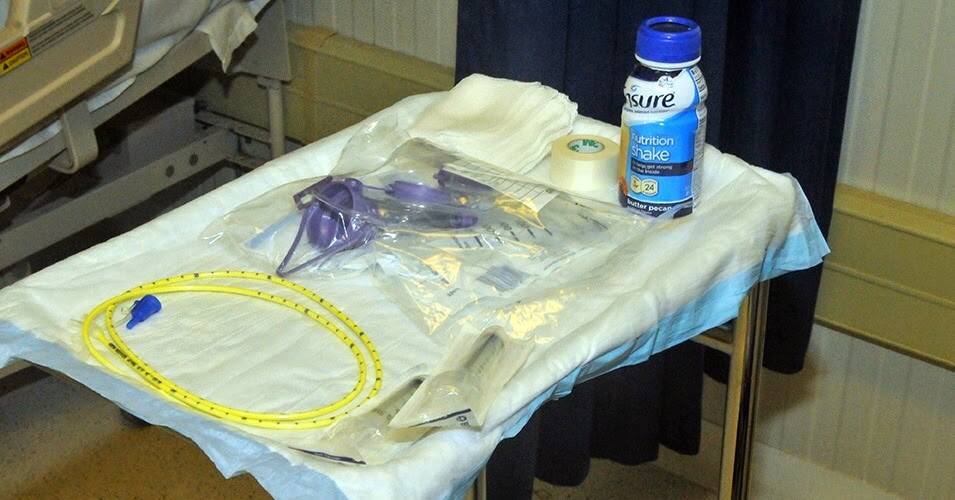
Leading medical groups are speaking out in support of a U.S. Navy nurse who refused on ethical grounds to force-feed hunger strikers held captive at Guantanamo Bay.

The American Nurses Association announced Wednesday that they have penned letters to U.S. government and military officials strongly urging against any punishment or retaliation for the act of refusal, which occurred in July. The military is planning to try the unidentified nurse, who is an officer, before a Board of Inquiry, which could result in a dishonorable discharge that strips him of his veterans benefits.

"The ANA Code of Ethics for Nurses clearly supports the ethical right of a professional nurse to make an independent judgment about whether he or she should participate in this or any other such activity," reads an October 17 letter (pdf) to Secretary of Defense Chuck Hagel from Pamela Cipriano, ANA president. "The military setting does not change the nurse’s ethical commitments or standards."

Doctor Vincent Iacopino, senior medical adviser for Physicians for Human Rights, told Common Dreams that his organization strongly supports the nurse's refusal to take part in the force-feeding of competent adults, which is banned by the World Medical Association and the American Medical Association and has been condemned by the office of the United Nations high commissioner for human rights as torture and a violation of international law.

"Force feedings are being done without informed consent, against people's wishes," said Iacopino. "We have codes of conduct that prohibit us from conducting therapeutic interventions or diagnostic procedures that people do not consent to."

"The government is claiming it is doing this to save people's lives," Iacopino continued. "The reality is that people are on hunger strike, protesting something: indefinite detention, often without charges. Any health professional under those circumstances has a duty to refuse. This is ill treatment with no respect for autonomy."

This is not the first time medical professionals have called for non-participation in the Guantanamo Bay force-feedings.

In op-ed published in the New England Journal of Medicine in July, a time of doctors writes, "Force-feeding a competent person is not the practice of medicine; it is aggravated assault. Using a physician to assault prisoners no more changes the nature of the act than using physicians to 'monitor' torture makes torture a medical procedure. Military physicians are no more entitled to betray medical ethics than military lawyers are to betray the Constitution or military chaplains are to betray their religion."

Furthermore, the American Medical Association also penned a letter to Hagel in April declaring, "Every competent patient has the right to refuse medical intervention, including life-sustaining interventions."

The nurse's act of refusal was originally revealed by Abu Wa'el Dhiab, a Syrian man and father of four who currently held in Guantanamo Bay despite being cleared for release since 2009. Dhiab told his lawyers at Reprieve that he heard the nurse, described as an approximately 40 year-old Latino man, state, "I have come to the decision that I refuse to participate in this criminal act."

"Before we came here, we were told a different story," the nurse reportedly added. "The story we were told was completely the opposite of what I saw."

The U.S. military has been broadly criticized for its treatment of hunger strikers. In response, the U.S. has imposed secrecy on its procedures and practices, including a media blackout on the number of people participating in the protest.

One hundred forty eight men remain incarcerated at Guantanamo Bay without charges or fair trial. More

This work is licensed under a Creative Commons Attribution-Share Alike 3.0 License

If this brave and honourable nurse is going to be tried, then so should President Obama and the Joint Chief of Staff. Editor


Sunday, May 12, 2013

If the Government Does It, It's Legal

Indefinite detention of the innocent and guilty alike, without any hope of charges, trial, or release: this is now the American way. Most Americans, however, may not care to take that in, not even when the indefinitely detained go on a hunger strike.

That act has certainly gotten Washington’s and the media’s collective attention. After all, could there be anything more extreme than striking against your own body to make a point? Suicide by strike? It’s the ultimate statement of protest and despair. Certainly, the strikers have succeeded in pushing Guantanamo out of the netherworld of non-news and onto front pages, into presidential news conferences, and to the top of the TV newscasts. That, in a word, is extraordinary. But what exactly do those prisoners, many now being force-fed, want to highlight? Here’s one thing: despite the promise he made on entering the Oval office, President Obama has obviously not made much of an effort to close the prison, which, as he said recently, “hurts us, in terms of our international standing... [and] is a recruitment tool for extremists.”

If Congress has been thoroughly recalcitrant when it comes to closing Guantanamo, the president’s idea of what shutting down that prison meant proved curious indeed. His plan involved transferring many of the prisoners from Cuba, that crown jewel of the offshore Bermuda Triangle of injustice that the Bush administration set up in January 2002, to a super-max-style prison in Illinois (“Gitmo North”). That would mean, of course, transferring indefinite detention from the offshore world of extraordinary rendition, black sites, and torture directly into the heart of the American justice system. Obama himself has indicated that at least 50 of the prisoners can, in his view, never be released or tried (in part because confessions were tortured out of some of them). They would be kept in what he, in the past, politely termed “prolonged detention.”

Here’s a second thing the strikers undoubtedly wanted to highlight and it's even harder to take in: Guantanamo now holds 86 prisoners (out of the 166 caged there) who have been carefully vetted by the U.S. military, the FBI, the CIA, and so on, and found to have done nothing for which they could be charged or should be imprisoned. All 86 have been cleared for release -- years late, often after brutal interrogation experiences sometimes involving torture. The problem: there is nowhere to release them to, especially since the majority of them are Yemenis and President Obama has imposed a moratorium on transferring any prisoner to Yemen.

Then there are the prisoners who may indeed have done something criminal in regard to the U.S., but had confessions tortured out of them which won't hold up in court. They are among the ones who will never be brought to trial, but never cleared for release either. In other words, indefinite detention, something anathema to the American justice system, will for the conceivable future be us. The fact that relatively few Americans seem fazed by this should be startling. No charges, no trials, but never getting out of prison: that would once have been associated with the practices of a totalitarian state.

We know one thing: no one, not George W. Bush, Dick Cheney, Donald Rumsfeld, Condoleezza Rice, or other top officials involved in setting up such a global system of injustice, sweeping up the innocent with the guilty, and subjecting them to horrors without end (including now force-feeding) will ever be brought to justice in an American court, nor will anyone involved in the system of rendition, torture, or abuse. In the Obama years, while indefinite detention remained a grim American reality, the government, as TomDispatch regular and former State Department officer Peter Van Buren himself experienced, honed other methods for punishing those it was unhappy with, especially whistleblowers of all sorts.

One of those methods might be called “indefinite suspension.” Instead of not being charged, you are charged repeatedly and dragged endlessly -- your life in a state of suspension -- through various bureaucratic judicial processes, the actual courts, and endless appeals thereof, so that even if sooner or later you come out the other side exonerated, you will still have been punished for your “crimes.” Let Peter Van Buren explain this mockery of "justice."

Homeland Insecurity: Seven Years, Untold Dollars to Silence One Man By Peter Van Buren

Read More


Wednesday, May 8, 2013

A Guantanamo Detainee's Perspective

Sami El-haj was working as a cameraman with Al Jazeera when he was captured and consequently detained at Guantanamo. He spent six years at the facility and is now the Manager the of Public Liberties and Human Rights Department at Al-Jazeera Network.

My story of the International Committee of the Red Cross (ICRC) is not exceptional. It more or less reflects the situation of all those who have languished or are languishing in the depths of Guantanamo or any dark prisons of injustice. However, it is my hope that, by telling this story and by clarifying certain notions and presenting some proposals, I may help to improve the ICRC’s humanitarian services and its relations with detainees.

The history of this time-honoured organization and its role in alleviating the suffering of victims of war, torture, and imprisonment are too well known to require an introduction. As for me, I regard the ICRC as having been born on the day that I came to know it and it came to know me, when I came to accept it – after rejecting it for a long time, because I was unaware of what it did and how, when it presented to me its system of values, which I had previously failed to understand.

Thus, my story began in January 2002, with a blank sheet of paper handed to me by the American investigator at Bagram who requested that I write a letter to my family and specify their address. I distrusted this request because I thought it was part of the investigation. My fellow prisoners and I felt the same distrust for the second time that year during our encounter with the ICRC in Kandahar prison when its delegates asked us to give them an account of how we had been detained and transferred there. The first instance of positive appreciation came shortly before the Eid al-Adha (Feast of the Sacrifice) when the ICRC presented us with copies of the Holy Qur’an that it had brought to Kandahar prison. It also brought us dishes of mutton from ritually sacrificed sheep, which had a highly positive effect on us. Someone had remembered us during the Eid and compensated us to a certain extent for our privation on that great occasion.

I received the first letter from my family, through the Qatar Red Crescent, in September 2002. It enclosed a photograph of my baby son Muhammad, whom I had left while he was taking his first faltering steps. The feeling was indescribable: a strange mixture of solace and sadness; tears were my first reaction. All my fellow prisoners in the neighbouring cells also broke into tears because they thought that something bad had happened to my family. This continued for more than an hour during which time I was unable to explain the situation or even to read the letter. The mere fact that I had received it, together with that photograph, had a tremendous impact, and not only on me!

Subsequently, there was a regular exchange of letters with my family through the ICRC, and my trust in it, and in its role, increased with the arrival of the first Arab delegate, from the Arab Maghreb, in whom we had even greater confidence when we found that he knew the Qur’an by heart. My reason for mentioning this is to draw attention to the prevalent notion among the detainees that an organization displaying a cross as its emblem must be a crusader organization. The fact that the ICRC delegate was a Muslim who had memorized the Qur’an rectified the misconceptions that we were harbouring concerning the organization with which we had not previously had any dealings in our countries.

He was followed by a succession of Arab delegates, which had a very positive effect on our attitude towards the ICRC insofar as their presence made us feel comfortable and confident since they were fellow Arabs with whom we could communicate more easily. At the very least, we could understand their facial expressions in which we perceived genuine feelings and a sympathy that seemed more authentic to us because of cultural similarities.

Later, the ICRC brought specialists and doctors. The availability of medical care gave us a feeling of relief and this feeling became stronger with the arrival of jurists who answered our questions. The provision of a library was even more welcome since the ICRC supplied more than 10,000 books, ranging from the principal Islamic reference works to the best detective stories. We were able to take advantage of this store of knowledge in order to organize a programme between the sunset and evening prayers. During these evening sessions one of us would read a book and summarize it for the others. We read to those who did not know how to read, and some of them began to master the Arabic language. Even more importantly, reading and exercising our imagination was very helpful in enabling us to preserve our sanity. In this connection, it is noteworthy that a consultant from the prison’s administration – this time of Arabic origin – deprived us of these books by warning the prison administration that it was ‘training theologians’. After that we started receiving Tintin and Milou stories and books bearing offensive titles such as A Donkey from the East!

The ICRC improved its interaction with the detainees by developing the means of communication between them and their families to include the Internet and a telephone line.

In the light of my above-mentioned experiences, I can point out some negative aspects that could have been avoided in the ICRC’s contacts with the detainees:

1. The dispatch of non-Arab delegates created a psychological barrier because of cultural and linguistic differences, resulting in a lack of trust in the ICRC on the part of the detainees.

2. Regarding the ICRC’s emblem, it would obviously be unreasonable to ask the organization to change its emblem in order to build bridges of confidence with the recipients of its humanitarian services. However, it would be extremely helpful if the ICRC could pay attention to this point and endeavour to clarify the issue of the emblem by giving a historical explanation in order to dispel people’s misconceptions, and especially those of people from Islamic backgrounds who might be unaware of the true facts. More


Tuesday, April 30, 2013

6 Horrifying Facts Every American Should Know About Guantanamo Bay and the Ongoing Hunger Strike

As the hunger strike grows, the U.S. is sending more medical personnel to help force-feed the prisoners. Here are some of the facts you should know about the protest and the prison camp.

The hunger strike at Guantanamo Bay continues to grow. The U.S. recently forced many prisoners into solitary confinement. The military now admits that 100 prisoners at the camp are refusing to eat. But lawyers for Guantanamo detainees say that more than 130 detainees are on hunger strike.

While the claims and counter-claims bounce back and forth, the situation continues to deteriorate. Here’s 6 facts you should know about Guantanamo Bay and the ongoing act of protest most of the prisoners are participating in.

1. U.S. Medical Reinforcements Have Arrived to Force-Feed Prisoners

One of the latest news items is that “medical reinforcements” from the U.S. Navy have arrived at Guantanamo Bay to cope with the growing hunger strike. The Naval nurses and specialists are there to help facilitate the process of force-feeding the detainees.

“We will not allow a detainee to starve themselves to death, and we will continue to treat each person humanely,” Guantanamo prison spokesman Samuel House told the New York Times. But the practice of force-feeding has been criticized by human rights groups.

When detainees are force-fed, they are shackled to a “restraint chair.” Then, U.S. military officials force a tube into their nose to pump nutrients into their body. The American Medical Association has come out strongly against the practice. “Every competent patient has the right to refuse medical intervention, including life-sustaining interventions,” AMA President Jeremy Lazarus wrote in a letter to Secretary of Defense Chuck Hagel, the Miami Herald reports.

In a harrowing New York Times Op-Ed, Guantanamo prisoner Samir Naji al Hasan Moqbel described the process of force-feeding. “I will never forget the first time they passed the feeding tube up my nose. I can’t describe how painful it is to be force-fed this way. As it was thrust in, it made me feel like throwing up,” he wrote. “I wanted to vomit, but I couldn’t. There was agony in my chest, throat and stomach. I had never experienced such pain before. I would not wish this cruel punishment upon anyone.”

2. Hunger Strike Sparked By Raids, Fueled By Indefinite Detention

Detainees began the hunger strike in early February after they said personnel at the camp raided cells, confiscated personal items and treated the Qu’ran disrespectfully. The military disputes this narrative. But what is clear is that, as the New York Times reported, the strike is being driven by “a growing sense among many prisoners, some of whom have been held without trial for more than 11 years, that they will never go home.”

“The men are not starving themselves so they can become martyrs...They’re doing this because they’re desperate. They’re desperate to be free from Guantanamo. They don’t see any alternative to leaving in a coffin. That’s the bottom line,” Wells Dixon, an attorney for five Guantamano detainees, told AlterNet earlier this month.

3. 86 Detainees Have Been Cleared for Release--But They’re Still There

There are currently 166 detainees at Guantanamo. And over half of them--86--have been cleared for release out of the hellish prison camp. But they’re still there, a fact that is helping to drive the hunger strike. More


Friday, November 30, 2012

For the First Time, Obama Official Sketches Out End to War on Terror

Neither the George W. Bush nor Barack Obama White House ever laid out a vision for what an end to the war on terrorism would actually look like. But as Obama prepares for his second term in office, one of his top defense officials is arguing that there is an end in sight, and laying out conditions for when the U.S. will reach it.

Jeh Johnson

“On the present course, there will come a tipping point,” Jeh Johnson, the Pentagon’s top lawyer, told the Oxford Union in the U.K. on Friday, “a tipping point at which so many of the leaders and operatives of al-Qaida and its affiliates have been killed or captured, and the group is no longer able to attempt or launch a strategic attack against the United States, such that al-Qaida as we know it, the organization that our Congress authorized the military to pursue in 2001, has been effectively destroyed.” At that point, “our efforts should no longer be considered an armed conflict.”

Johnson’s description of the endgame raises more questions than answers. But under his formulation, the 2001 Authorization to Use Military Force (AUMF), which the Obama administration has cited as the foundation of its wartime powers, would expire. That would mean any detainee at Guantanamo Bay who hasn’t been charged with a crime would be free to go, although Johnson says that wouldn’t necessarily happen immediately. It would also raise questions about whether the U.S. would possess residual legal authorities for its lethal drone program — which Johnson defended to the BBC on Thursday — including the legal basis for any “postwar” drone strike the CIA might perform.

In Johnson’s view, once al-Qaida’s ability to launch a strategic attack is gone, so too is the war. What will remain is a “counterterrorism effort” against the “individuals who are the scattered remnants” of the organization or even unaffiliated terrorists. “The law enforcement and intelligence resources of our government are principally responsible” for dealing with them, Johnson said, according to the text of his speech, with “military assets in reserve” for an imminent threat.

Johnson, considered one of the more liberal voices on Obama’s senior national security team, notably did not say when the U.S. will reach his tipping point. And his vague argument is more likely to provoke debate than settle any legal or strategic questions about the war. But it comes at an auspicious time: just before Obama’s second term, when there are visible stirrings in Congress to finally close Guantanamo Bay and accelerate an end to the Afghanistan war. Johnson, according to Foreign Policy’s Kevin Baron, is also under consideration to become attorney general, a post from which he’d have greater influence to conclude the war. It’s also notable that Johnson’s current boss, Defense Secretary Leon Panetta, recently backed away from his earlier rhetoric that the war is abating and heralded its spread to new battlefields in Africa.

Johnson’s not a commander. He’s the Pentagon’s general counsel, meaning his most direct involvement in the war on terrorism surrounds the military’s ability to detain suspected terrorists during the conflict. In his view, once the conflict ends, Guantanamo Bays doors have to swing open. Just maybe not immediately.

“In general, the military’s authority to detain ends with the ‘cessation of active hostilities’,” Johnson said. But he pointedly noted that both the U.S. and U.K. governments “delayed the release of some Nazi German prisoners of war” after World War II ended. Still, that would mean the vast majority of Guantanamo’s 166 detainees, those who haven’t been charged with any crime, would be ultimately free to go — a position almost guaranteed to spark controversy.

Murkier still is what it would mean for intelligence and law enforcement to target the “scattered remnants” of al-Qaida. Most significantly, once the AUMF expires, big questions would immediately arise about the legal framework for the apparatus of drone strikes and commando raids that President Obama hasexpanded and institutionalized for the long haul. The CIA in particular is a question mark: since the legal rationale for its drone program has never been disclosed, its dependency on the AUMF or its typical “Title 50″ authorities is unclear. More


Wednesday, July 11, 2012

Department of Defense Declassifies Report on Alleged Drugging of Detainees

Detainees in custody of the US military were interrogated while drugged with powerful antipsychotic and other medications that “could impair an individual’s ability to provide accurate information,” according to a declassified Department of Defense (DoD) inspector general’s report that probed the alleged use of “mind altering drugs” during interrogations.

In addition, detainees were subjected to “chemical restraints,” hydrated with intravenous (IV) fluids while they were being interrogated and, in what appears to be a form of psychological manipulation, the inspector general’s probe confirmed at least one detainee - convicted “dirty bomb” plotter Jose Padilla - was the subject of a “deliberate ruse” in which his interrogator led him to believe he was given an injection of “truth serum.”

Truthout obtained a copy of the report - “Investigation of Allegations of the Use of Mind-Altering Drugs to Facilitate Interrogations of Detainees” - prepared by the DoD’s deputy inspector general for intelligence in September 2009, under a Freedom of Information Act (FOIA) request we filed nearly two years ago.

Over the past decade, dozens of current and former detainees and their civilian and military attorneys have alleged in news reports and in court documents that prisoners held by the US government in Guantanamo, Iraq and Afghanistan were forcibly injected with unknown medications and pills during or immediately prior to marathon interrogation sessions in an attempt to compel them to confess to terrorist-related crimes of which they were accused.

The inspector general’s investigation was unable to substantiate any of the allegations by current and former detainees that, as a matter of government policy, they were given mind-altering drugs “to facilitate interrogation.” More


Tuesday, May 8, 2012

Justice Cheated: Human Rights Watch’s Kenneth Roth on Failures of Guantánamo Military Tribunals

The military tribunal established to prosecute the five leading suspects in the September 11th attacks opened this weekend at Guantánamo Bay.

During a nine-hour hearing on Saturday, the five prisoners refused to enter pleas on murder and terrorism charges, or to talk or listen to the judge, in what one of their lawyers explained was a “peaceful resistance to an unjust system.” Defense attorneys say the trial for the five leading suspects in the September 11th attacks is rigged to lead to their execution. Critics say the Obama administration has set a dangerous precedent by proceeding through a military tribunal. After initially attempting to move the case to a civilian courtroom in New York, the White House caved to vocal opposition and agreed to resume the military commissions begun under President George W. Bush at Guantánamo. We speak with Kenneth Roth, executive director of Human Rights Watch, who attended the military trial at Guantánamo this weekend. More


Wednesday, May 2, 2012

Real Politics Must be in the Streets: The Constitutional Crimes of Barack Obama - By Dave Lindorff

May 01, 2012 "Information Clearing House" -- As we slog towards another vapid, largely meaningless exercise in pretend democracy with the selection of a new president and Congress this November, it is time to make it clear that the current president, elected four years ago by so many people with such inflated expectations four years ago (myself included, as I had hoped, vainly it turned out, that those who elected him would then press him to act in progressive ways), is not only a betrayer of those hopes, but is a serial violator of his oath of office. He is, in truth, a war criminal easily the equal of his predecessor, George W. Bush, and perhaps even of Bush’s regent, former Vice President Dick Cheney.


Let me count the ways,

* For starters, in vowing to “preserve, protect and defend the US Constitution of the United States,” President Obama, upon taking office, had a sacred obligation to prosecute the people who had gravely wounded that document prior to his assuming office. It was clear, as I wrote in my book The Case for Impeachment: The Legal Argument for Removing President George W. Bush from Office (St. Martin’s Press, 2006), that Bush and Cheney had ordered and condoned and covered up torture of captives in their so-called “War” on Terror, as well as in the very real wars against Iraq and Afghanistan, committing grievous war crimes that are not only violations of international law, but of the US Criminal Code, given that the US is a leading author and signatory of the Geneva Accords). They also were war criminals of the first degree for orchestrating, through lies to both the UN Security Council and the US Congress and the American people, about the alleged threat and imminence of any threat by Iraq to the US or its allies. President Obama, under the UN Charter and under US law, as the president, commander in chief and top law officer in the nation, was bound to investigate and prosecute those crimes. Instead, he ordered that there would be no prosecutions.

* A federal court also ruled that President Bush had committed a felony in using the National Security Agency and several complicit telecommunications companies to spy on massive numbers of Americans with no warrants. Again, instead of prosecuting the president once he replaced him, President Obama said there would be no prosecution, and he went on to expand that spying program exponentially, effectively shredding beyond recognition the Fourth Amendment against unreasonable searches and seizures, which had been a leading rallying issue for the revolutionists of 1776.

* President Obama, on his own initiative, has moved beyond the illegal wars in Iraq and Afghanistan, launching illegal wars against Libya, Yemen and Pakistan, largely through the use of American military aircraft, cruise missiles and especially pilotless drones.

In addition to being illegal acts of war against nations that pose no imminent threat to the US, these clear acts of war have caused vastly disproportionate civilian deaths -- reportedly as many as 40 civilians, including many children, are being killed by drone strikes inside Pakistan for each of the supposed targeted “terrorists.” Jist the disproportionality of such "collateral damage" is a heinous war crime, even leaving aside the illegality of such strikes being conducted by the US within the border of a sovereign nation not at war with the US. More

________________________________________________________________

The ideas expressed here are those of the author of the article and do not necessarily reflect those of the the Cayman Institute, the South Asian Strategic Stability Institute or their Editors.


Tuesday, January 24, 2012

Navi Pillay, UN Rights Chief, Says Guantanamo Must Close

 GENEVA — The U.N. human rights chief says the U.S. government must close the Guantanamo Bay prison as President Barack Obama promised a year ago.

Navi Pillay, the U.N. High Commissioner for Human Rights, says “the facility continues to exist and individuals remain arbitrarily detained – indefinitely – in clear breach of international law.” 
Obama pledged to shutter the U.S. Naval Base prison in Cuba in his annual address to Congress last year.
Pillay said Monday – ahead of Obama’s next annual speech Tuesday – that she is deeply disappointed the U.S. government “has instead entrenched a system of arbitrary detention.”
Pillay said she also is “disturbed at the failure to ensure accountability for serious human rights violations, including torture, that took place.” More